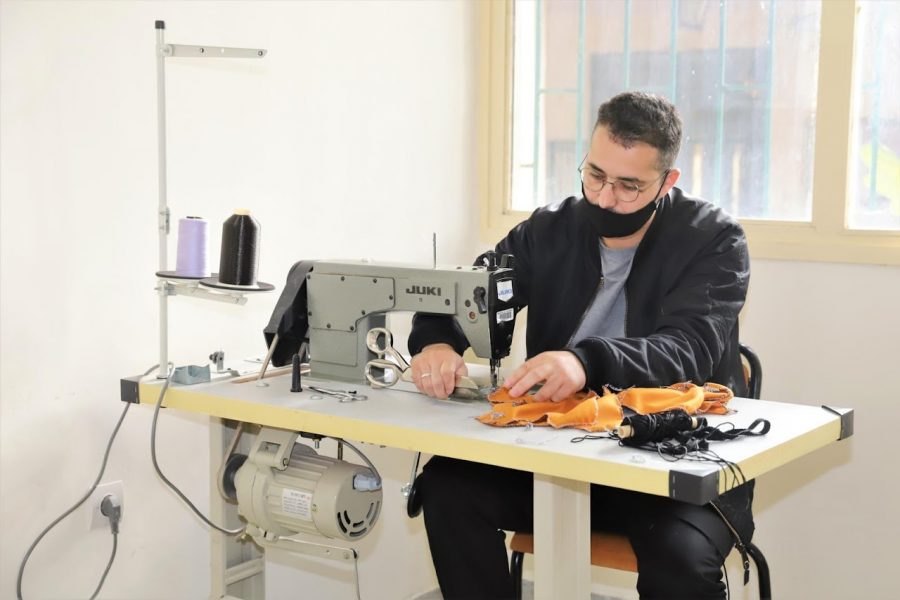
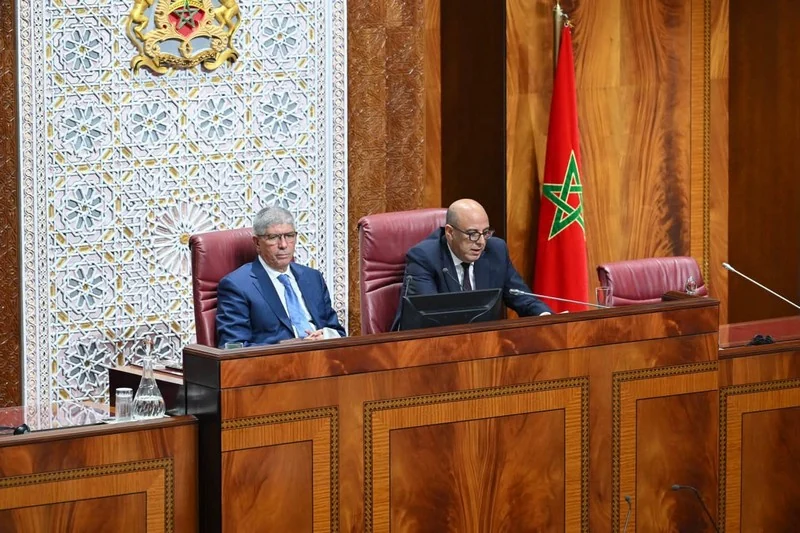
At a closed meeting of the thematic group for the evaluation of public policies related to youth at the House of Councilors, Fatima Zahra Amour, Minister of Tourism, Air Transport, Craft & Social Economy, announced that plans to increase the numbers of trainees in the sectors of traditional industry, social and solidarity economy.
The presentation revealed that the ministry plans to train one hundred twenty thousand ninety men and women between 2022-2026, including the training in the crafts category.
The plan, based on expanding partnerships with local communities through increasing programs for young people, aims to enable their inclusion into the labor market.
In addition, the plan seeks to support the establishment of contracts, with low-cost investments, in the traditional industries’ domain.
The government likewise plans to take the sector’s requirements into account to enhance the quality of the training.
Another objective is to integrate programs and units related to trades, self-skills, and entrepreneurship.
Amour explained in the same presentation that the plan’s basis is to enforce the governance scheme of vocational training.
The consolidation occurs by enforcing partnerships with institutional actors, chambers, and the federation of traditional industry entrepreneurs in planning and managing training programs.
The government intends in this respect to standardize the implementation of training programs and improve strategic vigilance, emphasizing that the ministry will continue to implement the requirements of law relating to the exercise of craft activities.
The goal is to register graduates of vocational training centers in the National Handicrafts Register, allowing them to benefit from different services, including social protection.
The ministry also aims to develop a draft law on the social and solidarity economy to restructure it and organize it.
Highlighting the vitality of traditional industry sectors and social and solidarity economy, the minister noted that the traditional industry sector constitutes 7% of the gross domestic product and provides 2.4 million jobs.
Amour also mentioned that the social and solidarity economy constitutes 2% of the gross domestic product concerns 5 percent of the active population, including 40,500 cooperatives and 210,000 associations.
The ministry as well intends to conserve endangered trades by developing a program in partnership with the United Nations Educational, Scientific, and Cultural Organization (UNESCO).
In this framework, the ministry has documented, described, and digitized the skills associated with 32 trades, valorized, and integrated into the training system.
The state institution has encouraged in this respect young people to acquire the skills and knowledge associated with trades through the training programs.
The programs also involve:
• Training for inmates in prisons at 1,000 inmates per year.
• Training for the blind and visually impaired.
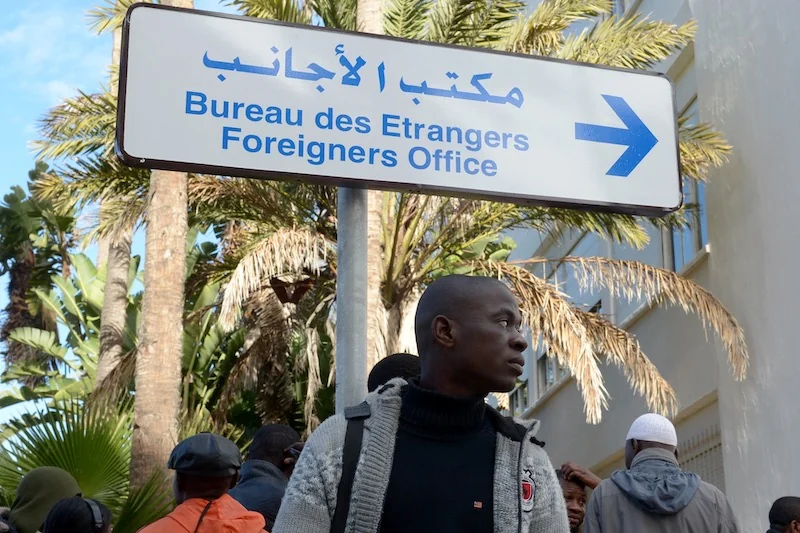
• Allocating 5% of career progression goals to youth from African countries.



add your comment
Terms of publication : Not to offend the writer, people, sacred things, or attack religions or the divine self, and refrain from racist incitement and insults.