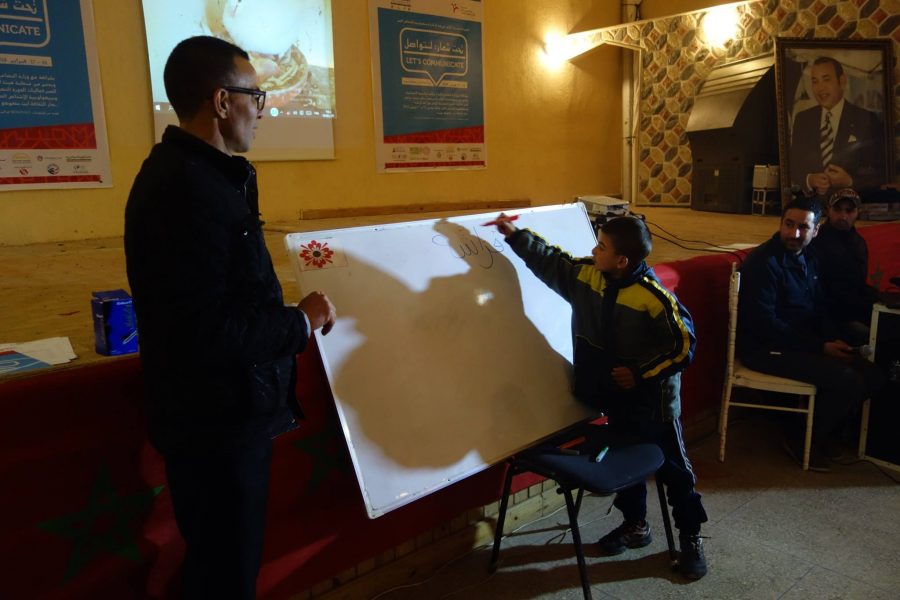
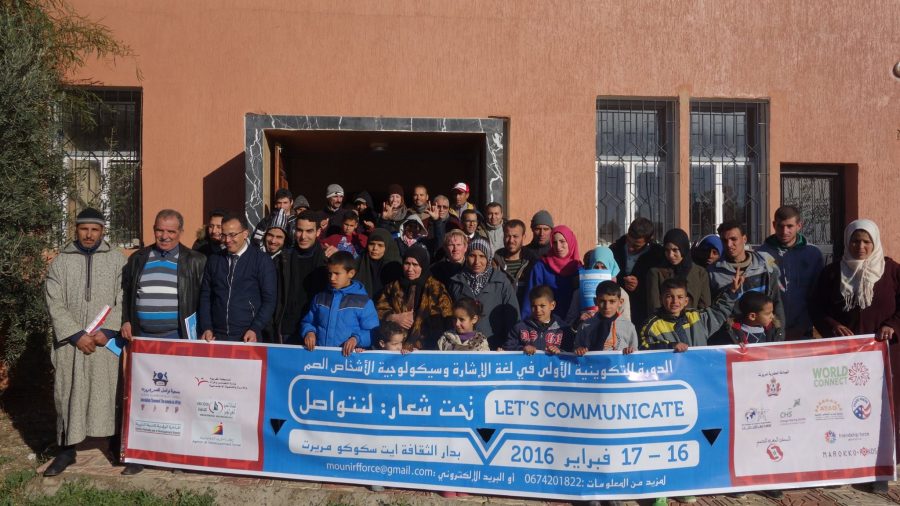
Born at the heart of Atlas mountains, M’rirt, a small city in Khenifra’s region, the young members of the NGO communication for deaf gathered, in a school’s class, haunted by the dream of an inclusive future where deaf people can also be part of the internet-driven world.
The group went on a years-long process, researching in international sign languages dictionaries, holding meetings and online votes sessions to choose the right signs for a list of famous IT’s terms such as Antivirus, application, VPN, and eventually translated them to Moroccan sign language.
“Deaf people use internet intensely, since the technology helped them enormously to stay informed and in contact with the world, however, the internet displays the users to several dangers, and Moroccan deaf people have no accurate dictionary of IT’s terms in sign language,” said Mounir Naili, the NGO’s interpreter in an interview with Hespress Eng,
The lack of accurate terminology and the rising dangers of the internet led the NGO’s members to start working on creating the new dictionary in order to protect Moroccan deaf internet’s users.
Their Information Technology list has been digitized in the form of videos, which include talks about digital safety, recorded in Moroccan sign language and published on the official pages of the NGO in Facebook and Youtube.
The innovative idea won the first prize of youth for change, organized by the library of Alexandria, in Egypt, in 2016.
Mounir Naili, recalled with nostalgia the story behind the establishment of the NGO, “it was in the 2000’s, I was studying agriculture, I met by coincidence my childhood, who recently finished his PHD despite his hearing loss, looking for a job in a farm.”
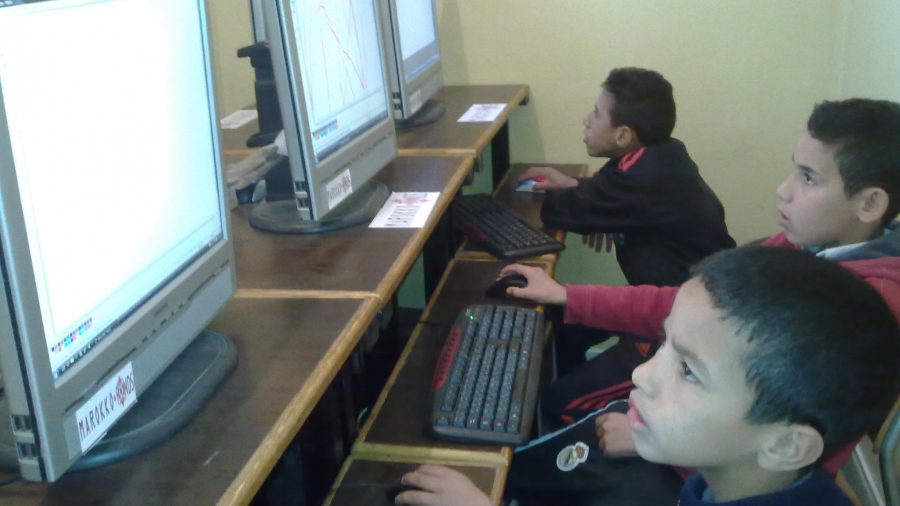
Naili’s friend, emboldened by his knowledge and education, and derided by the unfairness of unemployment after spending more than 8 years studying in depth the Arabic linguistics, decided to go back to his small city and start the initiative, in 2007, to help the deaf community of the city.
“Even though I don’t belong to the community of deaf people, I joined my friend’s NGO because I wanted to help him. Also, 2008 was a hard time for the youth, as the economic crisis hit, I didn’t want to waste my time doing nothing and I preferred to learn new things and help as much as I can.” Naili stated in his interview with Hespress Eng.
Today, the NGO offers a rich curriculum of subjects, which varies from math and languages to sexual education and digital safety.
The NGO provides, also, free courses for children and adults in the city as well as digital courses in Facebook and YouTube.
“The official dictionary of Moroccan sign language was last updated in the 80’s, the Moroccan sign language is not standardized between the regions, there are no professional major programs in the universities to train professional Moroccan sign languages interprets, all these are odds that harden the living situation of Moroccan deaf community,” Naili said.
According to the results of the national research on disability for the year 2014, the number of deaf people in Morocco is 63,400 people, which represents 4% of the total number of people with disabilities.
The situation in Morocco is further complicated by the absence of a standardized national sign language, in addition to the lack of accommodation arrangements that enable persons with a hearing impairment to enjoy their rights and to participate fully and effectively in social and economic development, a lack that leaded a huge number of Moroccan deaf to drop out of school, according to Naili.
Naili and his group hope that Morocco’s new government will put more efforts to care for Morocco’s deaf community.





add your comment
Terms of publication : Not to offend the writer, people, sacred things, or attack religions or the divine self, and refrain from racist incitement and insults.