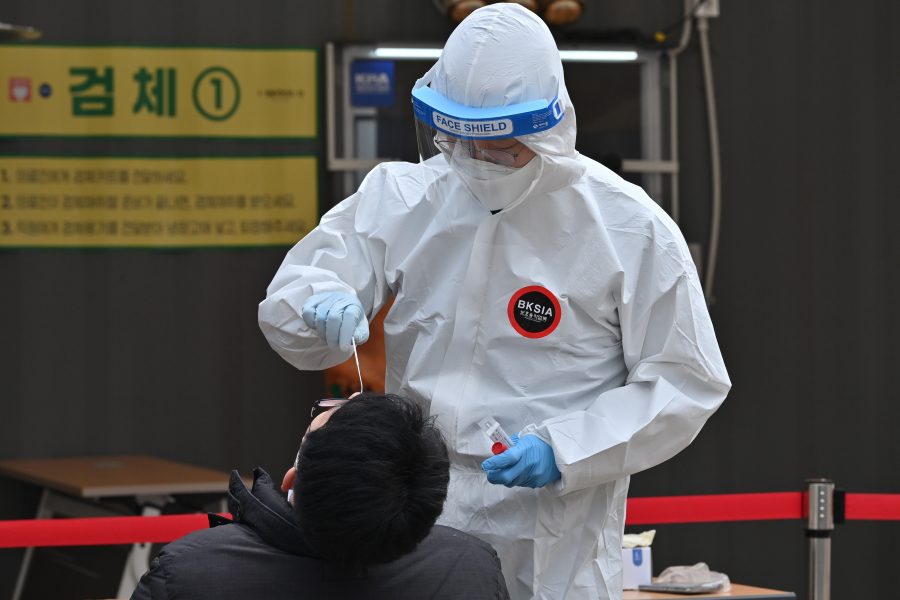
The Japanese Ministry of Health announced on September 1 two confirmed cases of the newly named COVID Mu at the airport quarantine stations of Japan in June and July.
It is the first time this variant’s existence in Japan and it has been confirmed.
The Mu variant was found in a woman in her 40s arriving in Japan from the United Arab Emirates on June 26, and in a woman in her 50s coming from the U.K on July 5, both were symptomless, according to the same source.
Mu variant, also known as B.1.621, was added to the WHO’s watchlist on August 30, after it was detected in 39 countries, “has a constellation of mutations that indicate potential properties of immune escape”, according to the World Health Organization (WHO).
According to WHO’s data, the vaccine might work less on B.1.621, suggesting that the vaccine’s efficacy on Mu is “similar” to that on Beta.
Previously, the Mu variant was known as the “Colombian variant”, since it was first identified in the South American country at the beginning of the year, and it has several mutations, including E484K, N501Y, and P681H.
After being detected in Colombia, Mu was found in other South American countries and Europe, according to NewScientist’s website.







add your comment
Terms of publication : Not to offend the writer, people, sacred things, or attack religions or the divine self, and refrain from racist incitement and insults.