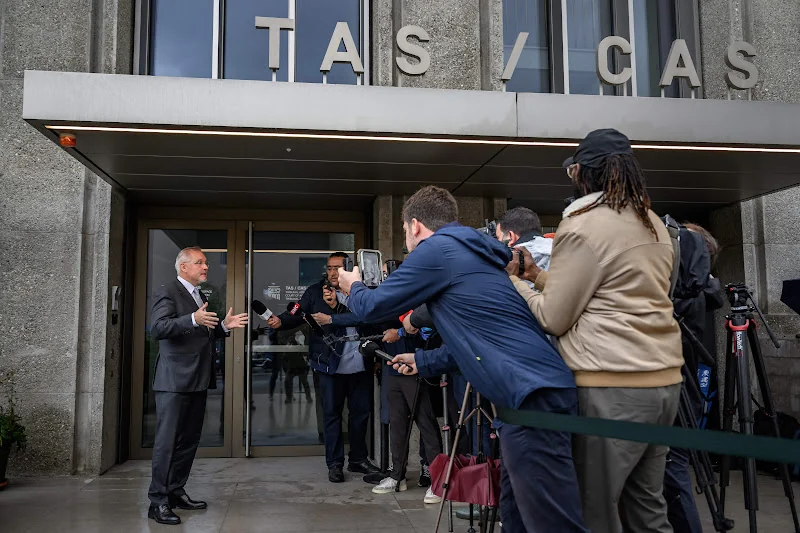
Morocco’s legal challenge over the 2025 Africa Cup of Nations final has entered a new phase, with the Royal Moroccan Football Federation (FRMF) notifying the Court of Arbitration for Sport (CAS) of a reported telephone conversation between one of the three arbitrators handling the case and the president of the Senegalese Football Federation.
The alleged exchange, which reportedly took place on Sunday, November 22, involved German arbitrator Ulrich Haas and Senegalese Football Federation President Abdoulaye Fall. The development has raised questions about the arbitrator’s independence and impartiality, as well as the potential validity of any award issued by the current panel.
The immediate question is whether the reported contact could lead to the arbitrator’s removal before the CAS issues its decision. A second, potentially more consequential question is whether the eventual ruling could be challenged before Switzerland’s Federal Supreme Court if the proceedings are found to have violated fundamental arbitration guarantees.
In a legal assessment, Mourad El Ajouti, president of the Moroccan Lawyers Club, said the implications would depend on whether the contact is established, what was discussed and whether the circumstances could reasonably raise doubts about the arbitrator’s impartiality.
“If the facts are established, this is no longer merely a procedural incident. It affects the proper constitution of the arbitral tribunal itself and could extend to the validity of any award issued by that panel,” El Ajouti told Hespress AR.
Scenario one: A formal challenge could lead to the arbitrator’s removal
The first possible course of action is a formal challenge against the arbitrator under Article R34 of the CAS Code.
The provision allows a party to seek an arbitrator’s removal when circumstances give rise to legitimate doubts about their independence or impartiality. A request must generally be submitted within seven days of the party becoming aware of the grounds for challenging the arbitrator and is examined by the competent Challenge Commission of the International Council of Arbitration for Sport (ICAS).
The FRMF’s communication to the CAS registry is therefore significant because it formally brings the reported contact to the court’s attention. However, notifying the registry and filing a formal challenge are distinct procedural steps. The communication alone does not establish that a challenge has been filed or that the arbitrator will be removed.
El Ajouti said the legal threshold does not necessarily require proof that the contact influenced the eventual ruling. Rather, the central question is whether the circumstances surrounding the exchange could objectively give rise to legitimate doubts about the arbitrator’s independence or impartiality.
The nature of the conversation, its subject matter, whether it concerned the case and whether it was disclosed to the other parties would therefore be important in determining whether grounds for recusal exist.
If a formal challenge succeeds, the arbitrator could be removed and replaced in accordance with the applicable CAS rules. The proceedings could then continue before a reconstituted panel. Depending on the stage reached and the applicable procedural arrangements, this could also affect the timetable for the award.
Scenario two: CAS could examine the complaint without removing the arbitrator
A second possibility is that the CAS examines the reported contact and determines that it does not meet the legal threshold for removal.
Article R33 of the CAS Code requires arbitrators to remain independent and impartial toward the parties and to disclose without delay circumstances that could call those qualities into question. Articles S18 and S19 also set out obligations concerning the independence, impartiality and conduct of arbitrators.
El Ajouti argued that an undisclosed, one-sided exchange between an arbitrator and a party while a case is under deliberation could undermine the principle of equality between the parties, particularly if the other side was not informed of its content or given an opportunity to respond.
The issue also falls within the framework of Swiss arbitration law. Article 182(3) of Switzerland’s Federal Act on Private International Law requires equal treatment of the parties and respect for their right to be heard.
The outcome would nevertheless depend on the circumstances. A reported telephone call does not automatically establish misconduct or justify removal. Its content, context, disclosure and relevance to the dispute would all matter.
The CAS could therefore conclude that the available information does not justify recusal, while still addressing the concerns raised by the FRMF through the procedures it considers appropriate.
Scenario three: An award could be challenged before Switzerland’s Federal Supreme Court
The implications would not necessarily end if the CAS issued its ruling with the current panel.
Under Article 190(2) of Switzerland’s Federal Act on Private International Law, international arbitration awards can be challenged before the Swiss Federal Supreme Court on specific grounds, including the improper constitution of the arbitral tribunal and violations of the parties’ right to equal treatment or their right to be heard.
The deadline for such an appeal is generally 30 days from notification of the award.
According to El Ajouti, the FRMF could potentially rely on these provisions if it considered that the reported contact had compromised the proper composition of the panel or breached fundamental procedural guarantees.
The Swiss court would have the authority to examine whether the circumstances surrounding the arbitrator’s conduct were capable of justifying a challenge, independently of the position taken by the CAS bodies.
An appeal would not, however, automatically invalidate the award. The FRMF would have to establish that the circumstances fall within one of the limited grounds for setting aside an international arbitration decision. The Swiss Federal Supreme Court does not function as a general appeal court reviewing the merits of the underlying football dispute.
If the appeal were successful, the award could be set aside, potentially requiring the dispute to be reconsidered through a new arbitration process. This would not automatically determine the winner of the AFCON final; it would concern the validity of the arbitration proceedings and the decision reached through them.
The Sun Yang precedent: When Swiss courts annulled a CAS award
El Ajouti pointed to a previous case involving Chinese swimmer Sun Yang as an example of how concerns about an arbitrator’s impartiality can have consequences beyond the CAS proceedings.
In its December 22, 2020, ruling in case 4A_318/2020, published as ATF 147 III 65, Switzerland’s Federal Supreme Court set aside a CAS award after finding circumstances that gave rise to legitimate doubts about an arbitrator’s impartiality.
The decision led to the arbitrator’s removal and the dispute being referred to a newly constituted panel.
The precedent illustrates that the independence and impartiality of arbitrators are substantive legal requirements, not merely formal obligations. However, it does not mean that every undisclosed contact between an arbitrator and a party would necessarily produce the same outcome. Each case must be assessed according to its own facts and applicable legal standards.
An arbitrator found to have breached the obligations of independence or disclosure could also face individual consequences within the CAS system, potentially including removal from its list of arbitrators, subject to the applicable disciplinary procedures.
What happens to the AFCON dispute?
The reported contact adds a separate procedural issue to the original dispute over the 2025 AFCON final.
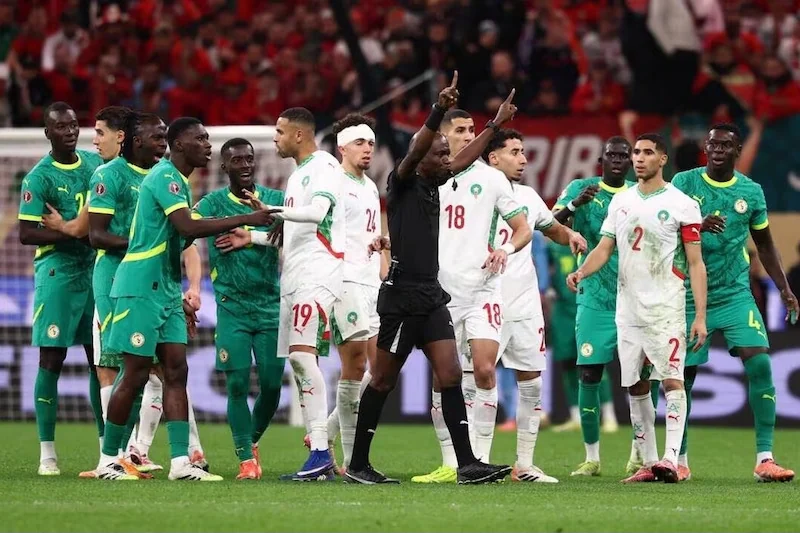
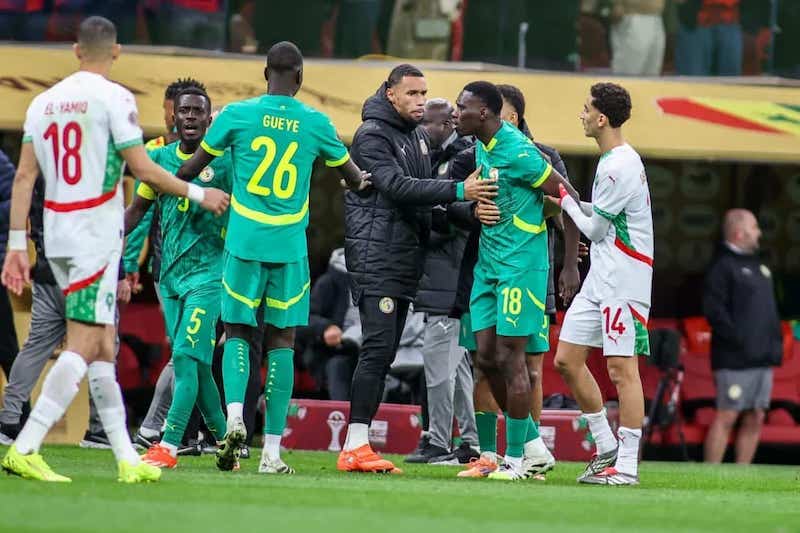
The Senegalese Football Federation appealed to CAS against the CAF Appeals Board decision declaring Senegal to have forfeited the final and awarding Morocco a 3-0 victory after the Senegalese team left the pitch.
The original proceedings concern the legality of CAF’s application of its competition regulations to the events during the final. The FRMF’s latest communication raises a different question: whether the panel responsible for deciding the appeal has complied with the independence and impartiality requirements governing international sports arbitration.
The two issues should be distinguished. A successful challenge to an arbitrator would not, by itself, establish that Morocco won the original dispute on its merits. Similarly, a decision upholding the CAS panel’s composition would not determine the underlying football question.
The immediate next steps will depend on how CAS responds to the FRMF’s communication, whether Morocco submits a formal request for the arbitrator’s removal and whether the reported exchange is established to have involved circumstances relevant to the case.
The dispute could therefore follow several paths: the arbitrator could remain on the panel, be replaced following a successful challenge, or participate in an award that Morocco might subsequently seek to contest before Switzerland’s Federal Supreme Court.
For now, the reported call remains an allegation, and no breach of arbitration rules has been independently established. But the episode has shifted part of the AFCON dispute from the interpretation of football regulations to the legal safeguards underpinning the arbitration process itself.




add your comment
Terms of publication : Not to offend the writer, people, sacred things, or attack religions or the divine self, and refrain from racist incitement and insults.