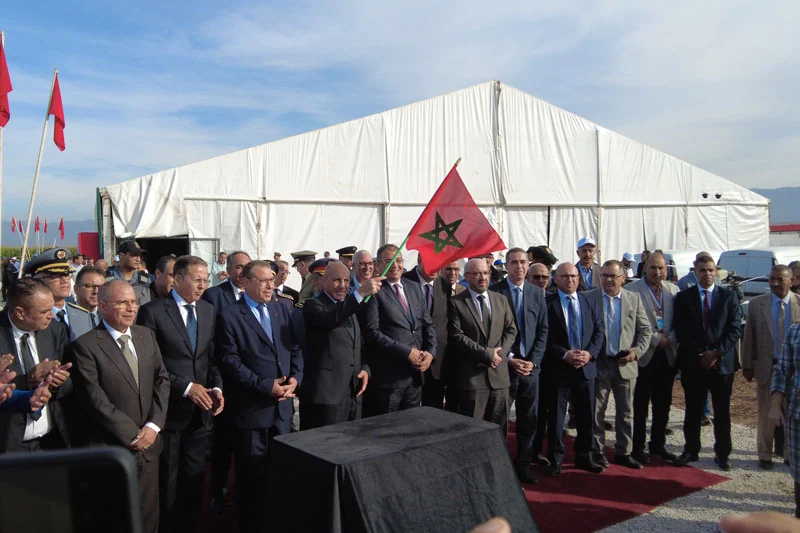
Morocco officially launched its 2026-2027 agricultural season on Saturday in the Béni Mellal-Khénifra region, with Agriculture, Fisheries and Food Sovereignty Minister Khalid Hatimi outlining plans to boost production, create jobs and strengthen the country’s food security.
The launch took place during a field visit to agricultural projects and infrastructure in Béni Mellal and Fquih Ben Salah provinces, attended by the region’s governor, the regional council president and senior agricultural officials.
The new season follows a 2025-2026 campaign that produced an estimated 90 million quintals of cereals, supported by favorable rainfall.
For the current season, the Agriculture Ministry has introduced measures to secure agricultural inputs, develop production chains, modernize irrigation systems and expand agricultural insurance, while encouraging investment and providing support to farmers.
Production and employment targets
Speaking to Hespress on the sidelines of the visit, Hatimi said the new season was being launched from the Tadla Plain with expectations of higher productivity, abundant output and greater added value benefiting both farmers and consumers.
The minister also highlighted the objective of creating new and sustainable employment opportunities, linking this to efforts to consolidate national food sovereignty and secure the Kingdom’s food supply.
He said climate change, geopolitical disruptions and rising agricultural input costs required changes to existing approaches to managing and planning the sector.
“We cannot continue in the same way,” Hatimi said, stressing the need to modernize planning and programming methods to address the challenges facing Moroccan agriculture.
He added that the government’s strategy focuses on increasing productivity and production volumes, generating added value for farmers and consumers, and creating new jobs, while continuing to implement the Green Generation strategy and mobilize institutions involved in the sector.
Cooperatives and certified seeds
The official delegation began its visit at the “Sanad” women’s cooperative in the commune of Oulad M’Barek, in Béni Mellal province.
The minister inspected the cooperative’s local-products exhibition space and activities focused on processing and marketing spices, cereals, pastries and couscous. The cooperative operates within the social and solidarity economy, with projects aimed at improving the economic and social conditions of women in rural areas.
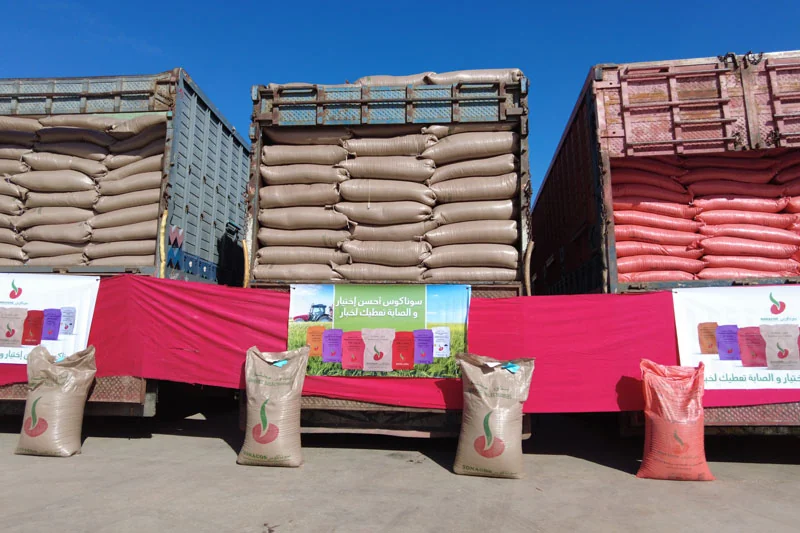
In Sidi Hamadi, in Fquih Ben Salah province, Hatimi visited the regional center for the sale of certified seeds operated by the National Seed Marketing Company (SONACOS).
He was briefed on measures to ensure farmers have access to certified and subsidized seeds, as well as arrangements for their distribution during the new agricultural season.
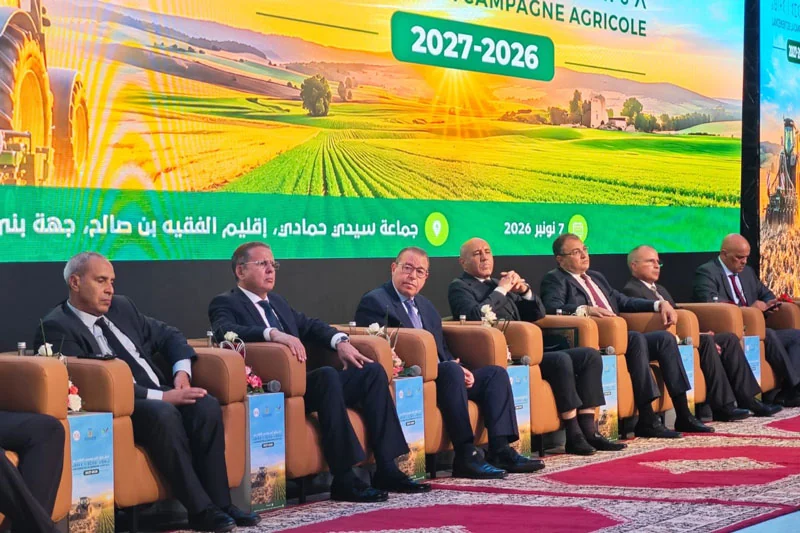
Sidi Hamadi also hosted a meeting presenting preparations for the 2026-2027 season, with representatives from the Directorate for the Development of Production Chains, the National Office for Agricultural Advisory Services, the National Institute for Agronomic Research, Cosumar Group, the Moroccan Agricultural Mutual Insurance Company and Crédit Agricole du Maroc, alongside the regional agricultural chamber.
Participants reviewed measures to secure production inputs and provide farmers with professional and financial support. Hatimi subsequently launched the official sowing operation, marking the start of agricultural activities for the season.
Irrigation infrastructure modernization
The field visit also included an inspection of the G9 filtration station in the western Béni Moussa irrigation district in Fquih Ben Salah province.
Built under the REDI project at a cost of MAD 15 million, the facility serves an agricultural area of 3,243 hectares and benefits approximately 900 farmers.
The project includes the conversion to localized irrigation and the renewal and modernization of the main canal control system within the Béni Moussa irrigation perimeter, part of the wider Tadla irrigation area.
Hatimi concluded his visit by inspecting the modernization project for the Zaidania canal in Kasba Tadla, in Béni Mellal province.
The project, also part of the REDI program, has a budget of MAD 395.22 million and aims to improve the canal’s hydraulic performance, reduce water losses and ensure reliable irrigation supplies to agricultural holdings.
It is also intended to improve the sustainability of irrigation infrastructure in the region as part of broader efforts to modernize water-management systems across the Tadla agricultural perimeter.




add your comment
Terms of publication : Not to offend the writer, people, sacred things, or attack religions or the divine self, and refrain from racist incitement and insults.