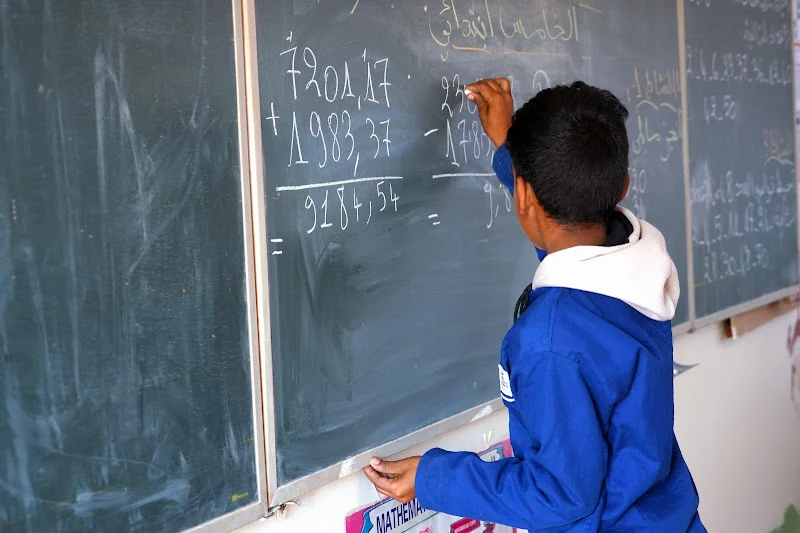
More than 264,000 students left school in Morocco during the 2025–2026 academic year, with only 21% entering reintegration programs, according to figures presented by Education Minister Nabil Benabdellah to the House of Representatives.
Of the 264,889 students who dropped out, 56,114 were reintegrated through educational or vocational pathways, leaving 208,775 outside the reintegration measures recorded by the ministry.
The figures come as Morocco’s school population reaches 9.22 million for 2026–2027, with public institutions educating 83% of pupils, compared with 17% in private schools.
Private enrollment fell across every level, dropping 12.4% in preschool, 6.7% in primary education, 9.7% in middle school and 3.2% in upper secondary education. Public enrollment moved in the opposite direction, rising 4.5% in middle schools and 14% in upper secondary schools, although primary enrollment declined by 1.7%.
The shift is adding pressure at the very stage where Morocco loses the largest number of students. Middle schools account for 55% of dropouts, compared with 23% in primary education and 22% in upper secondary education.
Rural students represent 51% of those leaving school, while boys account for 62%. Half of all dropouts occurred during the academic year, 43% resulted from students failing to reenroll, and 7% followed exclusion.
Of those reintegrated, 58.4% entered vocational training, while 26% were previously excluded students who returned to education. Another 15% joined non-formal education programs, and 0.6% entered traditional education.
Classroom conditions remain uneven as public enrollment increases. During 2025–2026, classes with at least 41 pupils represented 9.8% of middle school classrooms and 9.4% of upper secondary classrooms, against 1.3% in primary education.
Overall, 4.6% of classrooms were classified as overcrowded, while 17.5% combined pupils from different grades.
Morocco operates 12,661 schools, including 8,556 primary schools, 2,417 middle schools and 1,688 upper secondary schools, alongside 12,772 satellite units serving rural communities.
The ministry is also expanding its Pioneer Schools program, now covering 80% of primary institutions and 76% of primary pupils, as well as 50% of middle schools and 54% of their students.
Amazigh instruction has reached 50.7% of schools, excluding satellite units, while English teaching covers 95.4% of middle schools.





add your comment
Terms of publication : Not to offend the writer, people, sacred things, or attack religions or the divine self, and refrain from racist incitement and insults.