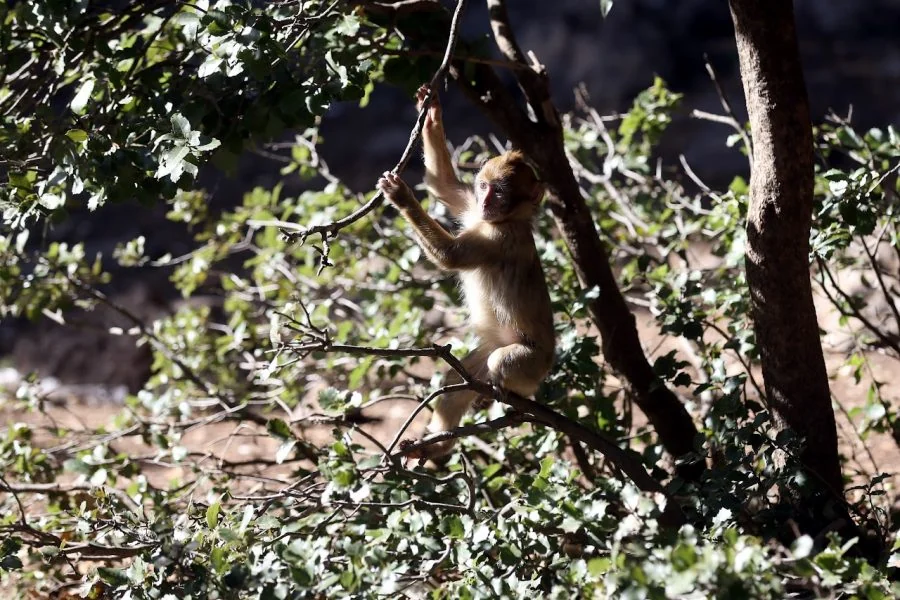
Morocco’s endangered Barbary macaques appear to have found an easier alternative to spending their days searching for food in the Middle Atlas forests: helping themselves to farmers’ crops.
And according to new research, the monkeys living near orchards may be doing better than their forest-dwelling neighbours.
A study published in Global Ecology and Conservation on September 21 found that macaques with access to orchards spent less time foraging, travelled shorter distances and showed higher recruitment of young animals than those relying on natural forest resources.
For monkeys navigating a landscape increasingly affected by drought and declining vegetation, cultivated orchards offer something forests cannot always guarantee: an accessible, concentrated supply of food.
But the apparent shortcut comes with complications. The same orchards that offer easier meals belong to farmers, turning hungry macaques into unwelcome visitors.
Researchers compared macaque populations living in forest habitats with those occupying areas where forests meet agricultural land.
The orchard-foraging monkeys spent less energy searching for food and moved across smaller areas, while the forest population faced increasingly difficult conditions as natural vegetation declined.
Between 2015 and 2023, the recruitment of immature macaques in the forest population fell by approximately half, according to the study.
The researchers found that access to agricultural food was associated with better recruitment in the orchard population, although they could not establish that eating crops alone caused the difference.
The monkeys also appeared to recognize the risks of their new food source, displaying greater avoidance of humans in agricultural areas.
Barbary macaques are endangered, and Morocco’s Middle Atlas forests are among their most important remaining habitats. Protecting the animals means securing enough food for them to survive and reproduce.
Yet allowing them to depend increasingly on farmland risks intensifying conflict with farmers, who may suffer crop losses and view the animals as agricultural pests rather than wildlife in need of protection.






add your comment
Terms of publication : Not to offend the writer, people, sacred things, or attack religions or the divine self, and refrain from racist incitement and insults.