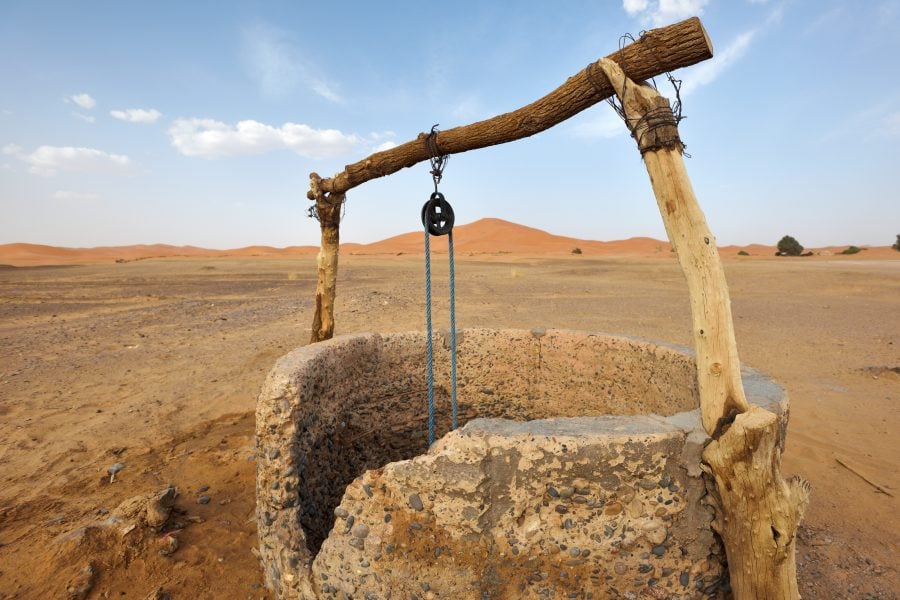
Morocco’s upper house says climate change has become a structural test of public governance, warning that rising temperatures, prolonged drought and extreme weather now threaten water security, food sovereignty, territorial equity and the state’s ability to protect vulnerable communities.
The report, prepared for the House of Councillors’ annual public policy evaluation session, reviews Morocco’s climate-related public policies between 2015 and 2025. It says that climate change should no longer be treated solely as an environmental issue, but as a cross-cutting national challenge affecting water security, food sovereignty, territorial equity and sustainable development.
The report draws on climate data from the General Directorate of Meteorology (DGM), which recorded a +1.49°C national temperature anomaly in 2024 compared with the 1991–2020 average, making it the hottest year ever recorded in Morocco. It also highlights a 24.7% national rainfall deficit and an increase in extreme weather events, including prolonged droughts, heatwaves, flash floods and forest fires.
he report draws on data from the General Directorate of Meteorology, which recorded a national temperature anomaly of 1.49 degrees Celsius in 2024 compared with the 1991-2020 average, making it Morocco’s hottest year on record. It also cites a 24.7% national rainfall deficit and a rise in extreme events, including droughts, heatwaves, flash floods and forest fires.
Those figures largely mirror the DGM’s latest climate assessment. The parliamentary report, however, moves the issue from climate observation to public accountability by asking whether Morocco’s institutions, ministries and public policies are prepared for worsening climate risk.
The report reviews the preparedness of key ministries responsible for water, energy, disaster risk management and social protection, while emphasizing that Morocco must simultaneously pursue climate mitigation and adaptation through stronger water governance, resilient infrastructure, climate-resilient urban planning and improved protection for vulnerable populations.
The report also highlights Morocco’s constitutional commitment to environmental protection, citing provisions of the 2011 Constitution that guarantee citizens’ right to water and a healthy environment while assigning Parliament responsibility for evaluating public policies related to natural resources and sustainable development.
The International Monetary Fund (IMF) has similarly warned that repeated droughts continue to reduce agricultural production, weaken economic growth and increase unemployment, identifying climate change as one of Morocco’s main medium-term economic risks. The IMF also supports integrating climate risks into public financial planning and strengthening water management reforms.
The report will be discussed during a plenary session of the House of Councillors on Wednesday, July 8, as part of Parliament’s annual public policy evaluation session under Article 101 of the Constitution. Lawmakers are expected to assess the implementation of Morocco’s climate strategies, institutional preparedness and the effectiveness of public policies in strengthening the country’s resilience to increasingly severe climate risks.


add your comment
Terms of publication : Not to offend the writer, people, sacred things, or attack religions or the divine self, and refrain from racist incitement and insults.