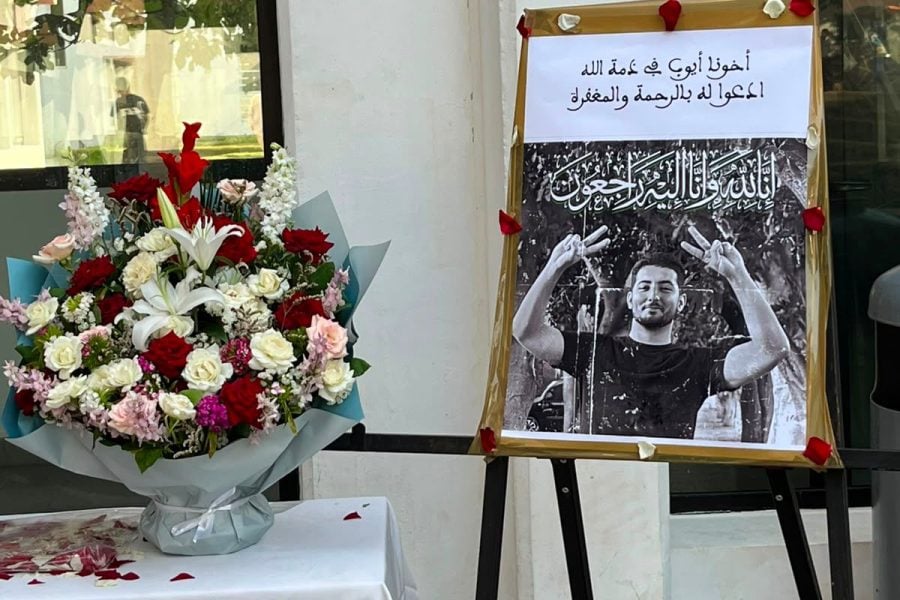
A third-year student at the National Institute of Statistics and Applied Economics (INSEA) in Rabat was found dead in his university residence this week, prompting an official investigation and reigniting concerns about mental health support within Morocco’s higher education institutions.
Authorities have opened an inquiry to determine the circumstances surrounding the death of Ayoub Messaoudi, a 22-year-old student in his final year at the institute.
According to a resident at INSEA who spoke to Hespress EN on condition of anonymity, Messaoudi was actively involved in a student music club and was generally regarded by his peers as sociable and cheerful. However, fellow students had reportedly started observing changes in his behavior before the incident.
The same source referred to personal hardships that had been discussed among students, including the reported death of his father and his mother’s battle with illness. The resident stressed, however, that these details remain unconfirmed and cautioned against reducing the tragedy to personal circumstances alone, arguing that broader institutional factors should also be considered.
The incident has renewed attention on mental health challenges faced by students in highly competitive academic environments.
Pedagogic mental health specialist and psychotherapist Yamna Gualoul described student suicide as a manifestation of overwhelming psychological pressure.
“Suicide here is a form of escape,” Gualoul said, pointing to the accumulation of academic, social, and emotional burdens that some students may struggle to manage.
She highlighted several factors commonly associated with elite preparatory and engineering institutions, including constant comparison between students, pressure to achieve high academic results, demanding workloads, and educational environments that often overlook psychological well-being.
According to Gualoul, such conditions can create what she described as a “silent and hidden suffering,” where students hesitate to seek help for fear of being judged or perceived as weak.
She also stressed the absence of dedicated psychological support structures in many institutions, calling for the establishment of mental health counseling and guidance units capable of identifying students in distress and providing professional assistance.
The tragedy has drawn comparisons to a similar incident in 2013, when a 23-year-old INSEA student was found dead in a university residence. At the time, the institute observed a period of mourning, but calls for long-term reforms in student mental health support did not lead to major structural changes.
As investigations continue into the circumstances of Messaoudi’s death, the case has once again raised questions about the adequacy of psychological support available to students and the responsibility of educational institutions in addressing mental health challenges before they escalate into tragedy.


The mental health is a real issue that should be taken more seriously both by society and the goverement, there are many socio-cultural interactions when it comes to to establish the right diagnosis, the goverement should pay more efforts in term of sensibilisation and widening the health insurance span to include more mental disorders
allah irehmo. mental health support is indispensable to any pedagogical institute of any sort. It shouldn’t take a tragedy like this to realize