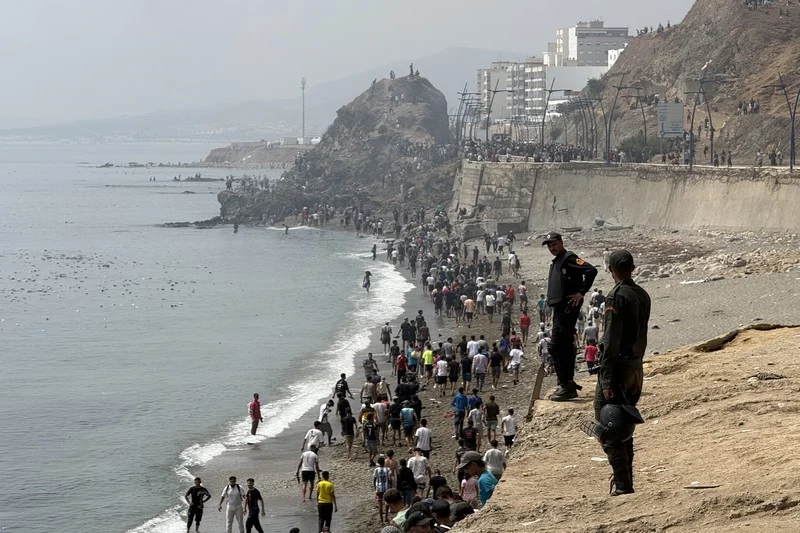
Morocco’s National Human Rights Council (CNDH) has released its preliminary findings on the mass migration attempts toward the Spanish enclaves of Ceuta and Melilla, concluding that the events exposed serious vulnerabilities affecting children, young people, and migrants while highlighting shortcomings in prevention, protection, and institutional coordination.
The report calls for a rights-based response centered on accountability, child protection, and strengthened public policies.
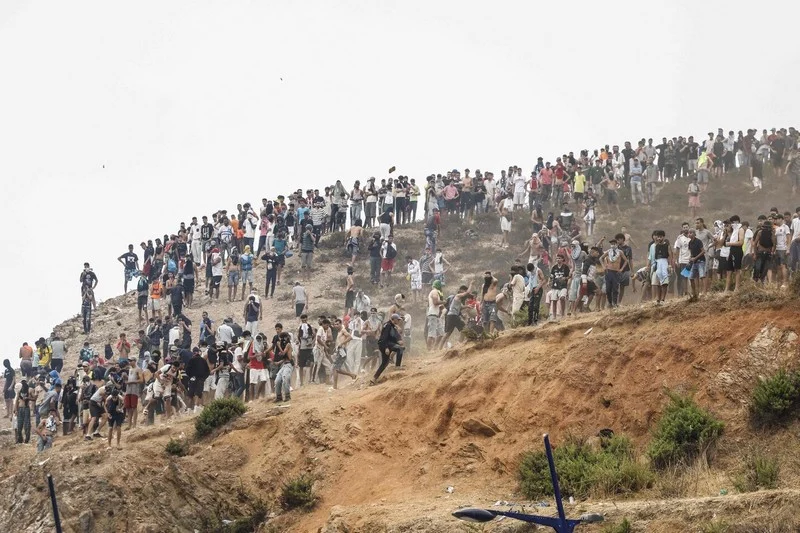
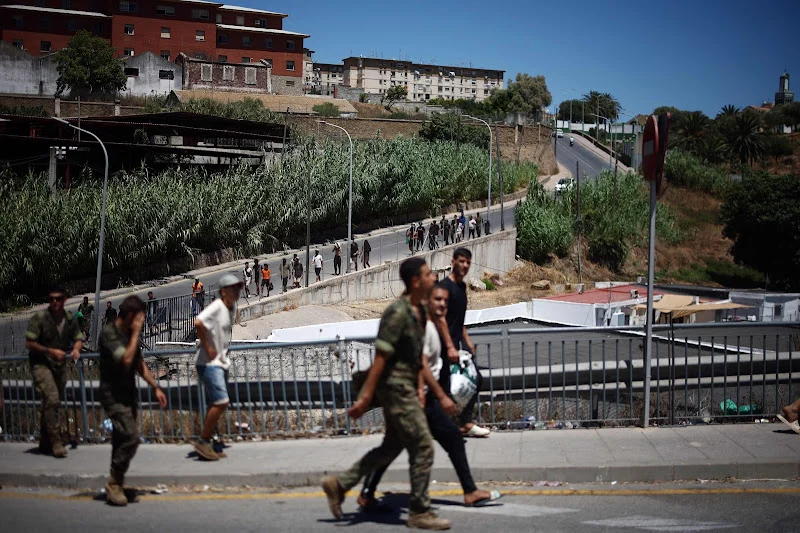
The report follows a field assessment conducted by the Council after the large-scale crossings and seeks to establish an initial understanding of the circumstances surrounding the events, their humanitarian consequences, and the institutional response. The CNDH describes its findings as preliminary and notes that further work and investigations remain necessary.
Children among the most vulnerable
A central focus of the report is the situation of children involved in or affected by the crossings. According to the CNDH, many minors were exposed to significant physical and psychological risks, reinforcing concerns over the growing vulnerability of children in contexts of irregular migration.
The Council stresses that protecting children requires more than emergency interventions, urging authorities to reinforce prevention mechanisms, improve child protection systems, and ensure that all actions involving minors fully comply with Morocco’s national legal framework and its international human rights obligations.
The report also highlights the need to better identify children at risk before such crises emerge, while strengthening coordination among institutions responsible for child welfare, education, social protection, and justice.
Social and economic vulnerabilities
Beyond the immediate events, the CNDH argues that the attempted crossings reflect deeper structural challenges affecting sections of Moroccan society, particularly young people facing economic and social vulnerability.
The Council links migration pressures to broader issues requiring sustained public policy responses rather than exclusively security-oriented measures. It calls for greater investment in social inclusion, youth opportunities, and territorial development while addressing the factors that contribute to irregular migration.
According to the report, long-term solutions should combine economic, educational, and social measures with stronger community-based prevention strategies capable of identifying vulnerable individuals before they become exposed to dangerous migration attempts.
Rights-based approach
The Council emphasizes that managing migration-related crises should remain anchored in respect for human rights and human dignity. It recommends ensuring that all interventions involving migrants, including children, adhere to legal guarantees and fundamental rights while strengthening oversight and accountability mechanisms.
The report also calls for improved institutional coordination between public authorities, local administrations, and civil society organizations involved in humanitarian assistance and child protection, arguing that fragmented responses reduce the effectiveness of emergency interventions.
Recommendations
The CNDH called for a comprehensive overhaul of Morocco’s approach to protecting vulnerable children and young people, urging authorities to move beyond emergency interventions by strengthening prevention mechanisms, improving early detection of at-risk children, and ensuring that all measures affecting minors fully comply with national legislation and Morocco’s international human rights commitments.
The Council stressed that the best interests of the child should remain at the center of all public policies and institutional responses.
The report also urged the government to improve coordination among the various institutions responsible for migration, child protection, education, justice, and social services, arguing that a more integrated institutional response would strengthen both emergency interventions and long-term protection efforts.
It recommended reinforcing oversight mechanisms while ensuring that all migration-related interventions are carried out in full respect of fundamental rights and legal guarantees.
More broadly, the Council said addressing irregular migration requires tackling its underlying social and economic drivers through stronger public policies targeting vulnerable communities, particularly young people.
It called for greater investment in social inclusion, education, employment opportunities, and territorial development, while continuing investigations and assessments into the recent events to better understand their causes and improve Morocco’s preparedness for similar crises in the future.
The Council describes the document as an initial assessment rather than a final report. It states that its objective is to identify urgent human rights concerns, inform public authorities, and contribute to policy reforms aimed at preventing similar incidents in the future.




add your comment
Terms of publication : Not to offend the writer, people, sacred things, or attack religions or the divine self, and refrain from racist incitement and insults.