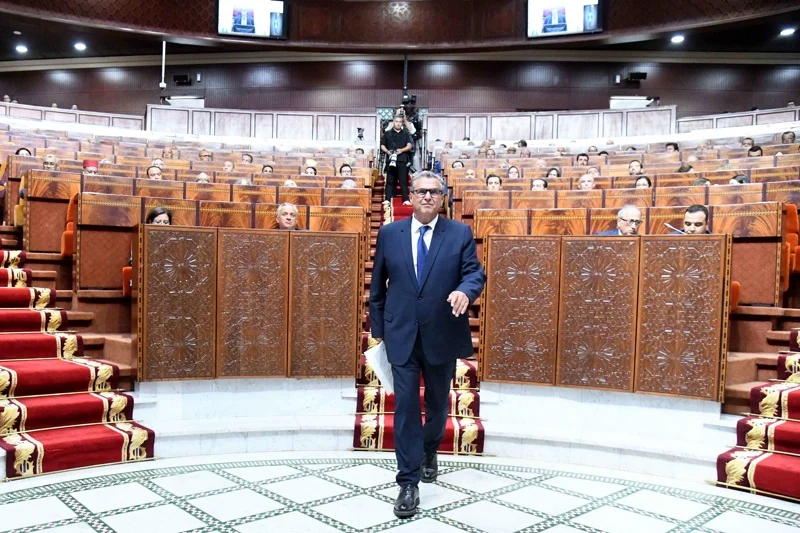
More than 730,000 students enrolled in Morocco’s public education system for the first time during the current academic year, marking a 7.4% increase compared with the previous year, Prime Minister Aziz Akhannouch said Monday.
Speaking before the House of Representatives during a monthly question session devoted to education policy, Akhannouch said the increase reflects growing confidence among Moroccan families in public schools amid ongoing government reforms aimed at improving education quality and strengthening the attractiveness of public institutions.
According to the prime minister, approximately 7 million students are currently enrolled in public schools nationwide. They are taught by more than 299,000 teachers across a network of over 12,400 educational institutions.
Akhannouch said the government remains committed to building a high-quality public education system that promotes equal opportunities and reduces social and regional disparities.
He also highlighted progress in expanding preschool education, noting that enrollment rates surpassed 80% during the 2025-26 academic year, covering more than 985,000 children.
Education budget rises sharply
The prime minister pointed to a significant increase in public spending on education, with the sector’s budget rising from 58 billion dirhams ($6.3 billion) in 2021 to 99 billion dirhams ($10.8 billion) in 2026.
He said the budget had grown by more than 68% over the five-year period, describing education as a strategic investment in Morocco’s future and a cornerstone of the country’s social development agenda.
Akhannouch said the government launched its 2022-26 education roadmap shortly after taking office, following consultations with stakeholders across the sector. The reform plan focuses on three main pillars: students, teachers and educational institutions.
Efforts to reduce overcrowding
The government also reported progress in addressing overcrowding in classrooms.
According to Akhannouch, the proportion of overcrowded classes fell from 9.4% to 5.7% during the current government’s term, thanks to improved planning and targeted interventions.
In primary schools, overcrowding rates declined from 6.5% in the 2021-22 academic year to 1.3% this year. In lower secondary education, the rate dropped from 19.3% in 2022 to 10.29% in 2025-26.
The government aims to reduce overcrowding further next year, targeting 1% in primary schools and less than 5% in secondary education.
Akhannouch said 758 new educational institutions were opened between 2022 and 2025, most of them in rural areas. During the current academic year alone, 169 new schools were established.
In addition, authorities renovated classrooms and facilities in 5,000 schools as part of a broader effort to modernize educational infrastructure and improve learning environments.
“Leadership Schools” show academic gains
The prime minister also highlighted the performance of Morocco’s “Leadership Schools” program, which is designed to improve learning outcomes through enhanced teaching methods and continuous assessment.
Government evaluations indicate that students in participating schools recorded substantial improvements in academic achievement. Mathematics results reportedly increased fourfold, while performance in Arabic doubled and French scores tripled among pupils from the second through sixth grades.
According to Akhannouch, students from these schools enter lower secondary education with an academic advantage of up to 10 points compared with their peers in conventional schools.
He added that mastery of core competencies rose from 11% in initial assessments to 45% in follow-up evaluations, while students in the program achieved an average correct-response rate of 59% compared with 37% among students in standard public schools.
Focus on dropout prevention
Akhannouch also emphasized efforts to combat school dropout rates through Morocco’s “Second Chance Schools” initiative, which provides alternative educational pathways for young people who have left the formal education system.
He said approximately 35,000 beneficiaries have been integrated into the program in recent years.
The government expects these measures to help reduce the number of young people classified as NEETs, those not in education, employment or training, a group Akhannouch described as a major social and economic challenge for Morocco’s future.
“The goal is not only to keep students in school,” he said, “but also to ensure their successful integration into economic and social life.”





add your comment
Terms of publication : Not to offend the writer, people, sacred things, or attack religions or the divine self, and refrain from racist incitement and insults.