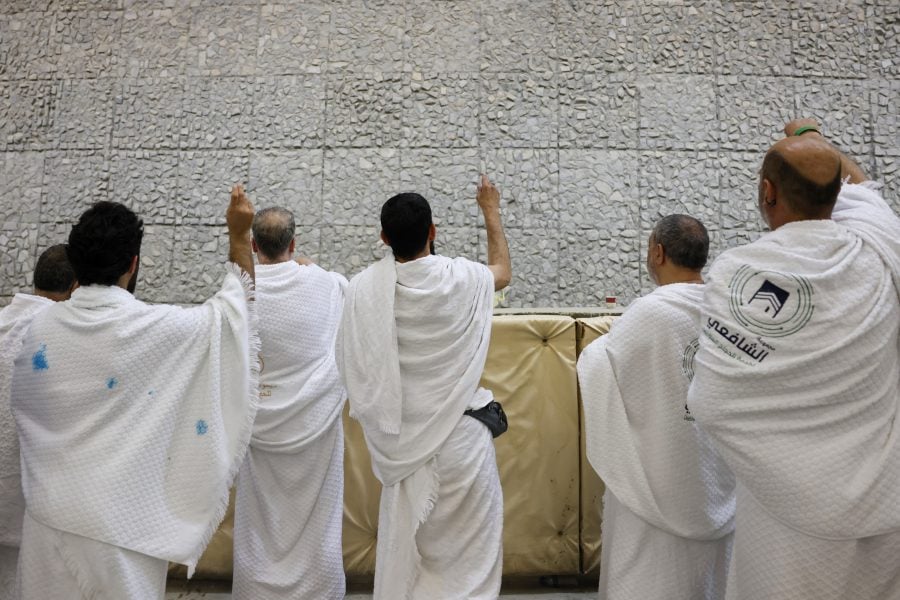
More than 1.7 million Muslim pilgrims gathered in Mina on Wednesday to perform the symbolic “stoning of the devil” ritual, one of the final and most physically demanding rites of the annual Hajj pilgrimage, as Saudi Arabia grappled with temperatures nearing 50 degrees Celsius amid heightened regional tensions.
From early morning, pilgrims moved through the vast tent city southeast of Mecca toward the Jamarat complex, where they threw pebbles at three concrete walls representing Satan. The ritual reenacts the Prophet Ibrahim’s rejection of the devil’s attempts to dissuade him from obeying God’s command to sacrifice his son Ismail.
Pilgrims had spent the previous night in Muzdalifah collecting pebbles after descending from Mount Arafat, where they gathered Tuesday for prayers and supplications in what is widely considered the spiritual peak of the pilgrimage.
Saudi Arabia races to avoid repeat of deadly heatwave
Saudi authorities entered this year’s Hajj under pressure to avoid a repeat of the deadly 2024 pilgrimage, when more than 1,300 pilgrims died during extreme heat conditions as temperatures climbed above 51C.
The National Center for Meteorology warned this week that temperatures in parts of the kingdom’s Eastern Province could reach between 47C and 50C as a regional heatwave persists ahead of Eid al Adha.
Saudi Arabia has expanded shaded areas, cooling stations, mist spraying systems and emergency medical deployments across key pilgrimage sites. Authorities said more than 250,000 personnel from dozens of government agencies were mobilized this year to manage crowds and reduce heat related risks.
Many pilgrims carried umbrellas, handheld fans and water bottles as temperatures in Mina and Mecca climbed above 45C during daylight hours.
Hajj unfolds against backdrop of regional conflict
This year’s pilgrimage has also unfolded under the shadow of conflict in the Middle East, particularly the fragile ceasefire between Iran, Israel and the United States reached earlier this spring after weeks of escalating military confrontation.
The Hajj, one of the five pillars of Islam, comes during Eid al Adha, the festival commemorating Ibrahim’s willingness to sacrifice his son before, according to Islamic tradition, divine intervention replaced the sacrifice with a ram.
After completing the stoning ritual, pilgrims return to Mecca for the farewell circumambulation of the Kaaba, marking the conclusion of the pilgrimage before many begin their journeys home.








add your comment
Terms of publication : Not to offend the writer, people, sacred things, or attack religions or the divine self, and refrain from racist incitement and insults.