
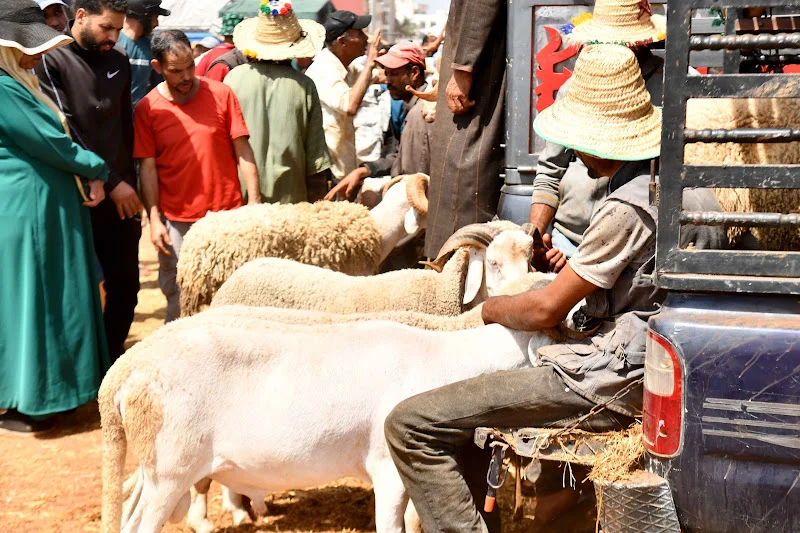
Reports of sacrificial sheep dying shortly after purchase have spread across Morocco in recent days, raising concerns among consumers ahead of Eid al-Adha.
Several Moroccans have shared videos on social media claiming that sheep bought from local markets died soon after being brought home.
Similar incidents have been reported in multiple regions, fueling concerns over the possible sale of sick animals despite high prices.
One widely shared video shows a man who bought a sheep for 4,300 dirhams ($430), only for it to die shortly afterward at the market before he could leave.
Another man said he had gifted a sheep to a needy family, but the animal died at their home the following day.
“We brought her a sheep. It was in good health and very lively,” he said.
Another video shows two dead sheep lying on the ground at a market in Sidi Moukhtar, in Chichaoua province, part of Morocco’s Marrakech-Safi region.
In the footage, a man says, “You buy it, and it will die once you take it home.”
What to check when buying a sacrificial sheep
Morocco’s National Office for Food Safety (ONSSA) has issued recommendations outlining what to check when purchasing a sacrificial animal for Eid.
In an awareness video, ONSSA urges buyers to ensure the sheep is active, alert and not easy to catch.
The animal should have clear, bright eyes with no redness and a clean nose without discharge.
It should not be coughing, and its abdomen should appear normal, with no unusual swelling. It should also show no signs of diarrhea.
Ali Chettour, president of the Moroccan Association for Consumer Protection and a member of the Moroccan Federation for Consumer Rights, said the sudden deaths could be linked to post-purchase handling, stress or high temperatures during transport, particularly over long distances.
He urged buyers to ensure animals are kept in proper conditions after purchase, in well-ventilated spaces away from direct sunlight, with regular access to water and feed, while avoiding overcrowding.
He also stressed the need to respect livestock transport regulations and monitor transport conditions to protect both animal welfare and consumer health, especially amid strong demand ahead of Eid al-Adha.
ONSSA also emphasized that, after confirming the animal is healthy and free of disease, it should be transported in conditions that minimize stress and ensure it arrives home safely.
Once home, the animal should be kept in a shaded, secure area, protected from drafts, and provided with proper food, rest and clean water.








add your comment
Terms of publication : Not to offend the writer, people, sacred things, or attack religions or the divine self, and refrain from racist incitement and insults.