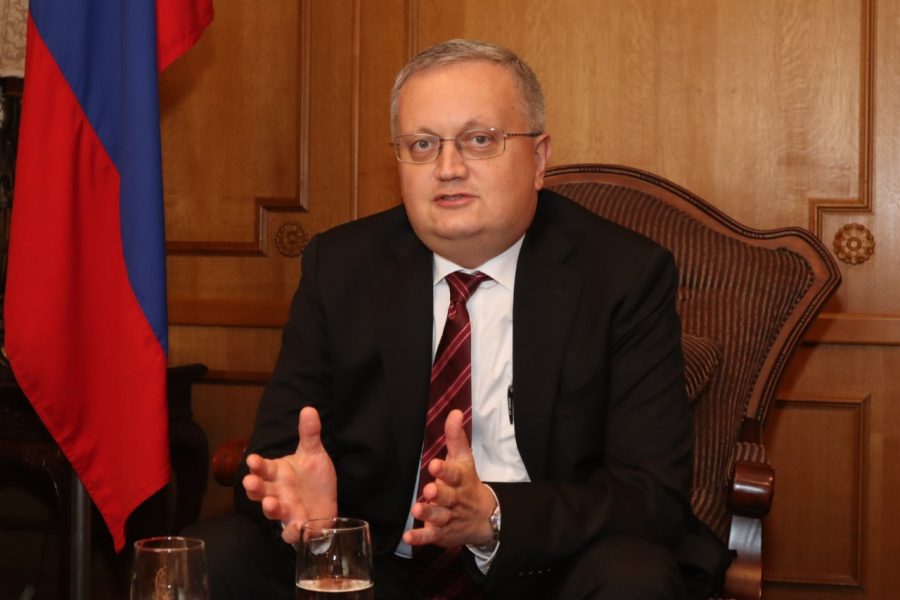
Russia’s position on the Moroccan Sahara issue has not changed despite its recent abstention from a United Nations Security Council vote, Russian Deputy Foreign Minister Georgy Borisenko said during a meeting with Arab journalists in Moscow.
Responding to a question from Hespress English about whether the abstention signaled a shift in policy, Borisenko said Russia remains committed to the U.N.-led process and to previously adopted Security Council resolutions on the conflict.
“I don’t see any changes in the Russian position,” Borisenko said. “Russia is sticking to U.N. resolutions adopted regarding the Moroccan Sahara situation.”
The senior diplomat said Moscow supports ongoing talks involving Morocco, the Polisario Front, Algeria, Mauritania and the United Nations, adding that Russia hopes the negotiations can eventually produce a peaceful and lasting settlement accepted by all parties.
“We are ready to support any settlement reached in these negotiations,” he said. “We are ready to accept anything that is acceptable to the participants.”
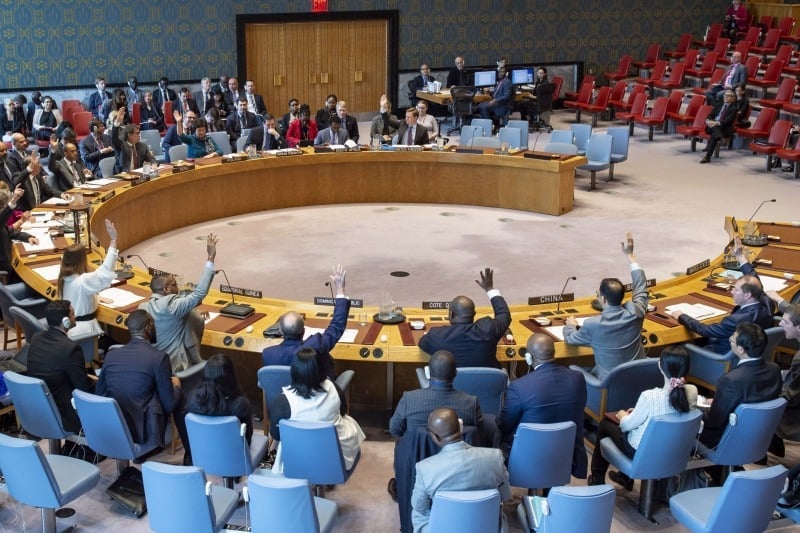
His comments came after Russia abstained from voting on the latest U.N. Security Council resolution renewing the mandate of MINURSO, the U.N. mission in the Moroccan Sahara.
The abstention sparked debate in Morocco, where some observers interpreted the move as a possible sign of changing Russian calculations on the issue.
Russia, however, stopped short of opposing the resolution and did not directly challenge Morocco during Security Council discussions.
Moscow has traditionally sought to maintain balanced ties with both Morocco and Algeria, two key regional actors with opposing positions on the dispute.
Unlike the United States and France, Russia has not officially endorsed Morocco’s autonomy plan as the sole framework for resolving the conflict.
Instead, Moscow continues to emphasize negotiations under U.N. supervision and what it describes as a “mutually acceptable” political solution.
During the discussion in Moscow, Borisenko described the Moroccan Sahara issue as a long-running conflict that should be resolved through diplomacy rather than escalation. He also welcomed recent talks involving Morocco, the Polisario Front, Algeria, Mauritania and the United Nations.
The latest U.N. resolution extending MINURSO’s mandate reiterated calls for a “realistic, pragmatic and lasting” political solution based on compromise.
Russia’s abstention allowed the resolution to pass while signaling that Moscow still has reservations about aspects of the current diplomatic process.



add your comment
Terms of publication : Not to offend the writer, people, sacred things, or attack religions or the divine self, and refrain from racist incitement and insults.