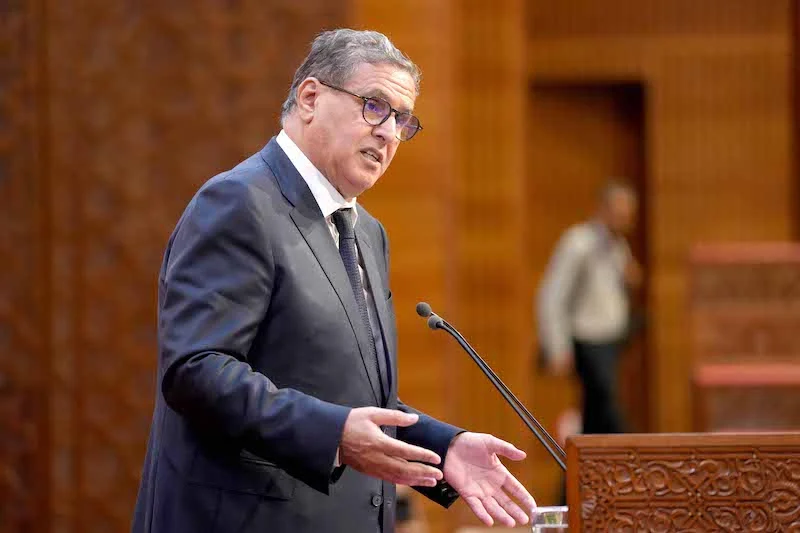
Morocco’s government has made progress on major reforms, but with limited impact on jobs, prices and daily life, says a report by Moroccan Observatory of Government Action.
The government led by Aziz Akhannouch came into office promising sweeping change. Its plan included creating 1 million jobs, expanding social protection, boosting the middle class, improving health and education, and reducing regional gaps.
Five years later, the report says some structural reforms moved forward, especially in social protection and public investment. But it adds that many Moroccans have yet to feel real improvements.
One of the biggest achievements cited is the expansion of health coverage. By 2025, more than 32 million people were covered by mandatory health insurance. Direct cash support programs also reached nearly 3.9 million households, offering monthly aid based on income and family size.
Public investment also increased sharply. Government spending on infrastructure and development projects rose from about MAD 230 billion before the term to nearly MAD 380 billion planned for 2026. Major projects include ports, railways, water systems and renewable energy.
Foreign investment showed strong growth as well, with record inflows in 2025. Officials say reforms to improve the business climate and simplify procedures helped attract investors.
Despite these gains, the report points out major gaps between promises and outcomes with unemployment remaining the biggest failure. Instead of creating jobs, the unemployment rate rose from 11.8% in 2021 to 13.3% in 2024. Youth unemployment exceeded 36%, and rural job losses worsened due to drought.
Rising prices also hit households hard. Inflation peaked above 10% in 2023, with food prices climbing over 20%. Although inflation slowed later, the report says the cost of living remains high, especially for the middle class.
Health and education reforms were launched, but their impact has been slow. Hospitals still face staff shortages and long wait times, while schools struggle with overcrowding and uneven quality.
The report points to ongoing concerns about corruption and market competition. Morocco ranked 99th globally in perceived corruption in 2025, and critics say some sectors still show signs of monopolies and unfair practices.
Beyond policy results, the report criticizes how the government operates. It says decision-making often focuses on technical data rather than public sentiment, leading to frustration among citizens. Communication has also been weak, with delays in addressing public concerns during crises.
Internal tensions within the ruling coalition have added to the problem, with disagreements sometimes playing out publicly.






add your comment
Terms of publication : Not to offend the writer, people, sacred things, or attack religions or the divine self, and refrain from racist incitement and insults.