
As Ramadan comes to a close, many households were anticipating a gradual, customary price drop.
Seasonal demand typically pushes costs higher during the holy month, but this year, traders say the outlook is shaped by a complex mix of global tensions, weather disruptions, and structural pressures.
Hespress EN spoke to representatives across key sectors to see where prices may be headed.
Fuel and transport costs
Houssine El Yamani, secretary general of the National Federation of Petroleum and Gas, said fuel price increases are not tied to Ramadan. “These rises are driven by global factors, particularly the Middle East conflict,” he said. Diesel currently costs about 11 MAD per liter internationally (1,345 USD per ton). After delivery, port and storage fees (1 MAD), taxes (~4 MAD) and distributor profits (~2 MAD), local prices could reach 18 MAD per liter.
El Yamani noted that government interventions, such as support for road transport operators, help companies but do little for everyday consumers. Diesel prices have already jumped 2 MAD per liter, increasing costs across the supply chain.
Potential government measures to protect consumers could include limiting fuel price liberalization, capping distributor profits, reducing taxes, and boosting energy independence.
Food, agriculture, and livestock
Mohamed Zemrani, a farmer and president of the Moroccan Association of Producers and Exporters of Products to Africa, said that while prices for fruits, vegetables, and meat usually drop after Ramadan, several factors are keeping them high this year.
Floods have damaged key crops like potatoes and onions. Fertilizers, pesticides, and labor costs have all risen sharply. Some products, such as yellow onions, are now imported from Spain, adding extra costs. Zemrani also noted that a small group of traders is holding back stock to sell at higher prices during Eid.
Livestock prices are similarly affected. Local lamb already costs 125–130 MAD per kilogram. Imports from Spain have been halted for months, and farmers are holding stock for Eid, keeping prices elevated.
Wholesale trends
Abderrezzak Chabbi, president of the Casablanca Wholesale Market Association, said post-Ramadan price patterns are usually predictable: demand drops, supply remains steady, and prices fall. “But this year is different,” he said.
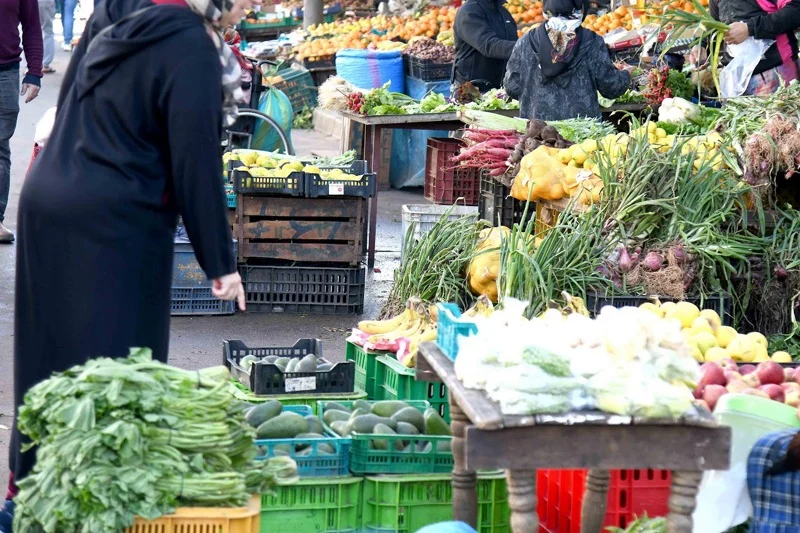
Some products, like tomatoes and peppers, have risen in price due to heavy exports, which drained local supply. Other items, such as dry onions, saw wholesale prices fall from around 12 MAD per kilogram to 6–6.5 MAD because local supply remained abundant.
Additional factors—worker absences after the holiday, price liberalization laws, and weather-related crop damage—have also contributed to fluctuations.
Consumer protection
Ali Chettour, president of the Moroccan Association for the Protection of Consumer Rights, said field data show prices rarely fall across the board after Ramadan. Any changes are usually modest and limited to seasonal items. “Rising global inflation, unpredictable weather, and high fuel costs are keeping prices high,” he said.
Chettour emphasized that consumers can also play a role by using resources wisely, avoiding waste, and reporting illegal practices. Protecting purchasing power requires cooperation among authorities, businesses, and shoppers alike.





add your comment
Terms of publication : Not to offend the writer, people, sacred things, or attack religions or the divine self, and refrain from racist incitement and insults.