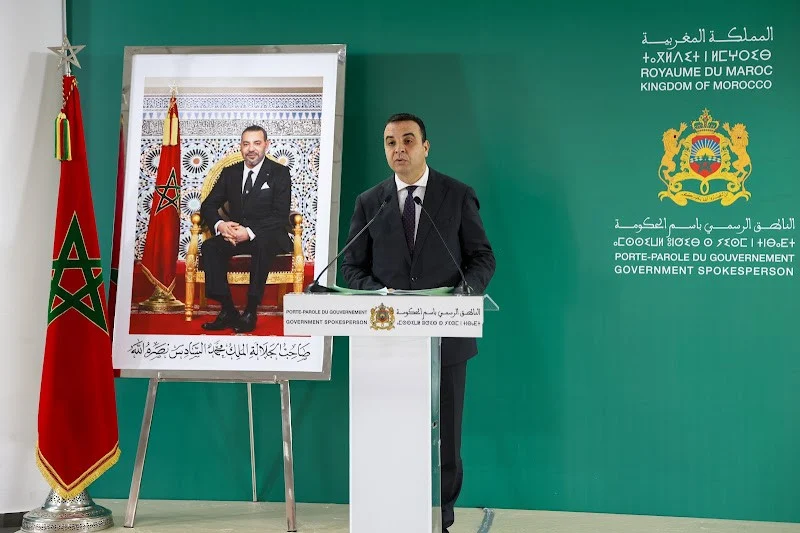
Morocco’s government said Thursday it is closely monitoring the economic repercussions of international tensions, particularly the war in the Middle East, but stressed that the national economy has so far shown strong resilience.
Government spokesperson Mustapha Baitas said during a weekly press briefing following a cabinet meeting that Prime Minister Aziz Akhannouch addressed the issue at the start of the meeting, outlining several factors supporting Morocco’s economic stability despite global uncertainty.
“The government has been closely following developments since the outbreak of the war in the Middle East and will continue to monitor the situation and its potential repercussions,” Baitas told reporters.
He said the government is prepared to adopt additional measures if necessary to protect economic gains and maintain growth momentum, institutional stability and effective governance in the face of international pressures.
Baitas attributed the country’s economic resilience largely to the implementation of royal directives aimed at strengthening the national economy and advancing Morocco’s social state policies.
Rainfall boosts agriculture
The government spokesperson also highlighted the positive impact of recent rainfall following several years of drought, saying the precipitation has improved reservoir levels and water availability for irrigation.
This development will allow major agricultural areas, including the Doukkala region, to resume normal production after previous disruptions, he said.
According to Baitas, the total area cultivated with cereals, legumes and forage crops has reached 4.5 million hectares, including 3.9 million hectares of autumn cereals, marking an increase of more than 48% compared with the previous agricultural season.
He added that sugar crops now cover 44,000 hectares, up 21%, despite early irrigation challenges and flooding that affected around 11,000 hectares.
Autumn vegetable crops reached 100,000 hectares, while winter vegetables covered 57,000 hectares, ensuring stable supply to the domestic market, he said.
Baitas also said current natural conditions, combined with government support measures, including barley distribution and direct aid to farmers, are expected to help rebuild Morocco’s national livestock herd and support employment in rural areas.
The government expects agricultural value added to return to levels seen during the Green Morocco Plan, with final figures expected to be announced during the upcoming International Agriculture Show in Meknes.
Moody’s rating and economic indicators
Baitas also commented on the latest rating issued by Moody’s, describing it as particularly significant because it represents the first such evaluation of Morocco’s economic institutions by the agency in nearly three decades.
He said the rating reinforces confidence in the government’s economic policies and strengthens international trust in Morocco’s economic stability.
Among key indicators, Baitas said the government has succeeded in controlling the budget deficit, which stood at 3.5% last year and is expected to remain at the same level this year before declining to 3% next year.
Public debt has also fallen to 67.2% of GDP, while foreign direct investment reached a record 56 billion Moroccan dirhams for the first time, he said.
Morocco also recorded economic growth of 4.8%, supported by strong performance in manufacturing, exports, services and a major surge in tourism.
Inflation, meanwhile, has dropped sharply from 6.6% in previous years to about 0.8%, Baitas said.
He added that these results reflect the implementation of royal directives and the government’s commitment to social reforms, including health and education sector reforms, wage increases through social dialogue, and efforts to ensure sustainable public finances and sound governance.



add your comment
Terms of publication : Not to offend the writer, people, sacred things, or attack religions or the divine self, and refrain from racist incitement and insults.