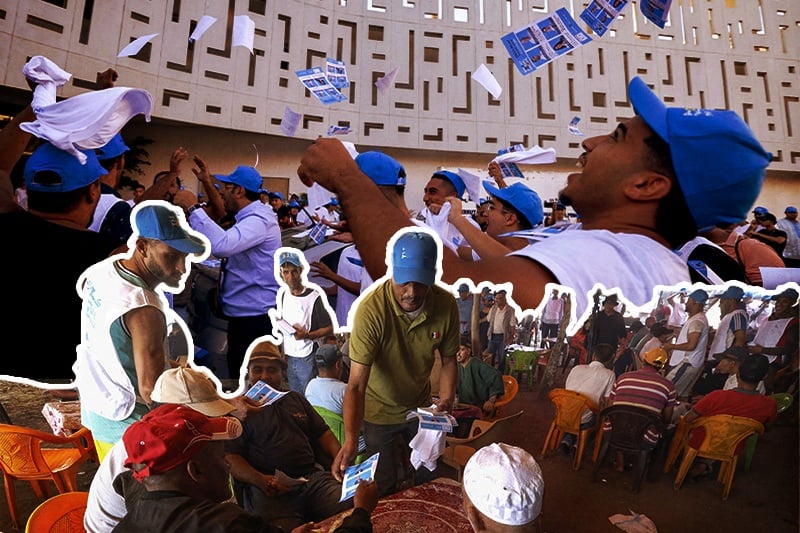
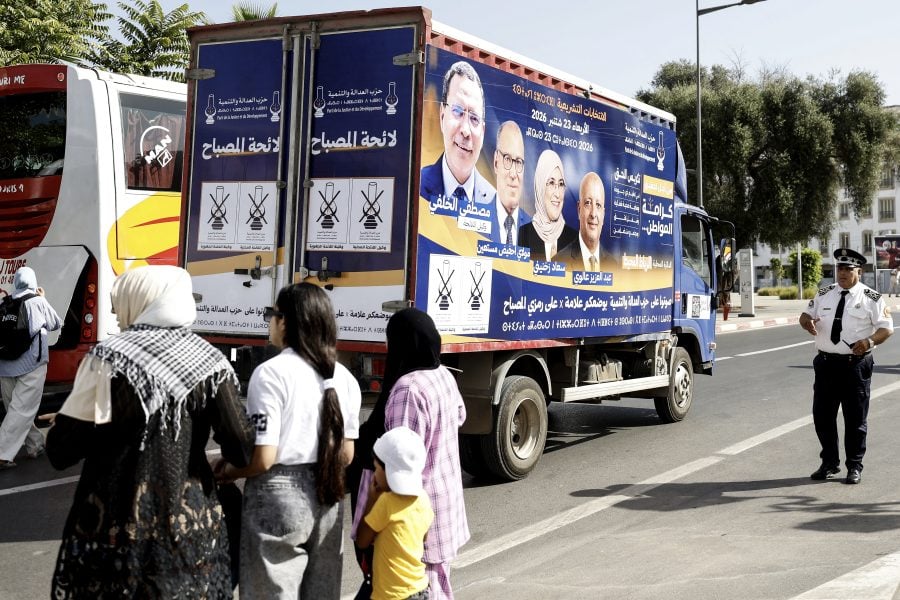
First come the leaflets. Under your door, into your hand at the cafe, then scattered across the pavement by the next morning. After that come the cars and motorbikes in party colors, a candidate’s name blasted through a loudspeaker as the convoy moves through the nation.
You probably don’t think any of it changes minds on voting. Badreddine El-Kacimi, a researcher at Ibn Tofail University in Kenitra, spent a year inside campaigns across northern Morocco and found little reason to disagree. But he wanted to understand what campaigns were doing if persuasion was not the whole point.
One answer was that they gave people something immediate to take part in.
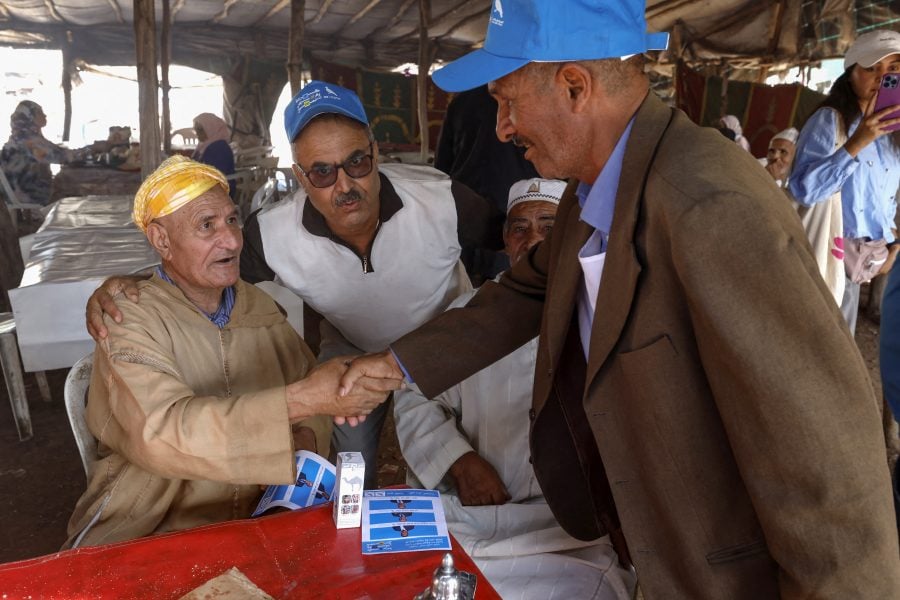
“The poorest take advantage of the feasts, especially during the weekly markets, eating until they are full. Plates of minced meat are served generously with glasses of tea and pieces of bread. At cafés, too, drinks and cigarettes are paid for by the candidate, and consumption becomes excessive. The fact that everything is free produces a kind of jubilation. Poor or rich, nobody really cares about the candidate; he is simply a cow to be milked,” El-Kacimi wrote in the 2023 study covering the last elections.
“Some, are paid by the candidate during the campaign,” he observed, “and it is they who make up his procession, carry him on their shoulders and surround him like bodyguards.”
That paid crowd is part of a larger, short-lived economy that appears with every election. Campaigns hire young people to hand out leaflets, fill processions, drive cars, set up events and move messages through neighborhoods, often for 100 to 300 dirhams a day.

Money moves, food moves, transport work appears, cafés fill, favors are dispensed, and people who may have little ideological attachment to the candidate still have a reason to participate in the spectacle.
El-Kacimi’s description is blunt: “Nobody really cares about the candidate; he is just a cow to milk.”
Some voters, he found, maintained ties with several elected officials at once, hoping to draw on more than one source of assistance rather than attaching themselves permanently to a single party or candidate. And if loyalty is loose and transactional, a candidate has to keep showing that he is relevant.
The convoy is one way of making that visible: how many people he can gather, how many cars he can put on the road, how many bodies he can keep moving. In the weekly souks El-Kacimi studied, parties arrived in convoys precisely to demonstrate their strength, then fed supporters and allies afterward.
It also fills a gap that has nothing to do with strategy and everything to do with what’s missing. Morocco’s major parties don’t differ much on substance, and most campaign inside the same broad lane, differing in emphasis more than direction.
And when there’s no real argument to win, competition moves somewhere else: onto whose name carries more local weight, whose network runs deeper, and who can put on the bigger show.
It’s also just how you reach anyone at all. In the communes the 2023 study covered, more than a third of the population can’t read. A printed program persuades no one who can’t read it. A drum, a feast, and a face people already recognize reach everyone in the market at once.

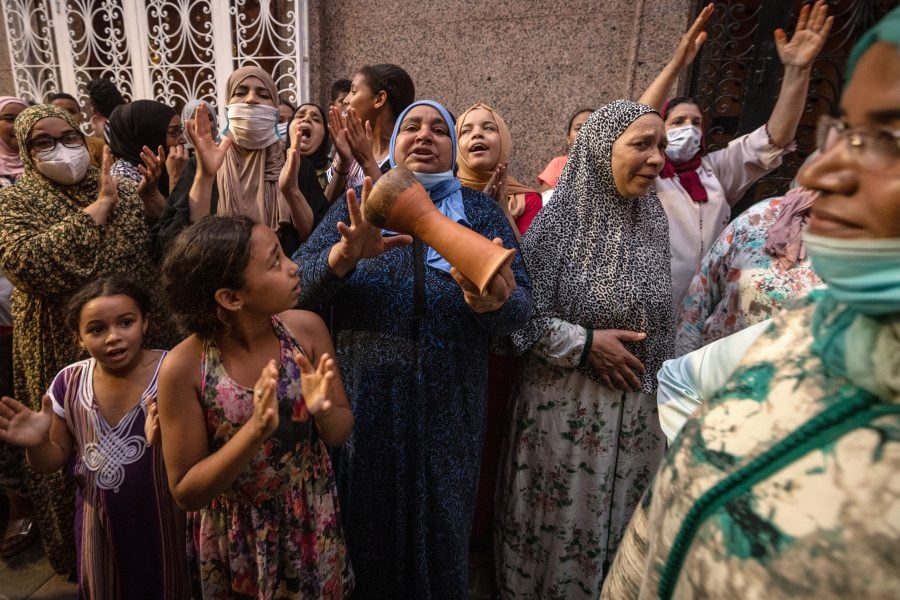
And the women who come out into the street with hand drums when a convoy passes are, for the rest of the year, mostly confined to their homes. The researcher describes this as real relief, and real contact with other women, not as performance for the candidate’s benefit.
But while the crowd may be there for its own reasons, the parties are also reading it politically, as a display of strength, and a way to size up the competition. Researchers studying campaigns describe rallies engineered less for the room than for the footage, creating a crowd that keeps working long after it’s gone home, through news coverage and social feeds.
“This type of festive demonstration is a form of symbolic violence; by celebrating their candidates, certain messages are transmitted to the other competitors,” El-Kacimi said.
The competition itself started way before. In the communes El-Kacimi studied, local party organizations often looked for candidates who already had the means to finance a campaign or a network capable of mobilizing people, sometimes valuing those assets more than years of party membership or ideological commitment.
He breaks the candidate’s advantage into different kinds of capital: money, personal relationships, local reputation, party organization and political communication. On the ground, he found, they did not carry equal weight. Money sat at the top of the hierarchy; political discourse was near the bottom.
That favors a politics built on relationships already in place. El-Kacimi’s system works best among relatives, neighbors, local intermediaries, favors owed and returned. Younger Moroccans are often less tied into those local networks.
So the people easiest for this machine to mobilize are often older, often rural, and already inside the networks it depends on.
Which leaves us with the people who are not there. In the next part, we look at how parties are trying to reach them online through targeted ads, voter data and social media, and how the campaign looks like on the feed.



add your comment
Terms of publication : Not to offend the writer, people, sacred things, or attack religions or the divine self, and refrain from racist incitement and insults.