
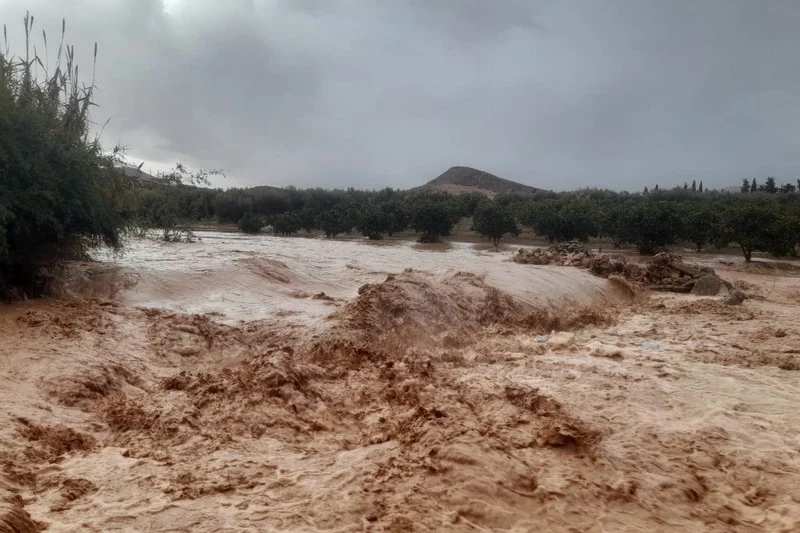
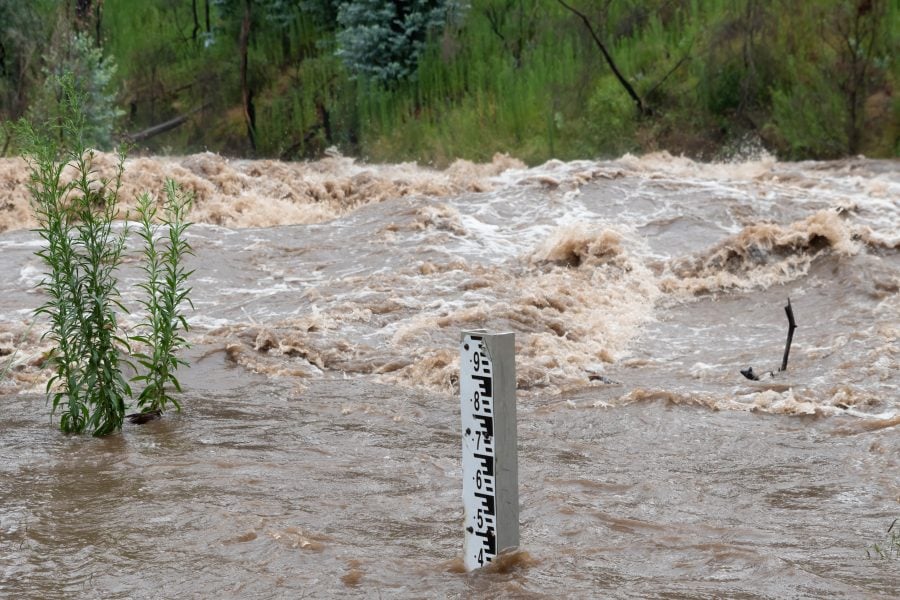
Specialized committees made up of representatives from the Ministry of Agriculture, the Regional Office for Agricultural Development of Gharb and local authorities are continuing to assess significant agricultural losses caused by flooding from the Sebou River in the provinces of Kenitra, Sidi Kacem and Sidi Slimane.
The assessment focuses on identifying the size of damaged farms, the types of crops affected and whether the land is irrigated or rain-fed. The process aims to prepare support for affected farmers through the distribution of subsidized seeds and fertilizers under a program designed to salvage the current agricultural season with spring crops.
Agriculture Minister Ahmed El Bouari said the agricultural component of the government’s flood response plan for northern and western regions is based on three main pillars.
The first pillar involves supporting livestock breeders and preserving herds by continuing the distribution of animal feed to affected farmers and strengthening veterinary monitoring.
The second pillar centers on launching a program to recover the current agricultural season by promoting spring crops through the distribution of subsidized seeds and fertilizers.
The third pillar focuses on rehabilitating hydro-agricultural infrastructure to enable farmers to resume irrigation in the coming weeks, as well as repairing and reopening damaged rural and farm roads to facilitate access to affected areas.
In the commune of Houafate in Sidi Kacem province, local civil society actor Mohamed El Khaoua said specialized committees began surveying farmers’ losses on Friday.
He said the assessments aim to accurately quantify damage to enable compensation through spring crops such as sunflower and legumes, noting that committees are primarily examining crop types and cultivated areas.
El Khaoua added that there has been no discussion of direct financial compensation. He also pointed to challenges that may delay spring planting, saying flooded lands require time to dry and must be rehabilitated by landowners before becoming suitable for cultivation again.
Damage assessments are also ongoing in the commune of Ouled Hssine in Sidi Slimane province, one of the areas hardest hit by the flooding, according to local civil society actor Abdelrahim Afif.
Afif said the evaluation process focuses on identifying crop types and determining whether farmland is irrigated or rain-fed to help shape appropriate support measures, particularly regarding seeds and fertilizers. He said authorities are awaiting the completion of field assessments before distributing spring crop support.
He also highlighted clear losses to orange and olive trees, particularly those planted within the past one to two years. While these damages are being recorded, he said the method of compensation remains unclear, noting that fruit trees cannot simply be replaced with spring crops.
Afif called for a comprehensive and objective assessment of all agricultural losses in the Gharb region following the recent floods, followed by proportional compensation, stressing the urgency as the spring planting season begins in March.







add your comment
Terms of publication : Not to offend the writer, people, sacred things, or attack religions or the divine self, and refrain from racist incitement and insults.