
Business federations in Spain and Portugal said the 2030 FIFA World Cup, co-hosted by Morocco, Spain and Portugal, could redraw the economic map of the Mediterranean by transforming traditional sports rivalry into a cross-continental commercial alliance.
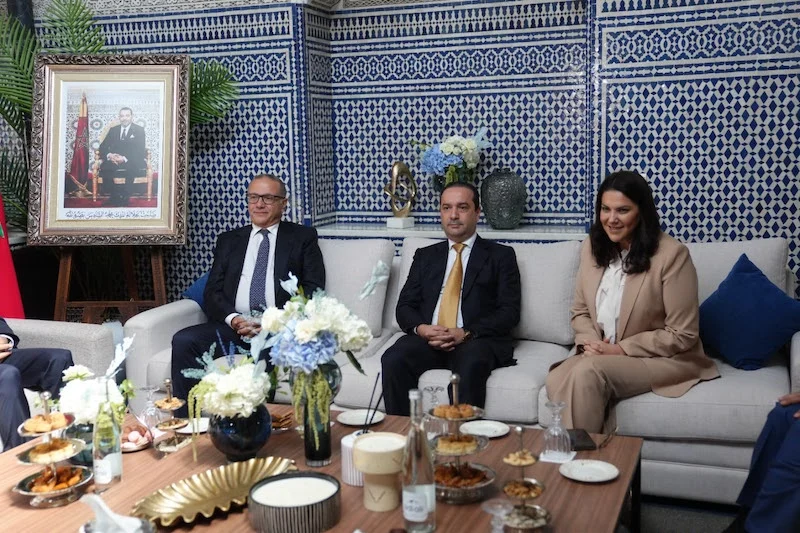
The comments were made Tuesday at a Moroccan-Spanish-Portuguese business forum on the 2030 World Cup held in the Moroccan city of Salé. The event was organized by Morocco’s General Confederation of Enterprises (CGEM) in partnership with Spain’s CEOE and Portugal’s CIP, with the aim of mobilizing the private sector and identifying investment and technical partnerships linked to the tournament.
Antonio Garamendi, president of Spain’s CEOE, described the 2030 World Cup as a “360-degree strategic project” that goes beyond sport to become a platform for joint investment and long-term economic growth. He said the tournament, which will bring together two continents for the first time, offers a unique model of institutional cooperation with lasting economic and social returns.
Garamendi said initial estimates suggest the tournament will generate billions of euros for each host country, adding that its real value lies in attracting investment to key sectors such as infrastructure, transport, tourism and innovation through public-private partnerships. He said stadiums and related infrastructure should be designed as multi-use facilities operating year-round, rather than as single-purpose sports venues.
He pointed to Morocco’s recent investments in sports infrastructure, including the Hassan II Grand Stadium project in Casablanca, as creating opportunities for joint ventures in engineering, construction and renewable energy.
Garamendi also stressed the importance of integrating tourism and transport value chains among the three countries, noting that the presence of major hotel groups and airlines operating across all three markets would reduce execution risks and improve service quality. He called for a focus on higher-value tourism and said innovation, smart-stadium technologies and sustainability standards would be critical to the tournament’s long-term financial viability.

Portugal’s CIP president, Armindo Monteiro, said the 2030 World Cup represents a strategic bridge between Europe and Africa, turning geographic proximity and historical ties into concrete economic opportunities. His remarks were delivered by Nuno Gabriel Cabral, chargé d’affaires at the Portuguese Embassy in Morocco.
Monteiro said economic ties between Portugal and Morocco are strengthening, noting that Morocco has become Portugal’s 10th largest export destination globally. He said preparations for the tournament would require significant investment and open the door to joint projects in tourism, hospitality, infrastructure and logistics.
He added that the event could accelerate the internationalization of companies from the three countries and help integrate them into global value chains. Portugal, he said, offers a stable gateway to the European market, while Morocco and Spain provide complementary regional advantages.
Monteiro highlighted innovation and digital technologies as essential to the success of the tournament and said cooperation on these projects sends a strong signal in favor of trade openness, multilateralism and long-term job creation.
Both business leaders said their organizations were committed to working closely with Moroccan and Spanish partners to ensure that the 2030 World Cup leaves a shared economic legacy on both sides of the Mediterranean.





add your comment
Terms of publication : Not to offend the writer, people, sacred things, or attack religions or the divine self, and refrain from racist incitement and insults.