
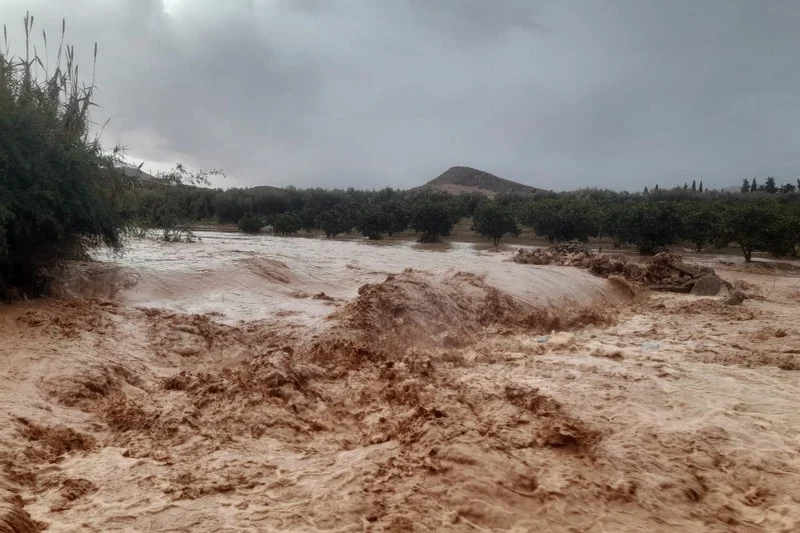
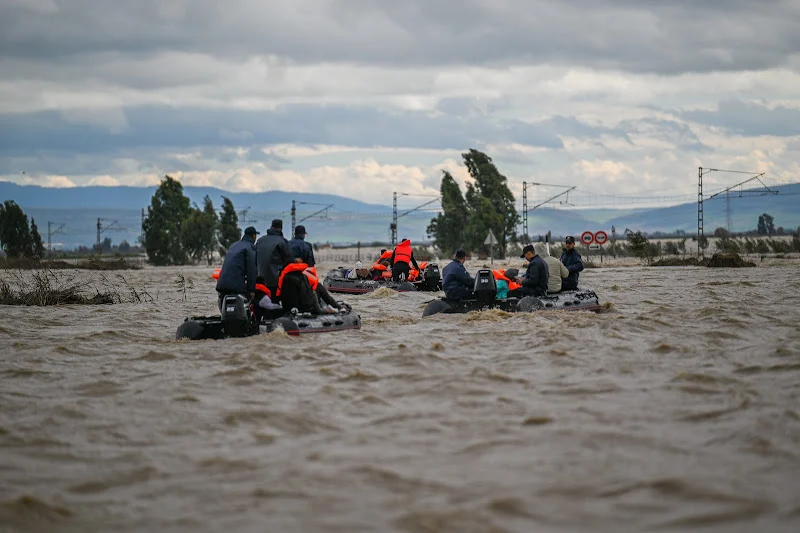
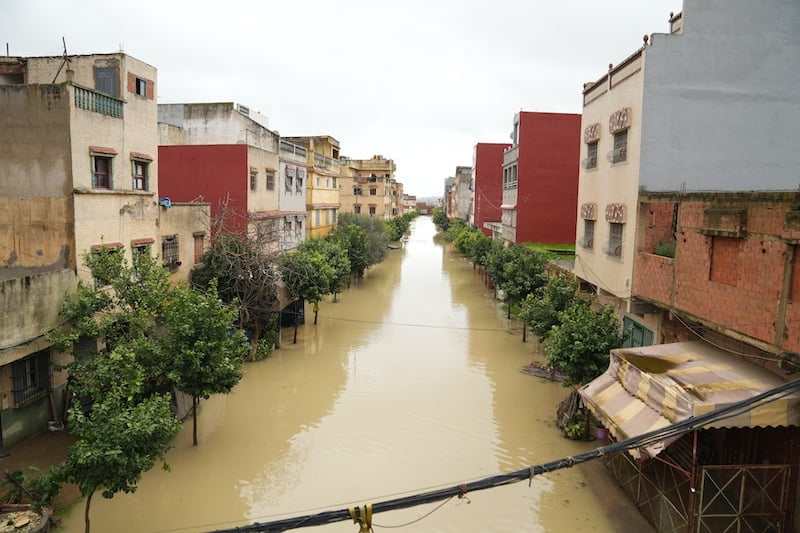
Authorities in the northern Moroccan city of Ksar el-Kebir intensified emergency efforts Thursday to avert a potential humanitarian disaster as flooding and fast-moving runoff linked to water releases from the nearby Oued El Makhazine dam continued to threaten residential areas.
Local and national authorities have been racing against time to prepare temporary shelters for residents of flood-prone neighborhoods, following instructions issued by King Mohammed VI, reflecting the seriousness of the situation facing the city.
Mohamed Simo, president of the Ksar el-Kebir municipal council, said the ongoing operations were being carried out under high-level royal directives. He said the instructions included providing tents to shelter residents at risk, ensuring food supplies for affected families and urging people in threatened areas to evacuate their homes as a precaution.
Large-scale mobilization has been underway across the city to prepare public and private spaces to receive displaced residents, amid growing concerns that water levels could rise further in several neighborhoods. The heightened alert comes as meteorological forecasts warn of additional heavy rainfall in Chefchaouen and Ouazzane, the two provinces that feed significant inflows into the Oued El Makhazine dam.
According to local sources, the dam received roughly 100 million cubic meters of water on Wednesday alone, further complicating the situation as it has been operating at full capacity for several days. Authorities have been forced to manage controlled releases to relieve pressure, increasing flood risks downstream.
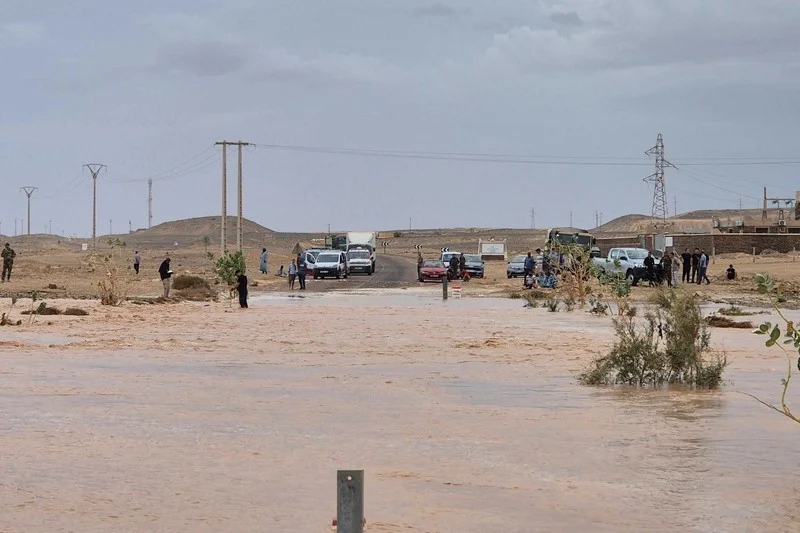
Fear and uncertainty have spread among Ksar el-Kebir residents, particularly after authorities closed several access roads and entry points to the city as a safety measure.
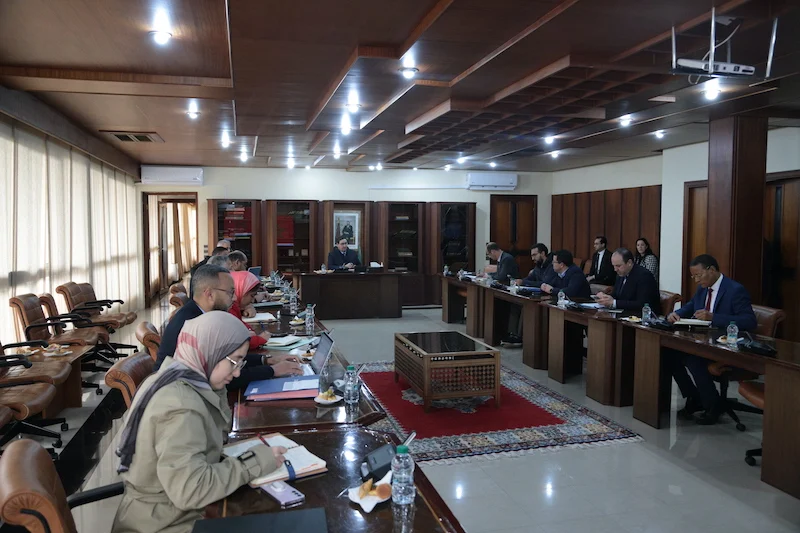
Against this backdrop, Transport and Logistics Minister Abdelssamad Kayouh chaired an emergency meeting Thursday to review measures taken by his ministry and affiliated agencies to manage transport and logistics under the exceptional weather conditions affecting several regions, with particular focus on Ksar el-Kebir.
The meeting brought together senior officials from the transport ministry, heads of public agencies overseeing rail, road safety and logistics, including the national rail operator ONCF, as well as representatives from the Ministry of Equipment and Water. Discussions focused on the condition of water infrastructure and the coordination of responses based on evolving risks.
Kayouh stressed the need to secure all modes of transport and logistics services in safe conditions for citizens. He called for heightened readiness to support any evacuation decisions taken by local authorities, including ensuring the availability of sufficient buses to relocate residents from flooded or at-risk neighborhoods if required.
He also urged transport agencies to account for the ongoing nature of the threat, particularly as dam inflows are expected to increase due to further heavy rainfall in the coming days.
Officials presented updates on preventive and planned measures aimed at maintaining transport safety and ensuring full coordination with emergency authorities.
Bahiya Boustta, director of road transport at the ministry, said all regional and central services had been instructed to remain fully mobilized and coordinate closely with local authorities, including deploying buses for evacuation operations and closely monitoring road transport to ensure public safety.
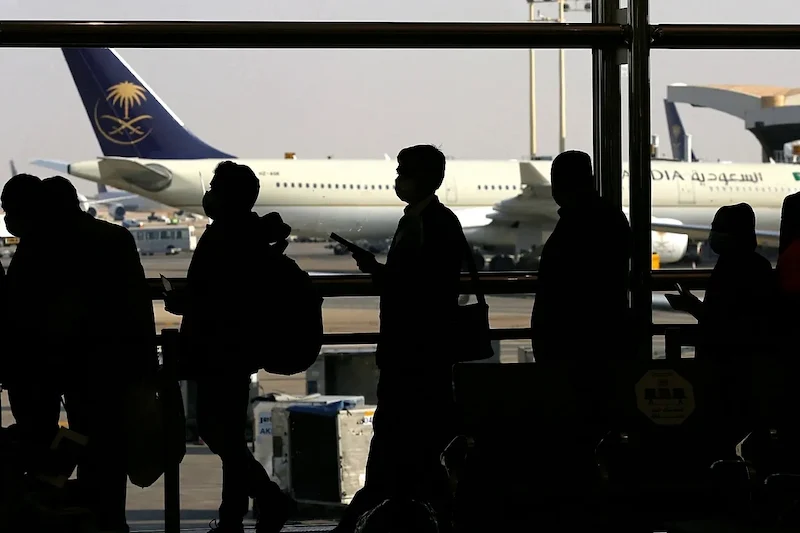
In the aviation sector, Tarek Talbi, director general of civil aviation, said flooding affected Tetouan’s Sania Ramel Airport, submerging the runway and surrounding areas. The airport has been closed to air traffic until midnight on Jan. 31, with all flights diverted to Tangier’s airport.
Talbi said drainage operations were underway and a task force had been established to assess both short- and long-term solutions to prevent similar disruptions in the future.
Maritime transport has also been impacted by recent weather conditions. Youssef El Hamidi, head of maritime transport at the ministry, said poor weather caused congestion at ports and delays in ferry services.
He said the ministry activated a monitoring unit to track maritime traffic and encouraged shipping companies to increase capacity during favorable weather windows. Vessels transiting the Strait of Gibraltar are being closely monitored from Tangier to ensure compliance with navigation rules and safety standards, particularly ships carrying hazardous materials.





add your comment
Terms of publication : Not to offend the writer, people, sacred things, or attack religions or the divine self, and refrain from racist incitement and insults.