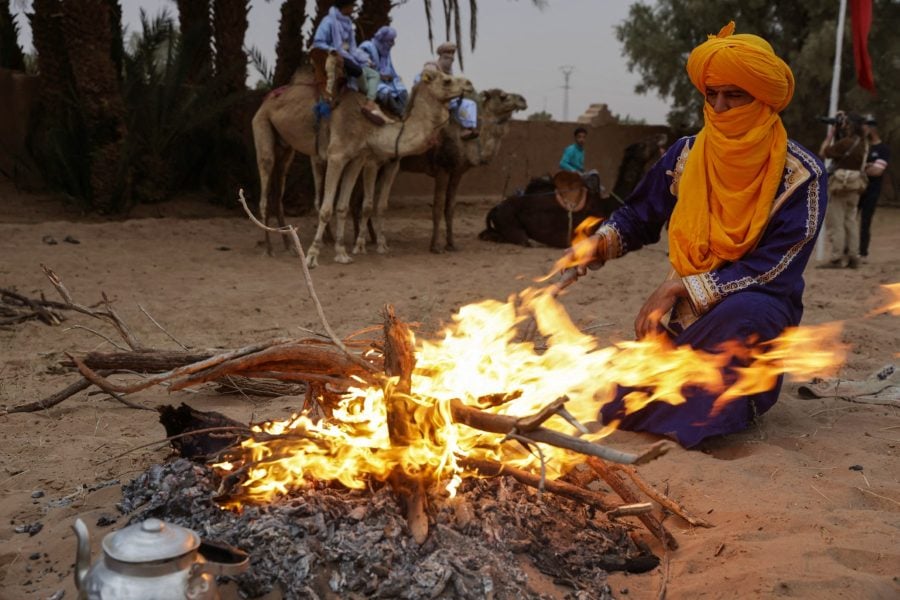
Prolonged drought in Morocco’s southeast has disrupted education for nomadic girls in Tinghir, deepening long-standing gender inequalities and forcing many to delay or abandon schooling, according to a new academic study.
The research, published in the International Journal of Interdisciplinary Gender Studies, examines the impact of drought on nomadic women and girls in the Draa-Tafilalet region. It found that environmental hardship has intensified existing social and economic pressures, particularly affecting girls’ access to education.
The paper, titled “Surviving Drought: Nomadic Women and Girls in Southeast Morocco,” was authored by Assistant Professor Fatima Ezzahra Oubni and is based on interviews with 17 nomadic women and girls in Tinghir province. It explores how prolonged drought has reshaped daily responsibilities, coping strategies and household resilience.
The study found that rising labor demands and financial strain linked to drought have pushed many girls out of formal education. Participants said girls increasingly assume expanded domestic and pastoral roles to support their families.
According to the research, prolonged drought has transformed household labor patterns, increased livestock-related debt, heightened emotional stress and reshaped gender expectations, including decisions around marriage.
In households where education access was possible, families often prioritized boys’ schooling, while girls were more likely to take on essential tasks such as collecting water and firewood, preparing meals and caring for livestock.
The findings indicate that families did not view the withdrawal of girls from school as a deliberate choice, but rather as a necessary response to environmental hardship and limited resources.
Livestock survival was closely linked to household survival, further increasing women’s responsibilities. At the same time, many men migrated to urban areas in search of alternative income, leaving women and girls to manage households and herds.
The study also highlighted the drought’s impact on marriage patterns among young women. Economic insecurity, male migration and expanding caregiving duties have led some women to delay or reject marriage in order to support their families, the research found.








add your comment
Terms of publication : Not to offend the writer, people, sacred things, or attack religions or the divine self, and refrain from racist incitement and insults.