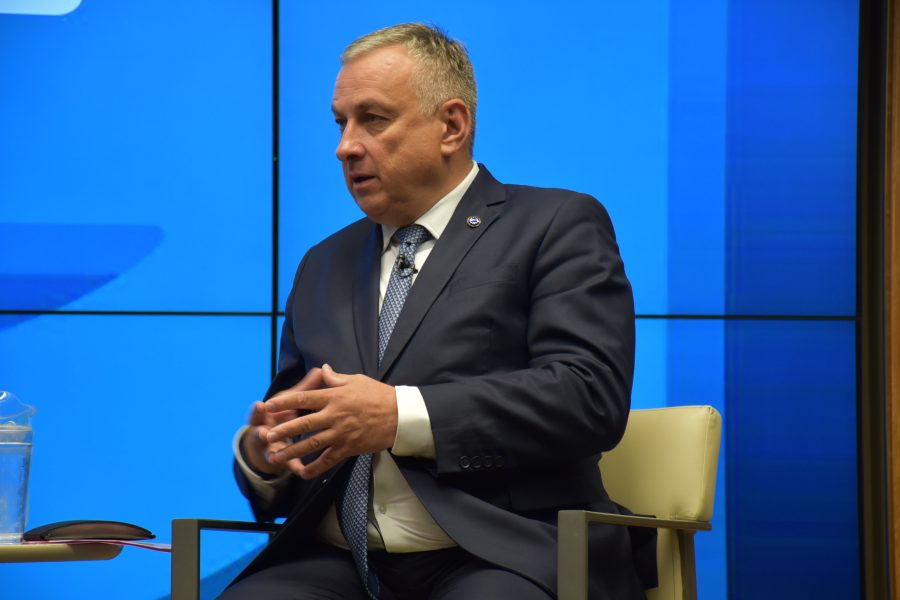
Morocco stands as one of the European Union’s most significant partners on the African continent, EU Commissioner for Partnerships Jozef Síkela told Hespress EN, noting that nearly half of foreign direct investment in Morocco originates from Europe.
In an interview, Síkela said this underscores the depth of the economic relationship, adding that Morocco’s alignment with European priorities, especially in the fight against climate change, positions the country as a like-minded ally.
The Commissioner highlighted Morocco’s strong reputation for an investment-friendly environment, saying the country ranks highly for investment friendliness.
“Morocco is currently one of the most important partners of the European Union,” he said, emphasizing that Morocco is ranked second only to a select few countries. Yet he stressed that the potential for future cooperation remains substantial.
Síkela said the most promising area lies in joint partnerships across Africa, noting that Morocco is not only attractive for foreign investment but is also increasingly active in investing abroad. In this sense, he said, Morocco can act as a gateway for European companies seeking opportunities in third countries, creating mutual benefits across borders.
He identified clean industrialization, electrification, digital connectivity and transport infrastructure as major areas for future collaboration. Síkela cited the Rabat tramway line as a successful example of this partnership, saying it connects the city and serves as a showcase of shared investment and know-how.
“Both parties are sharing basically the investments, the know-how to the benefit of people on both continents,” he said, describing the approach as a partnership of equals. He rejected the idea of zero-sum competition and emphasized mutual growth.
Morocco’s development and investment landscape is seen as a model for Africa, Síkela said, highlighting Morocco’s mature economy and capacity to partner effectively with European companies, particularly in infrastructure and connectivity.
He said Morocco’s success goes beyond standard investment schemes and reflects a deeper, strategic collaboration.
He pointed again to the Rabat tramway as a prime example, noting that up to 170,000 people use the line daily for commuting and schooling.
He described this as evidence of how European standards and investments can improve daily life while fostering cooperation across continents.
Síkela emphasized that Morocco’s capacity for large-scale projects demonstrates its readiness for even greater regional leadership. He said the country’s efforts in clean energy and electrification are crucial, as Africa will require more electricity for industrial production and desalination.
Digitalization also plays a central role, he said, enabling access to data for education, training and investment. Connectivity to regional and global markets remains a top priority, he added, framing Morocco as a bridge between Europe and Africa and a vital partner in regional growth.







add your comment
Terms of publication : Not to offend the writer, people, sacred things, or attack religions or the divine self, and refrain from racist incitement and insults.