
Deep social and regional gaps in early childhood education are creating unequal learning paths from the very start, according to a new joint report by the Higher Council for Education and UNICEF.
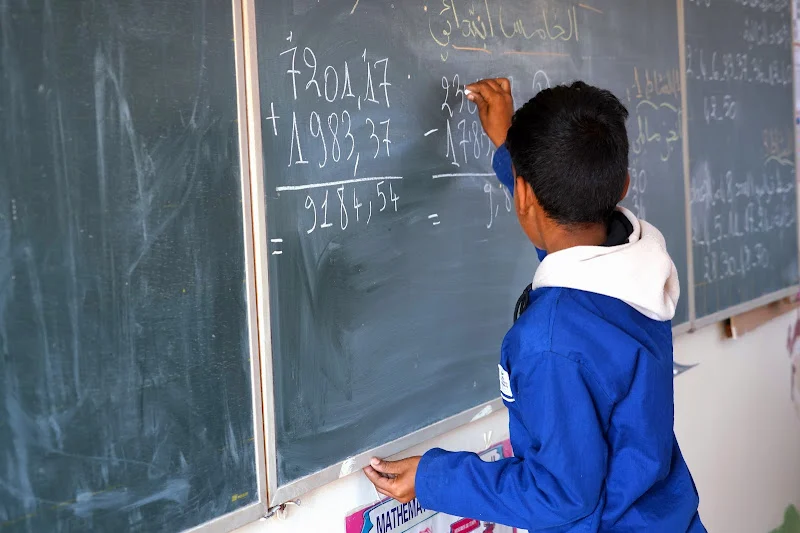
While Morocco has made real progress in expanding preschool access, the quality of learning children receive depends heavily on family income, location, and the type of school they attend.
Nationally, children in early education scored an average of 62 out of 100, a sign that most are only partially mastering basic skills.
The report says that the challenge is no longer just about getting children into classrooms, but about what happens inside them.
Children living in cities are clearly ahead. Urban preschoolers scored an average of 66 points, compared to 58 points for children in rural areas.
More than eight in ten city children reached the average benchmark, while rural children lagged far behind.
Geographic isolation, scattered housing, and limited infrastructure continue to affect learning conditions in the countryside, even as enrollment rises.
Social background adds another layer of inequality. Private preschools recorded the strongest results, with an average score of 71 points. Public preschools ranked last at 57 points, despite serving a large share of children.
Families with higher incomes increasingly turn to private education, leaving public and partnership-based preschools to carry the weight of social inequality.
Around 70% of children in early education come from households earning less than 5,000 dirhams per month.
Children from wealthier families scored about 12 points higher than those from low-income households.
Reading to children at home remains uncommon and becomes even rarer as household income drops, widening early literacy gaps.
When skills are broken down, children perform best in social and emotional development and early math.
Executive functions come next, while early reading and writing skills score the lowest nationwide, especially among rural children and those in public preschools.
Learning environments vary widely across regions. Differences in classroom organization, teaching materials, teaching practices, and inclusion of children with disabilities mean that preschool experiences are far from equal across the country.
Despite these gaps, the report notes major growth in the sector. Preschool enrollment for children aged four to five jumped from 50% to over 70% in a decade.
Public preschool units expanded rapidly, informal structures declined sharply, and total institutions reached more than 32,000 by 2025. Government funding nearly tripled during this period.





add your comment
Terms of publication : Not to offend the writer, people, sacred things, or attack religions or the divine self, and refrain from racist incitement and insults.