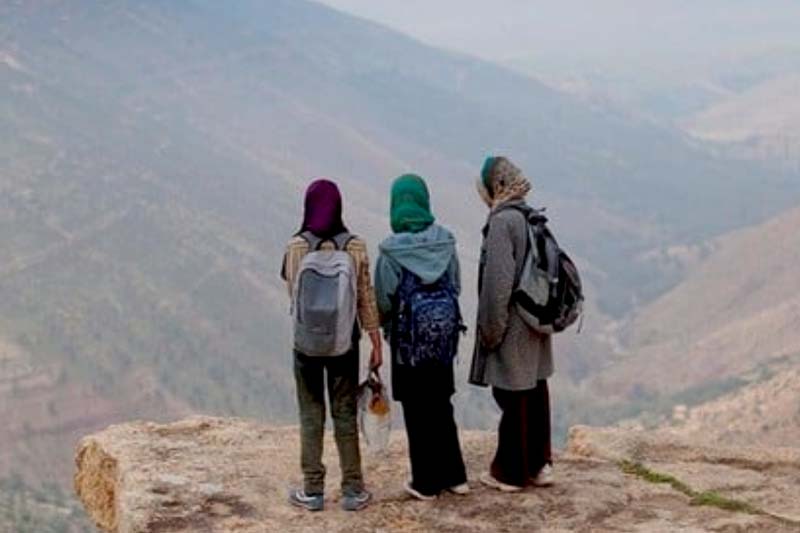
Educational inequality among rural Moroccans remains at levels recorded in cities three decades ago, despite substantial improvements in access to schooling, according to a new report by the Higher Council for Education, Training and Scientific Research.
The council’s Territorial Atlas of Educational Inequalities, based on Morocco’s 2024 census, found that the rural education Gini index stood at 0.59 in 2024, almost identical to the 0.58 recorded in urban areas in 1994.
The comparison indicates a gap of approximately 30 years in the reduction of educational inequality between rural and urban populations aged 15 and older.
Nationally, however, educational inequality has declined steadily. Morocco’s education Gini index fell from 0.63 in 2004 to 0.55 in 2014 and 0.47 in 2024.
The index measures how unevenly educational attainment is distributed across a population, ranging from zero for complete equality to one for maximum inequality.
In rural areas, it declined from 0.92 in 1982 to 0.59 in 2024, reflecting significant progress over four decades, although the gap with cities remains substantial.
For rural residents aged 15 to 19, the index stood at 0.16 in 2024, close to the 0.17 recorded among urban residents of the same age group in 2014.
The council said this reduced the rural-urban historical gap from approximately three decades among adults to around one decade among teenagers.
Beni Mellal-Khenifra recorded the country’s highest educational inequality index at 0.52, followed by Marrakech-Safi at 0.51.
Marrakech-Safi nevertheless registered the largest improvement between 2014 and 2024, with its index falling from 0.58 to 0.51.
The southern provinces recorded the lowest disparities, with Laayoune-Sakia El Hamra at 0.37 and Dakhla-Oued Eddahab at 0.38.
Casablanca-Settat and Rabat-Salé-Kénitra also performed better than the national average, recording indices of 0.41 and 0.43, respectively.
Tangier-Tetouan-Al Hoceima, the Oriental, Fez-Meknes, Drâa-Tafilalet, Souss-Massa and Guelmim-Oued Noun fell into the intermediate category, with indices below 0.50.
The findings show that younger generations are experiencing a more equal distribution of education than their parents and grandparents, while older age groups continue to account for much of Morocco’s persistent territorial inequality.




add your comment
Terms of publication : Not to offend the writer, people, sacred things, or attack religions or the divine self, and refrain from racist incitement and insults.