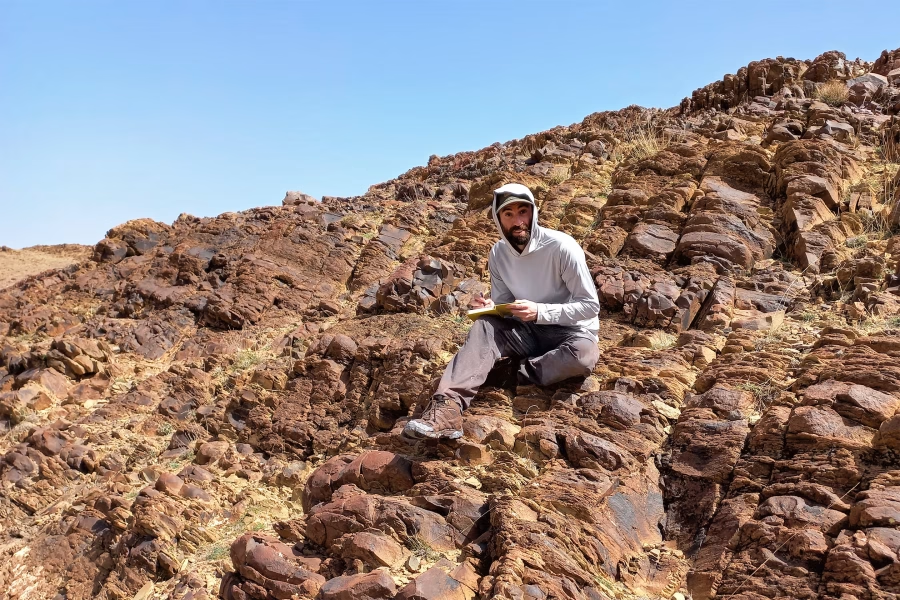
A team of Yale University–led researchers studying volcanic rocks from Morocco’s Anti-Atlas Mountains has uncovered new evidence explaining one of Earth’s oldest magnetic mysteries.
The findings, published in Science Advances on November 2, 2025, shed light on an erratic phase in the planet’s magnetic field during the Ediacaran Period (630 to 540 million years ago).
For decades, scientists have puzzled over chaotic magnetic data from that era, which seemed to suggest continents were moving at impossible speeds. The new study reveals that the anomaly was not caused by runaway tectonic plates but by Earth’s unstable magnetic field.
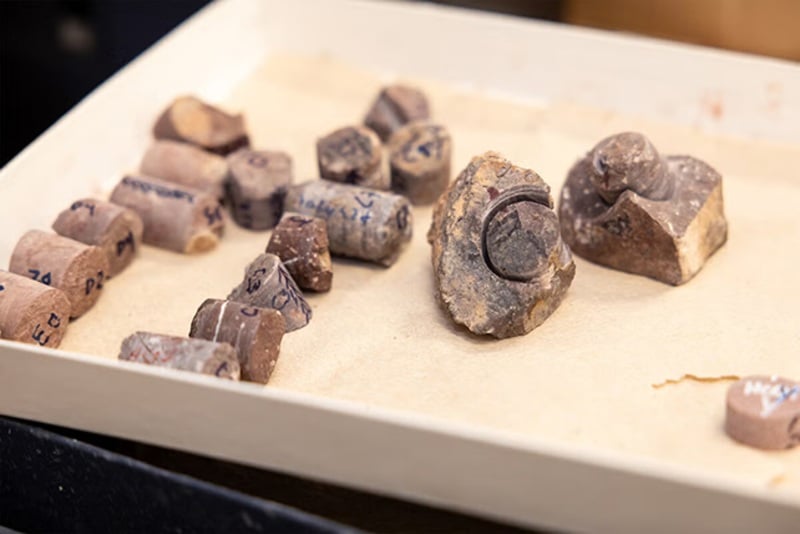
Using a detailed layer-by-layer analysis of ancient volcanic rocks, the researchers reconstructed short-term changes in magnetic orientation occurring over thousands, not millions, of years. This rapid variation, they found, points to a turbulent magnetic field rather than a geological drift.
“We are proposing a new model that finds structure in the magnetic field’s variability rather than randomness,” said David Evans, a Yale geologist and lead author.

The team also developed a new statistical approach to interpret Ediacaran paleomagnetic data, offering the most accurate reconstruction yet of continental positions during that time.
The data also challenge previous theories like true polar wander, which proposed large-scale shifts of Earth’s outer crust. Instead, the comparison with sedimentary layers shows that magnetic poles remained relatively stable, suggesting that core formation deep within Earth likely drove the magnetic instability.







add your comment
Terms of publication : Not to offend the writer, people, sacred things, or attack religions or the divine self, and refrain from racist incitement and insults.