
Morocco’s Minister of Health and Social Protection, Amin Tahraoui, acknowledged the “real and long-standing challenges” facing rural residents in accessing healthcare services, citing transportation difficulties, inadequate infrastructure and a shortage of specialized medical personnel.
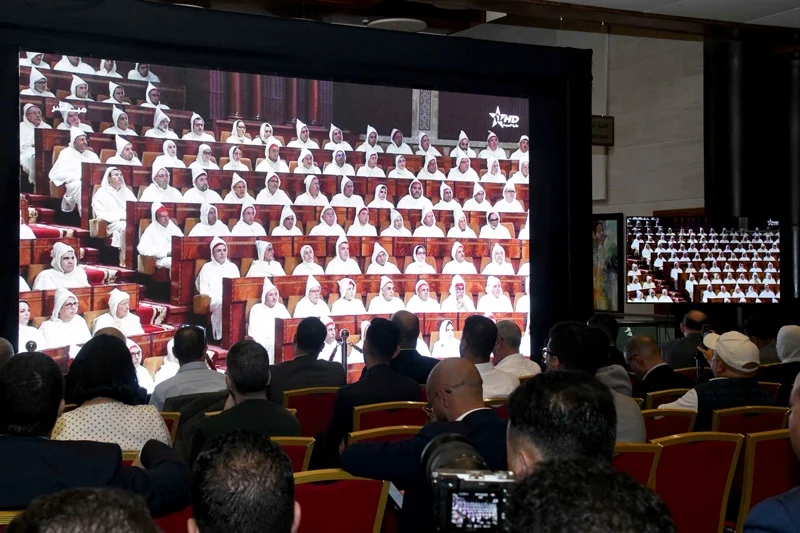
Speaking Tuesday during a parliamentary question session in the House of Councillors, Tahraoui said these challenges are being addressed through a “comprehensive reform of the national health system” launched in 2022 to reduce regional disparities and ensure fairer access to healthcare.
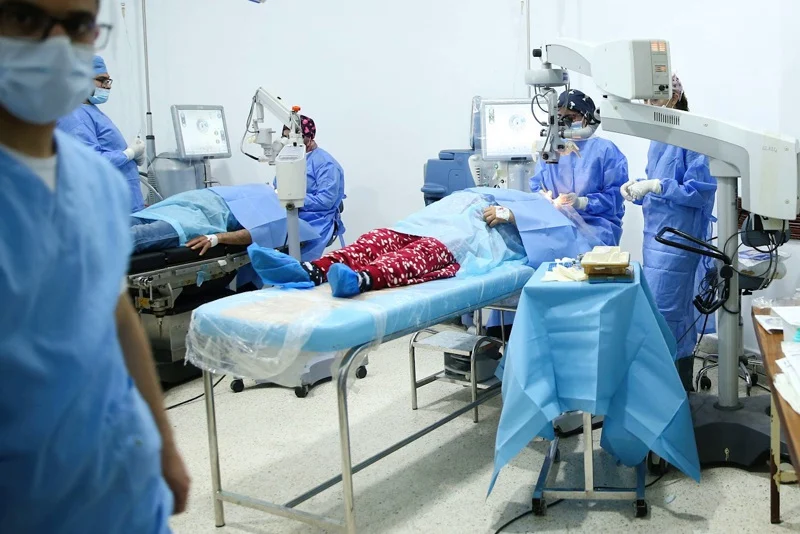
The minister highlighted several infrastructure projects aimed at improving rural health services, including the opening of a local hospital in Midar (Driouch province) in 2023, serving about 80,000 people in a mountainous area that previously lacked medical facilities; a hospital in Talsint (2024) for roughly 40,000 residents in an isolated region; and the Ahfir local hospital and Tinghir provincial hospital, which has been serving more than 300,000 people since early 2025.
Between 2022 and 2025, the ministry completed 22 projects and has 24 more scheduled to open starting in 2025, most of them in rural areas, Tahraoui said. He added that the ministry has rehabilitated 1,100 of 1,400 planned health centers, with a second phase beginning in 2026 to modernize an additional 1,600 primary centers, 70 percent of which are in rural zones.
The upgrades aim to provide modern reception areas, biomedical equipment, pharmacies, waiting rooms and digital connectivity, the minister said.
He also emphasized that territorial health groups, which bring together local, provincial and university hospitals under one regional structure, are central to improving governance and redistributing medical staff more equitably. A pilot program in the Tangier-Tetouan-Al Hoceima region currently groups 295 health centers and 22 hospitals, including a university hospital.
Tahraoui said new health employment decrees were adopted to attract and retain medical professionals in remote areas by offering financial incentives and job stability. These efforts, he said, aim to reduce patient transfers to major cities, ease pressure on university and regional hospitals, and strengthen equitable healthcare coverage nationwide.
Responding to questions on healthcare quality and costs, the minister noted that the health sector budget will rise by nearly 30 percent in the new Finance Bill, reflecting “royal attention and government priority” for health reforms.
On governance, Tahraoui said the centralized management model has reached its limits, and that the ministry’s decentralization through territorial health groups represents “a structural solution to long-standing inefficiencies.”
Regarding treatment costs, he rejected claims of sharp increases, saying that medicine prices have largely remained stable, with only “minor adjustments,” and that the state’s financial burden has grown due to the expansion of compulsory health insurance, which has increased access to care.
Addressing the situation of healthcare professionals, Tahraoui detailed salary increases ranging from 2,000 to 7,000 dirhams per month, representing 12 to 58 percent raises. Doctors, pharmacists and dentists received an average 4,405-dirham raise, nurses and health technicians 1,950 dirhams, administrators 1,750 dirhams, and technical assistants 1,700 dirhams.
He added that hazard pay has been raised by 500 dirhams for nurses and 200 dirhams for administrative and technical staff, with eligibility expanded to include faculty at higher institutes of nursing and health technology, as well as the National School of Public Health.
Tahraoui also announced that the government has agreed to improve promotion conditions, introduce annual professional exams, and grant seniority benefits for some nursing and technical staff. Draft decrees to formalize these measures are under approval.
Additionally, the ministry has prepared decrees to update compensation for on-call, standby and mandatory shifts, and to introduce a special allowance for public health program work, both currently under review.
“All these reforms are designed to ensure that healthcare professionals are motivated, that patients in rural and remote areas receive equitable treatment, and that Morocco’s health system continues to modernize,” Tahraoui said.





add your comment
Terms of publication : Not to offend the writer, people, sacred things, or attack religions or the divine self, and refrain from racist incitement and insults.