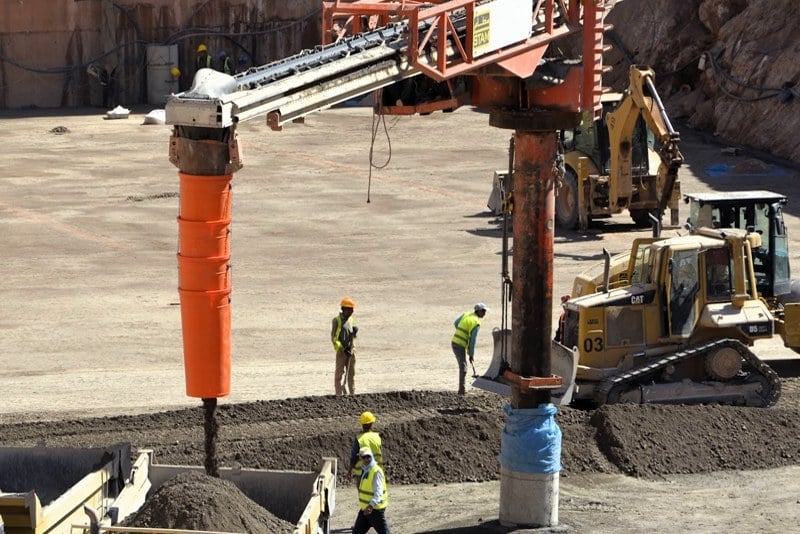
Morocco’s cement sales surged by 17.57% in July 2025 compared to the same month last year, signaling unprecedented momentum in the country’s construction and public works sector, according to data released by the Ministry of National Territorial Planning, Urban Development, Housing, and Urban Policy.
Citing figures from the Professional Association of Cement Manufacturers, the ministry reported that approximately 1.39 million tons of cement were sold in July alone, reflecting intensified activity driven by major ongoing infrastructure projects and seasonal maintenance works in sectors such as sports, transportation, and public facilities.
Cumulative sales through the end of July reached 8.28 million tons, marking an 11.03% increase compared to the same period in 2024.
Distribution cement accounted for the largest share at 4.57 million tons, followed by ready-mix concrete at 2.04 million tons. Precast concrete sales totaled 852,022 tons, infrastructure projects used 538,708 tons, general construction consumed 236,198 tons, and mortar represented 37,478 tons.
The Financial Studies and Forecasting Directorate echoed this upward trend in its latest economic outlook, reporting a 9.8% growth in cement sales during the first half of 2025.
Infrastructure Demand Driving Growth
The public infrastructure sector remains a major driver of this growth, with deliveries rising 6.4%. Deliveries for ready-mix concrete increased by 19.2%, distribution rose 6.1%, and precast concrete sales climbed 17.7%.
“This growth is unprecedented,” said Idriss El Fina, a Moroccan economist specializing in the real estate sector. He noted that Morocco hasn’t seen such figures since 2004–2006 under the Jettou administration.
“The figures we’re seeing in 2025 exceed those from previous years and reflect a genuine upward trend since 2023,” El Fina told Hespress AR. “This recovery is clearly visible to anyone monitoring the sector.”
El Fina attributed the momentum to two main pillars: self-initiated building projects, including home renovations, and large-scale public infrastructure development.
He emphasized that about 200 billion dirhams have been allocated to public works from a total public investment budget of 350 billion dirhams in 2025. He argued this reflects a clear government vision beyond projects related to the 2025 Africa Cup of Nations and 2030 World Cup preparations.
According to Morocco’s High Commission for Planning, the construction and public works sector added 53,000 new jobs in the second quarter of 2025.
Beyond Stadiums and Sports
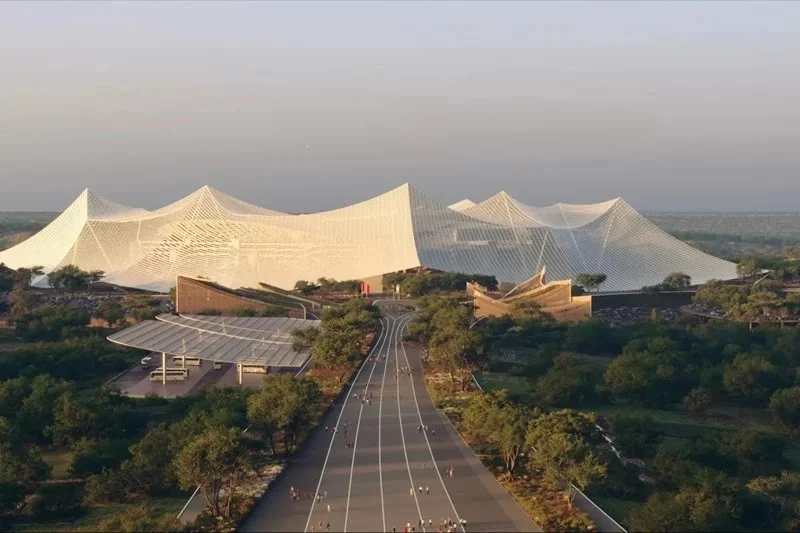
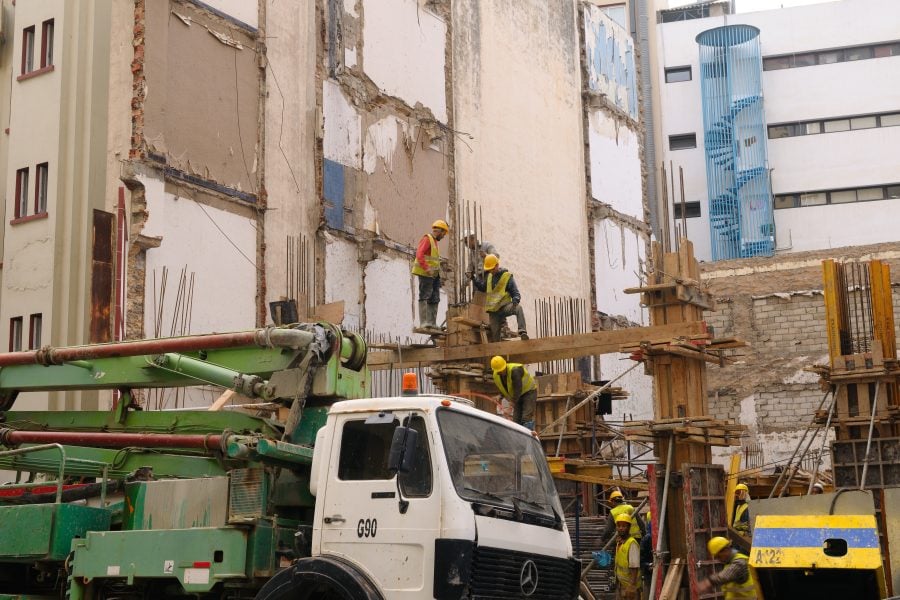
El Fina also highlighted that cement consumption growth is not limited to stadiums and sports infrastructure. It reflects ongoing work on dams, ports, airports, post-earthquake reconstruction in Al Haouz, and urban renewal across various cities.
He predicted that cement sales would hit 15.2 million tons by the end of 2025 and could surpass the record 16 million tons set in 2011 by 2026.
Caution Over Real Estate Assumptions
However, Anis Benjelloun, a real estate developer and vice president of the National Federation of Real Estate Developers, cautioned against interpreting rising cement sales as a sign of a residential real estate boom.
“While 8.28 million tons of cement were sold by the end of July, this doesn’t necessarily indicate growth in the housing sector,” Benjelloun told Hespress AR. “Cement is also used in non-residential construction like roads, hospitals, and public institutions.”
Benjelloun stressed that more accurate indicators of housing market health include the number of housing unit permits issued, the number of occupancy permits granted, and actual residential sales figures.
“Any objective analysis of the sector’s state must rely on precise, direct indicators — not just cement consumption or loan volume, which alone are insufficient to paint a full picture,” he concluded.





add your comment
Terms of publication : Not to offend the writer, people, sacred things, or attack religions or the divine self, and refrain from racist incitement and insults.