
The coastal city of Essaouira erupted in color, rhythm, and celebration on Thursday as the 26th Gnaoua and World Music Festival kicked off, reaffirming its role as one of Morocco’s most iconic cultural events.
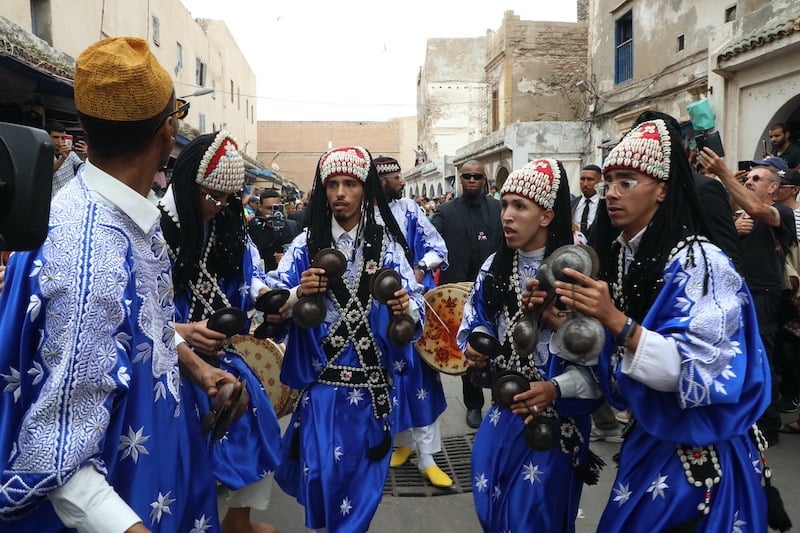
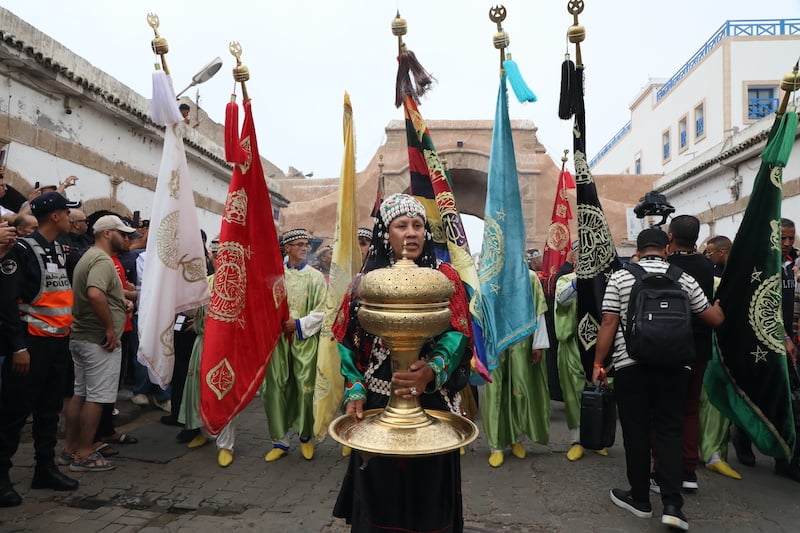
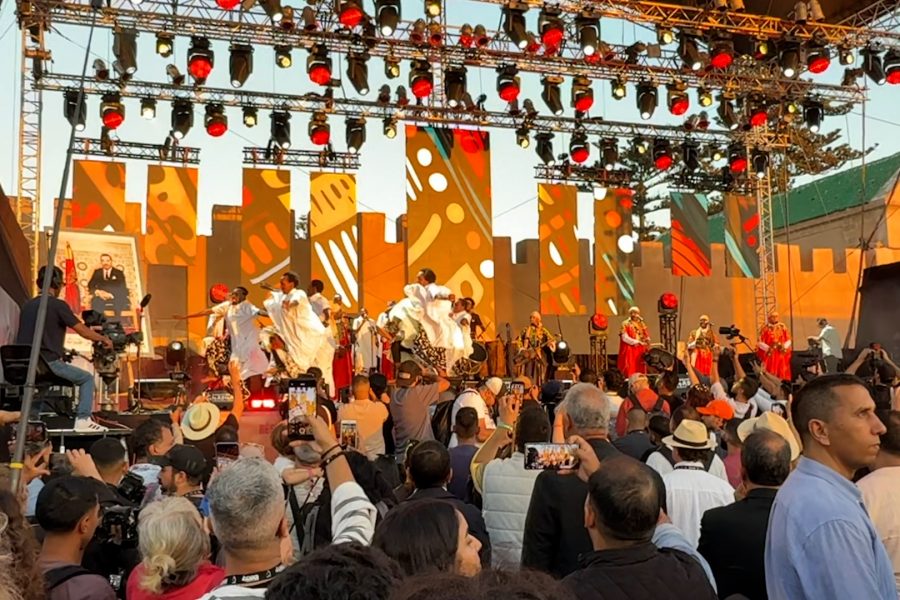
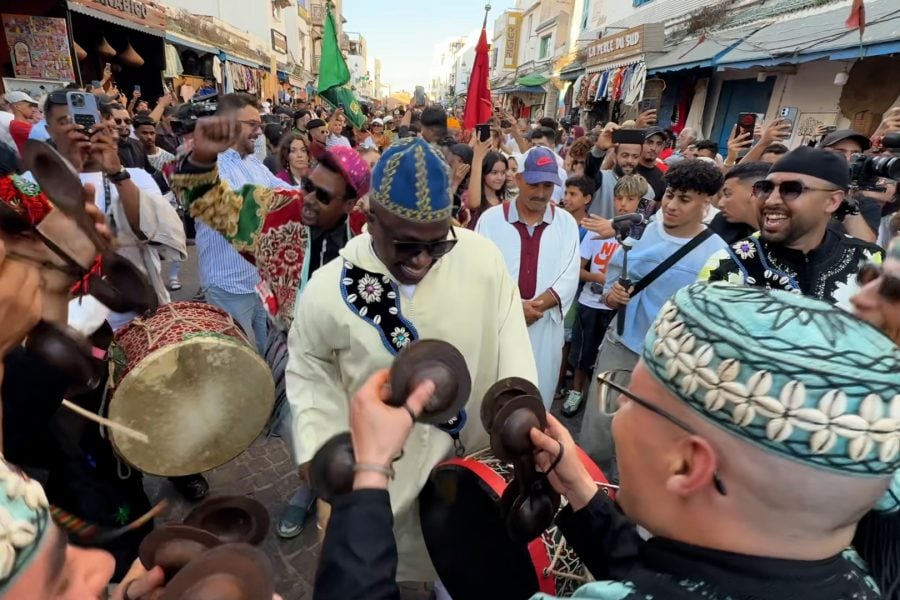
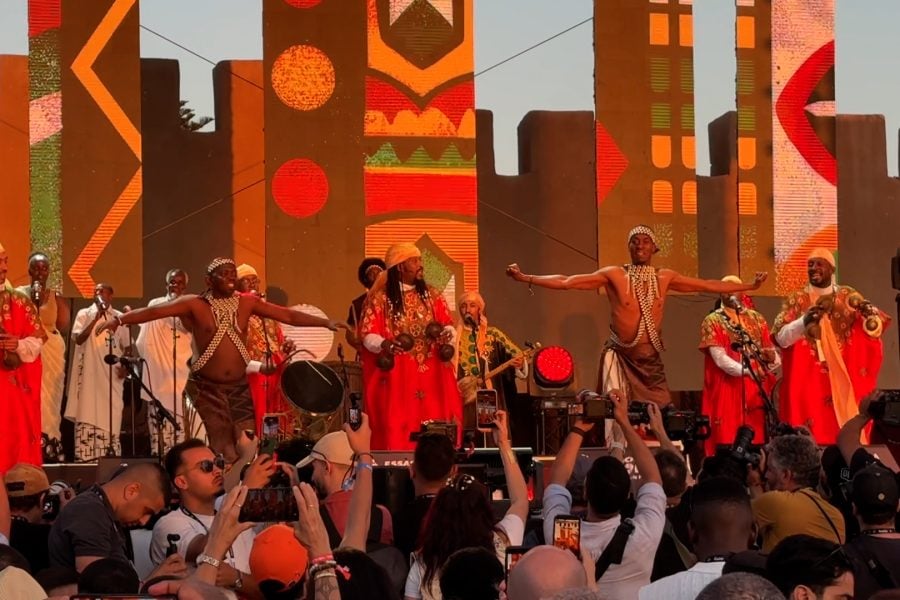
Under the high patronage of King Mohammed VI, the opening ceremony featured a traditional parade through the medina, where maâlems, Gnaoua music masters, led the way with hypnotic drumbeats, chants, and vibrant performances that drew cheering crowds toward the Moulay Hassan stage.
Among the attendees was André Azoulay, a longtime supporter of the arts, who joined the thousands gathered to witness the fusion of spiritual heritage and contemporary sound.
Festival co-founder Neila Tazi addressed the audience with a message that captured the festival’s deeper significance.
“This gathering is far more than a music festival,” she said. “It is a celebration of heritage, a dialogue in shared humanity, a unique moment where ancient rhythms meet contemporary sounds.”
First launched in 1998 as a modest single-stage event, the Gnaoua Festival has evolved into a global platform for musical dialogue, drawing over 250,000 visitors to a city with just 80,000 residents. The event provides a major economic boost to local businesses, from artisans to hotels and restaurants.
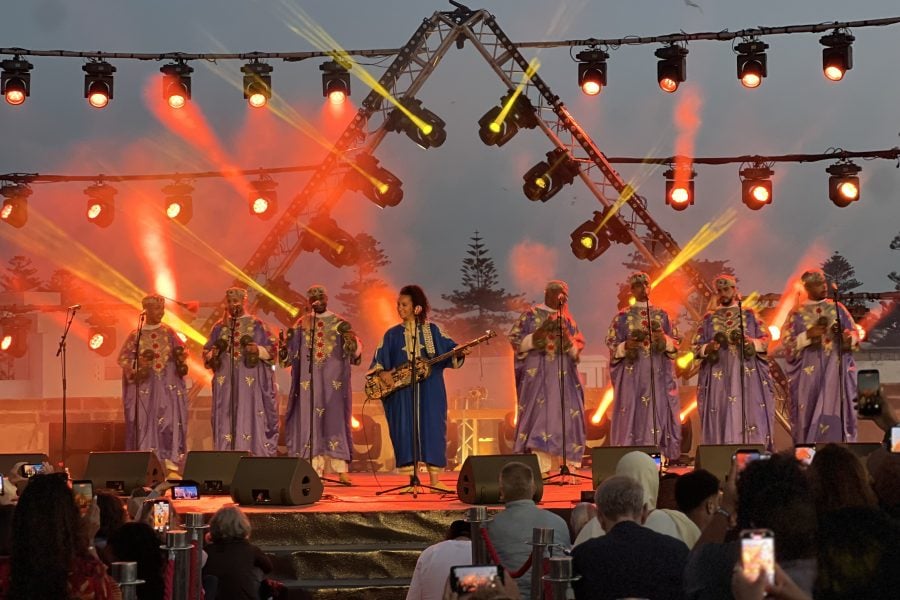
Seven stages are set across Essaouira, featuring a rich blend of performances that highlight the diversity of Gnaoua music and its cross-cultural collaborations. Artists from jazz, reggae, rock, and electronic backgrounds join Moroccan maâlems in performances that reflect the festival’s ethos of openness and creativity.
Recognized by UNESCO as Intangible Cultural Heritage, Gnaoua music is rooted in African, Arab, and Amazigh traditions. Using instruments like the guembri, a three-stringed lute, and qraqeb, metal castanets, Gnaoua performances draw from sacred rituals and communal healing practices that trace back centuries.
“Gnawa music,” Tazi reminded the crowd, “is not just a musical genre. It is a universal language of resilience, healing, and joy.”
More than just a celebration of sound, the festival aims to create a space for intercultural exchange and connection. “Through this festival,” Tazi added, “we aim to offer not only performances but encounters, a space where cultures listen to one another and music becomes a shared home for all of us.”
As the festival continues over the coming days, Essaouira becomes not just a stage for world-class music, but a beacon of coexistence, creativity, and peace through culture.



add your comment
Terms of publication : Not to offend the writer, people, sacred things, or attack religions or the divine self, and refrain from racist incitement and insults.