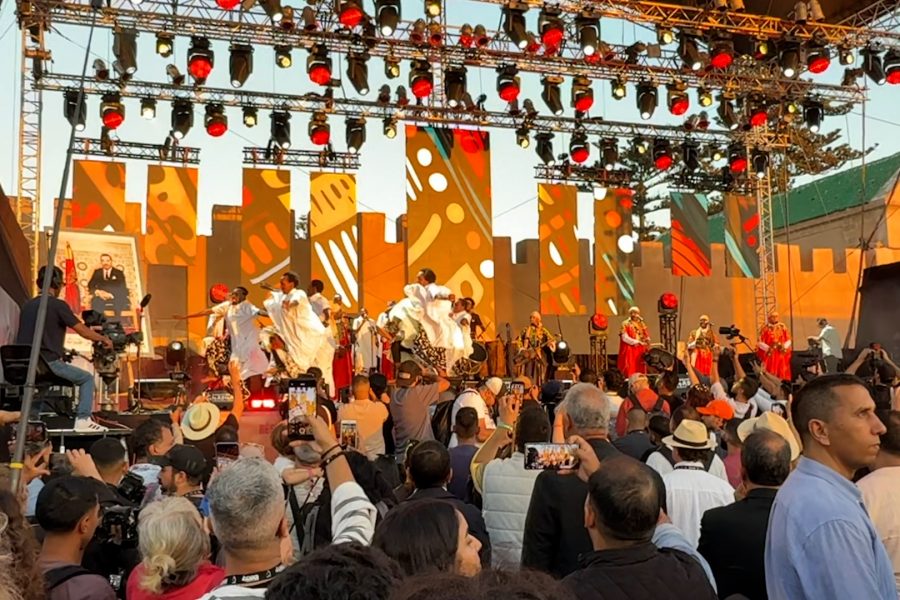
At the Old Danish Consulate in Essaouira, the sounds of the guembri and krakebs blended with the cello, drum kit and congas, filling the space as musicians from around the world came to Morocco to fuse Gnaoua music with their own musical traditions.
Held as part of Berklee College of Music’s partnership with the Gnaoua and World Music Festival, the program gathered professional and semi-professional musicians from 18 countries to expand their artistic skills, build networks, and explore new musical possibilities.
The program also includes workshops and courses dedicated to Gnaoua traditions, bringing together Berklee professors with experience in Moroccan music and Gnaoua musicians, including maalems in training, to explore new fusions between Gnaoua music and other musical styles.
“Something new will get born of this. We don’t know what it’s going to be. It may happen next month or in 10 years,” said Jason Camélia, associate vice president at Berklee Global.
For Camélia, the value of the program lies in bringing together musicians from different traditions and creating space for new forms of musical expression to emerge.
“Everybody that’s coming here is very interested in the Gnaoua tradition,” he emphasized.
He said the program aims to connect the storytelling found in the Gnaoua tradition with contemporary forms of musical storytelling, creating new links between different traditions.
For American hip-hop artist Christylez Bacon, taking part in the Berklee program for the first time, the experience revealed unexpected connections between different musical traditions
“I found a lot of similarities between Gnaoua rhythms and African-American music, and even Brazilian music,” said Bacon, who learned about Gnaoua music only five years ago in the US.
“It’s like seeing an extended family member,” he said.
For Efrat D’or, a musician born in Jerusalem who traveled from Portugal specifically to take part in the festival, her connection to Gnaoua music began in childhood visits to Morocco, her mother’s country of origin.
For the past four years, she has been studying the guembri and the traditions that come with it.
“I’ve been studying the guembri with my maalems and with people around and started going to lilas (Gnaoua nights) and the zaouia,” she said.
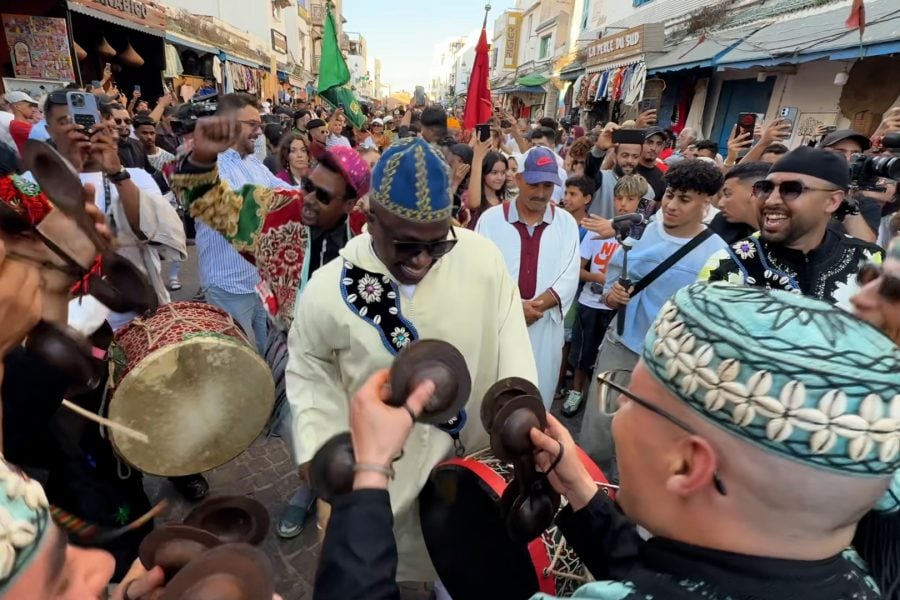
Efrat, who participated in the traditional parade for the first time yesterday, described the Berklee program as “very special and diverse,” adding that the most meaningful part was being with other musicians and creating together through collaboration, composition, and shared performance.





add your comment
Terms of publication : Not to offend the writer, people, sacred things, or attack religions or the divine self, and refrain from racist incitement and insults.