
France inaugurated a new visa application center in Laayoune on Wednesday, a move hailed by French Ambassador Christophe Lecourtier as a significant step toward consular equality and deeper cooperation with Morocco’s southern provinces.
Speaking at the launch of the TLS Contact visa center, Lecourtier described the occasion as “a great joy accompanied by much emotion,” noting that a promise made months earlier had now been fulfilled. “Residents of Laayoune and the southern provinces can now submit visa applications under the same conditions as Moroccans in cities such as Casablanca and Rabat,” he said.
The ambassador emphasized that the new center serves as “the first gateway to France,” equipped with modern technology, including biometric data and fingerprint collection systems that will send information directly to the consular center in Casablanca. That facility is responsible for processing visa applications from the south, including cities like Agadir and Marrakesh.

The first visa requests have already been received, Lecourtier confirmed, with biometric data collected and passports set to be returned within two weeks for those meeting the necessary conditions. The service is open to applicants traveling for professional, medical, or personal reasons and aims to provide identical treatment to that offered in other parts of the country.
Governor Abdessalam Bekrate of the Laayoune-Sakia El Hamra region attended the opening ceremony, which was also witnessed by local authorities, elected officials, and members of the civil and military community. Lecourtier praised the regional government’s efforts to provide appropriate facilities for the center, noting that this development eliminates the previous burden placed on residents, who had to travel long distances to Agadir to submit visa requests.
“This is more than just a service expansion,” Lecourtier said. “It carries a strong symbolic message: we are reinforcing the principle of equality in public services, affirming that the southern provinces are on equal footing with the rest of the Kingdom.”
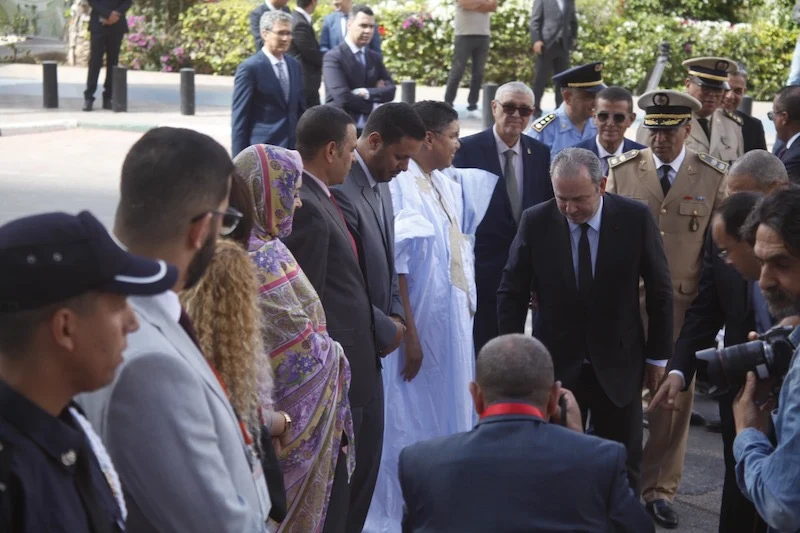
Responding to questions on the political and diplomatic implications of the move, Lecourtier stated that the new center reflects commitments made during the French president’s recent visit to Morocco, at the invitation of King Mohammed VI. He noted that Paris is committed to treating the southern provinces with the same level of cooperation and investment as other Moroccan regions.
“We consider the southern provinces as a new frontier for the work of the French Embassy,” he said, adding that he would also visit a French school under construction in Laayoune. “For the first time, students here will be able to sit for the French baccalaureate exam locally, without traveling to other cities.”
On the broader development front, Lecourtier highlighted the recent visit of the Director General of the French Development Agency to Laayoune and Dakhla. The visit included the announcement of major development projects aimed at supporting local growth. He also noted progress on the construction of a French cultural center and the imminent opening of a new French Alliance space.

Concluding his remarks, Lecourtier reiterated that recent political commitments—including France’s official support for Morocco’s autonomy plan in Western Sahara and recognition of the Kingdom’s sovereignty over the region—are now being realized through tangible, citizen-focused initiatives in areas such as visa services, education, development, and culture.
The opening of the Laayoune center is part of France’s broader effort to expand its consular network and diplomatic presence in southern Morocco. It also underscores Paris’ support for Morocco’s territorial integrity and its investment in the ongoing development and stability of the southern provinces.






add your comment
Terms of publication : Not to offend the writer, people, sacred things, or attack religions or the divine self, and refrain from racist incitement and insults.