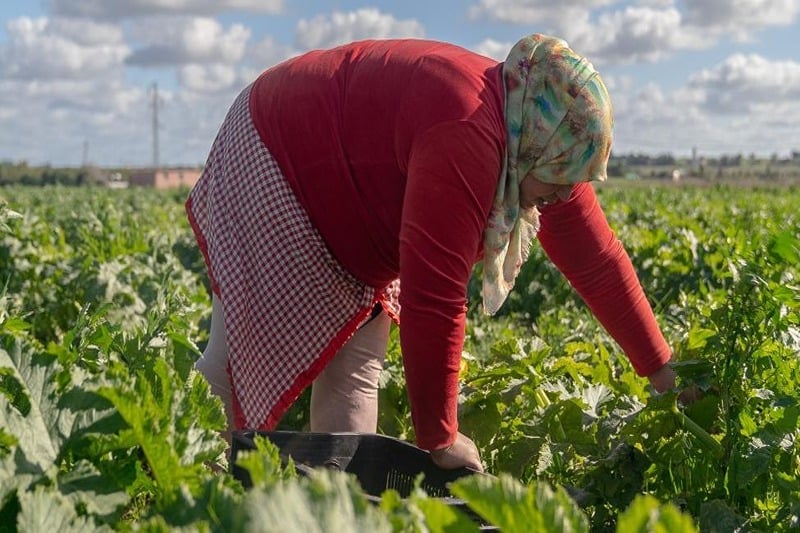
A recent study by the High Commission for Planning (HCP) showed profound gender inequalities in land ownership across Morocco, where a mere 6.9% of women possess property rights or legally secured claims over agricultural land, in stark contrast to 36.8% of men.
This glaring discrepancy reflects the multifaceted barriers impeding women’s access to land, particularly in rural areas, where deep-seated traditions and socio-cultural norms continue to dictate land distribution practices.
The study, titled Gender Inequalities in the Context of Sustainable Development Goals in Morocco, highlights that rural land tenure remains largely governed by customary practices, which, entrenched within patriarchal social structures, severely constrain women’s opportunities to acquire legally recognized ownership.
Beyond these entrenched traditions, bureaucratic red tape and legislative inadequacies further exacerbate the situation, as many women struggle with the procedural complexities of land registration and face significant obstacles in obtaining official documentation attesting to their ownership rights.
The persistence of gender-biased inheritance norms continues to disadvantage women, as familial land is predominantly bequeathed to male heirs, reinforcing a cycle of exclusion.
The limited awareness among women regarding their legal entitlements further compounds this issue, rendering them unable to assert their rights effectively.
Economic disparities further accentuate the gender divide in land ownership. Although women from lower-income backgrounds bear the brunt of these inequalities, the study reveals that even among the most affluent segments of society, land ownership remains overwhelmingly male-dominated.
For instance, while 53.9% of the wealthiest men own agricultural land, only 13% of their female counterparts hold similar assets, illustrating that financial capacity alone does not suffice to bridge the gender gap.
One of the most formidable impediments to female land ownership lies in the limited accessibility of financial resources.
The study highlights that stringent lending criteria, coupled with a lack of institutional support for female farmers, result in systematic exclusion from agricultural credit systems. Deprived of financial guarantees, women are often unable to secure loans, thereby restricting their capacity to purchase or develop land.
In response, the Moroccan government has initiated legal reforms aimed at rectifying these imbalances, particularly through amendments to the regulatory framework governing collective land, which constitutes a significant portion of the nation’s agricultural terrain.
Nonetheless, the practical implementation of these measures faces considerable resistance at the local level, as entrenched socio-cultural attitudes continue to obstruct women’s access to their rightful share of land.
The HCP study underscores that addressing these disparities transcends issues of social justice, as ensuring equitable land ownership for women could yield substantial economic benefits, including enhanced agricultural productivity, improved rural stability, and a reduction in poverty rates.
The report advocates for the implementation of more robust and enforceable legal measures, the simplification of administrative processes, the expansion of legal aid services for women, and the establishment of gender-sensitive financial mechanisms tailored to facilitate female participation in agricultural development.
If effectively enforced, such policies could serve as a catalyst for the economic empowerment of rural women, fostering their integration into the national economy while advancing broader sustainable development goals.








add your comment
Terms of publication : Not to offend the writer, people, sacred things, or attack religions or the divine self, and refrain from racist incitement and insults.