
Mohamed Ouzzine, Secretary-General of the Popular Movement Party, criticized the Competition Council, led by Ahmed Rahhou, calling it the Council of Inaction while discussing the head of government’s failure to cap fuel prices, despite having the authority under the freedom of prices and competition law.
“What has prevented the head of government from capping fuel prices for the past two years, especially when Article 4 of the Competition Council Law allows him to do so?” questioned Ouzzine. He also mentioned that his party had called for a “parliamentary committee to monitor prices, but it faced some obstacles.”
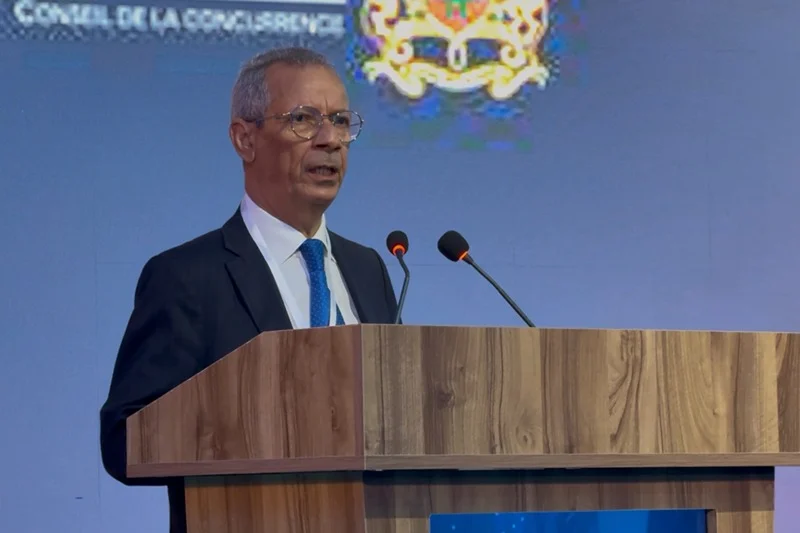
The head of the Competition Council rejected commenting on the sarcastic remarks made by Ouzzine, emphasizing that the Council does not engage in political squabbles, and told Hespress AR that “anyone is free to express their opinion regarding the Council’s work.”
Rahhou affirmed that the political leader has “every right to express his opinion and discuss anything related to the council’s work.”
He added, “we are open to communication regarding any topic handled by the constitutional institution.”
The head of the Competition Council emphasized that “they’re doing their job as they should,” and added that the institution can address any competition-related issues raised within the Council.
When asked about updates on an investigation into café pricing practices—a topic that had gone unanswered during the council’s annual media briefing last month—Rahhou stated that “the investigation is still underway.”
“This case involves numerous stakeholders, and the process requires listening to all parties and ensuring their right to defense,” he explained, adding that the council has yet to receive updates on the investigation’s progress.
In February, Rahhou defended the council’s decision to impose a settlement fine of MAD 1.84 billion on 9 companies operating in the national fuel supply, storage, and distribution markets, as well as their professional association. This fine was issued over a year ago following findings of anti-competitive practices.
Rahhou clarified that the penalty was not intended to destroy these companies but served as a severe punishment.
He explained, “if we compare the fine to the companies’ turnover, excluding taxes, it amounts to about 3% to 4%. In terms of annual profits, it represents approximately 50% to 60%.”
Rahhou emphasized that the council monitors the impact of such fines, a practice aligned with international standards. “We cannot impose fines that completely wipe out annual profits because that would be too risky for the companies’ future investments,” he said.





add your comment
Terms of publication : Not to offend the writer, people, sacred things, or attack religions or the divine self, and refrain from racist incitement and insults.