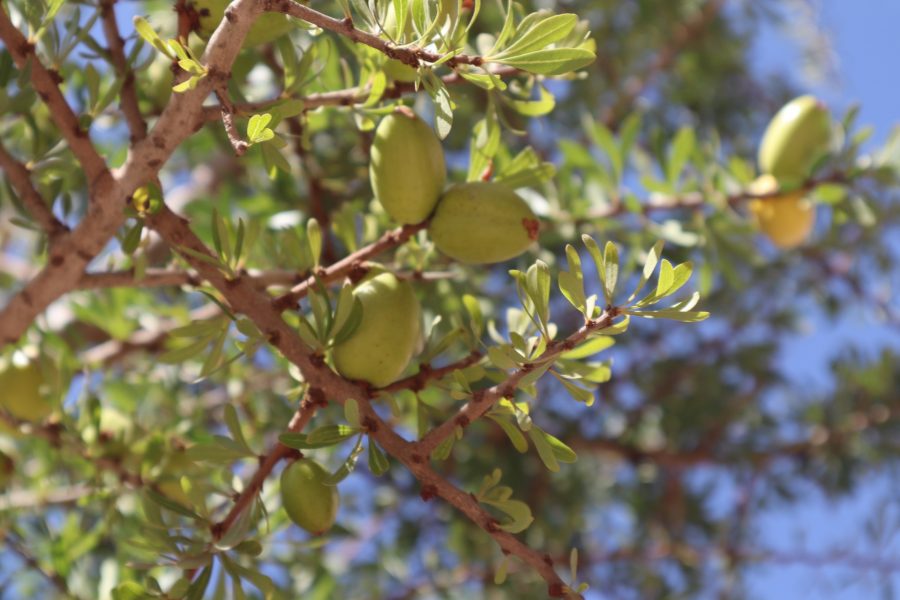
In 2023-2024, over 987 olive demonstration platforms, a key lever for technology transfer within the Al Moutmir model, were deployed across 24 provinces and 159 municipalities, covering all olive-growing areas in the Kingdom.
This program, aimed at supporting farmers in adopting optimized agricultural practices tailored to local conditions, directly benefited over 640 farmers through the platforms, while more than 6,000 others were indirectly supported via field schools, theoretical training, and social media interactions, as well as through @tmar networks.
Since the initiative’s launch, over 28,600 demonstration platforms have been established in more than 40 provinces. These platforms highlight the impact of applying best agricultural practices on yield, product quality, and income generation.
Developed collaboratively with the agricultural and scientific community, the PFD program receives scientific backing from Mohammed VI Polytechnic University in Benguerir.
The goal is to create a ripple effect driven by the farmers who hosted these demonstration platforms, acting as ambassadors for good practices and ensuring the continuity and sustainability of efforts.
Despite facing various challenges during the agricultural season, the demonstration platforms significantly improved olive yields. Compared to control plots following traditional farming methods, the demonstration platforms recorded yield increases ranging from 19% to 38%.
Data analysis reveals that, in a difficult production context, the adoption of the Integrated Crop Management (ICP) program played a key role in improving yields.
By integrating practices suited to the agro-climatic specifics of each region, ICP optimized tree nutrition, improved water management, and enhanced orchard resilience to environmental stresses. Notably, in irrigated areas, all plots using ICP showed yield improvements.
The demonstration platforms also boosted farm profitability. On average, they generated a profit margin of up to 30,363 dirhams per hectare, compared to 25,133 dirhams per hectare for control plots. This improvement ranged from 19% to 32%, depending on the context.
These results confirm the importance of adopting optimized technical practices based on an integrated approach. By combining rational fertilization, effective water management, appropriate cultural practices, and targeted pest control, the ICP program provides a sustainable solution to enhance olive productivity and profitability while mitigating climate change effects.
To further refine irrigation management, smart sensors were installed on the demonstration platforms, enabling real-time soil moisture monitoring and adjusting water inputs according to the actual needs of the trees. This innovative technology helps farmers adopt more precise and efficient irrigation practices, reducing waste while ensuring optimal olive tree development.
The average water productivity on the demonstration platforms reached 0.95 kg/m³, representing an increase of 11% to 25% compared to control plots, demonstrating better utilization of each cubic meter of water used.
In addition, farmers receive specialized support to adopt these technologies and integrate good irrigation practices into their daily orchard management. This personalized follow-up fosters gradual adoption of water-efficient techniques, which are essential for strengthening the resilience of the olive sector against climate challenges.
A demonstration platform (PFD) consists of a plot where Al Moutmir’s agronomist implements an optimal and sustainable technical itinerary based on the 4R principles (right fertilizer, right place, right dose, right time), while a nearby control plot follows the farmer’s usual practices. This allows the farmer to observe the differences and easily adopt best agricultural practices.
The technical itinerary in the PFD is based on an integrated management program known as the “Integrated Crop Program” (ICP), focusing on four pillars: rational water management, rational fertilization, integrated pest management, and the use of specialized, adapted products.
The process begins with soil analysis, a crucial step in developing a fertilization strategy and ensuring balanced plant nutrition. These analyses are conducted by mobile laboratories deployed nationwide by Al Moutmir and through the laboratories at Mohammed VI Polytechnic University (UM6P).
Once the PFD is established, the farmer receives regular follow-up throughout the key stages and operations of the crop. Field schools are organized on the site, providing practical training for farmers and their communities. Additionally, capacity-building programs in the form of theoretical training sessions are provided to farmers, covering various aspects of crop management.






add your comment
Terms of publication : Not to offend the writer, people, sacred things, or attack religions or the divine self, and refrain from racist incitement and insults.