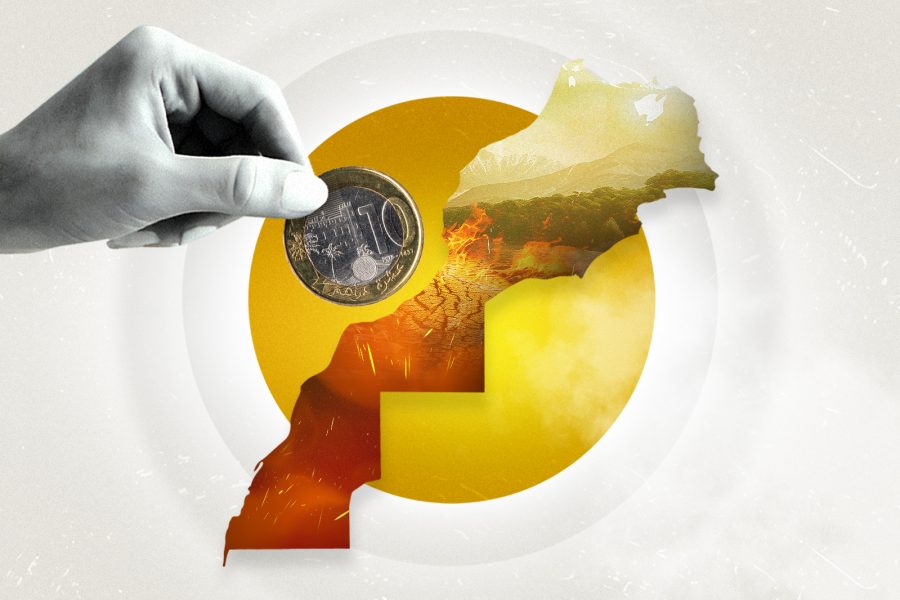
Morocco is stepping up its game against the growing threat of climate disasters by pumping 500 million dirhams (DH) into its Natural Disasters Effects Combating, an increase of 100 million MAD from last year, but this is nowhere close the estimated $35 billion Morocco needs for climate adaptation by 2030, according to the Climate Policy Initiative.
Morocco is one of the most vulnerable countries in the Middle East and North Africa when it comes to natural disasters, facing risks from earthquakes, floods, landslides, and droughts.
According to a CESE report, natural disasters cause significant human and economic damage in Morocco, with annual losses exceeding 8 billion dirhams.
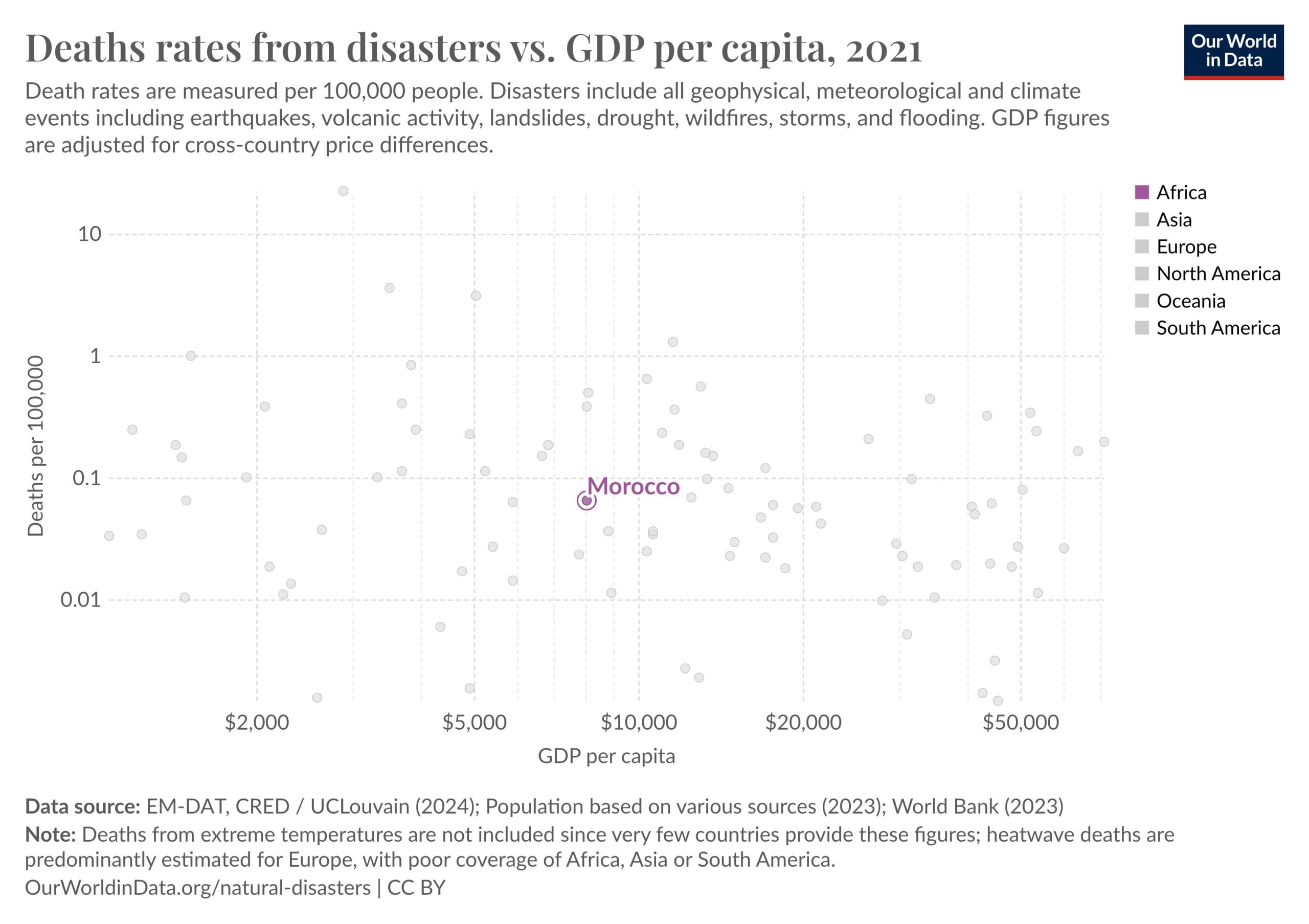
Floods account for over 4 billion dirhams in average yearly losses, representing 0.8% of the country’s GDP.
Earthquakes cause around 900 million dirhams in damages each year, while droughts have a major impact on agriculture, with average annual crop losses reaching approximately 3 billion dirhams.
Droughts, earthquakes, and floods are identified as the biggest natural risks facing Morocco, according to a CESE survey, with 59%, 54%, and 44% of respondents citing them, respectively.
The budget increase is a big move, but is it enough? With floods, droughts, and earthquakes becoming more frequent and destructive, Morocco needs far more to effectively address the growing climate crisis.
The Flood Factor
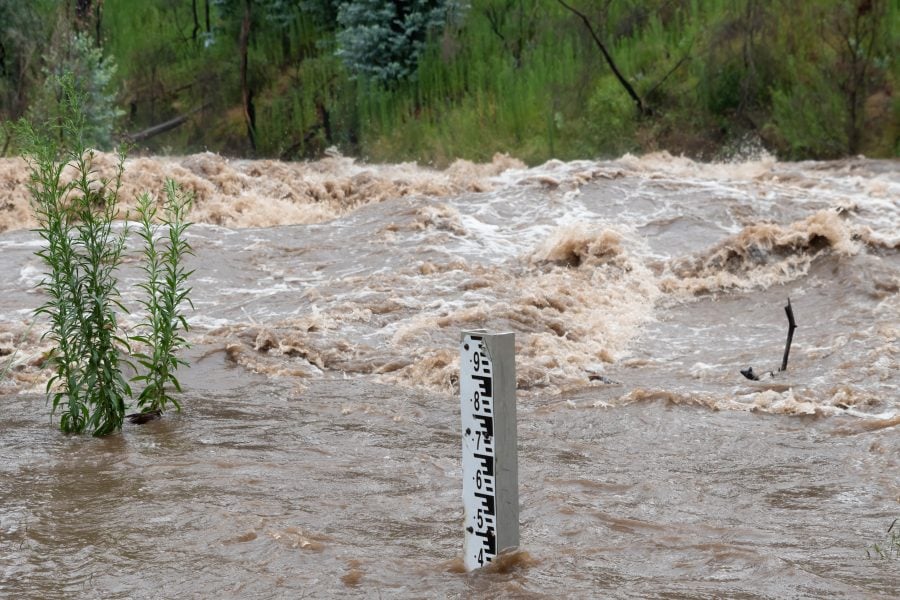
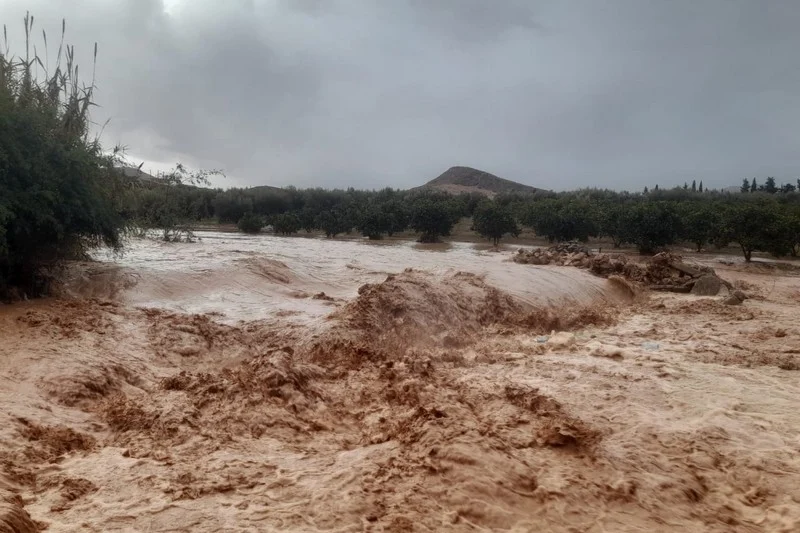
Flooding is one of Morocco’s most persistent problems. According to the World Bank, floods caused over $450 million in damages between 2000 and 2020.
Experts warn that these weather patterns—like the floods Morocco is increasingly grappling with—show how seasons blur together. They’re a clear sign of the larger, more disruptive impacts of climate change.
December usually marks the start of Morocco’s rainy season, but this year’s been anything but usual. Temperatures have stayed oddly high, and, as Ali Cherroud, a climate expert,explains, this reflects a growing trend of overlapping seasons caused by ongoing droughts and relentless climate change.
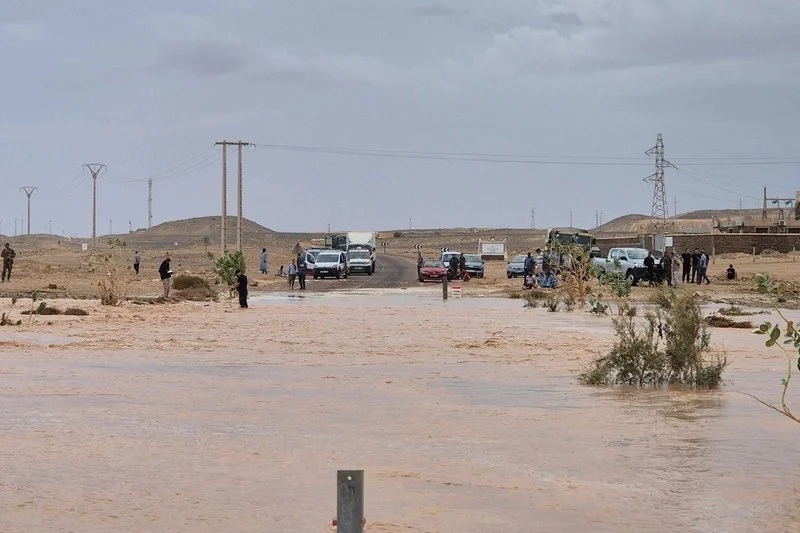
“This year, the shifts were particularly striking,” Cherroud said. “In September, we experienced unusually heavy rains brought by tropical clouds, which triggered devastating floods in southern areas of the High Atlas and the desert. It’s not something you expect for that time of year. After those rains, there was a brief spell of high temperatures, followed by yet another round of rainfall.”
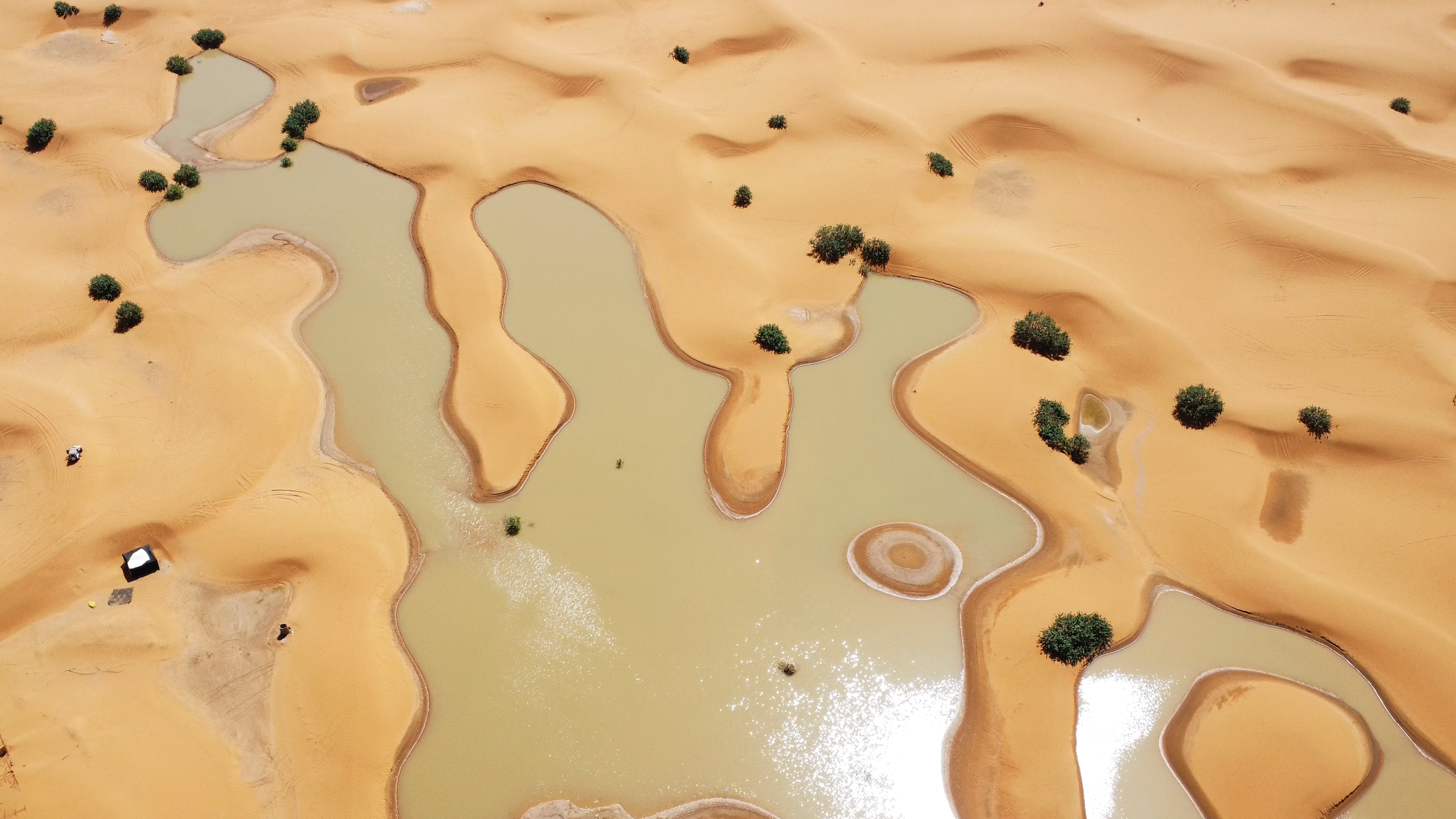
Out of the 400 million MAD allocated to the fund of natural disasters in 2024, 2.5 billion MAD was earmarked to tackle the aftermath of floods in Morocco’s south and southeast regions.
This funding focused on rehabilitating hard-hit areas like Errachidia, Midelt, Ouarzazate, Tinghir, Zagora, Figuig, Jerada, Taroudant, Tata, Tiznit, Guelmim, and Assa-Zag.
However, it’s not just nature to blame. Urban sprawl is eating into natural waterways, while aging drainage systems can’t handle heavy rainfall.

Drought: Agriculture’s Worst Nightmare
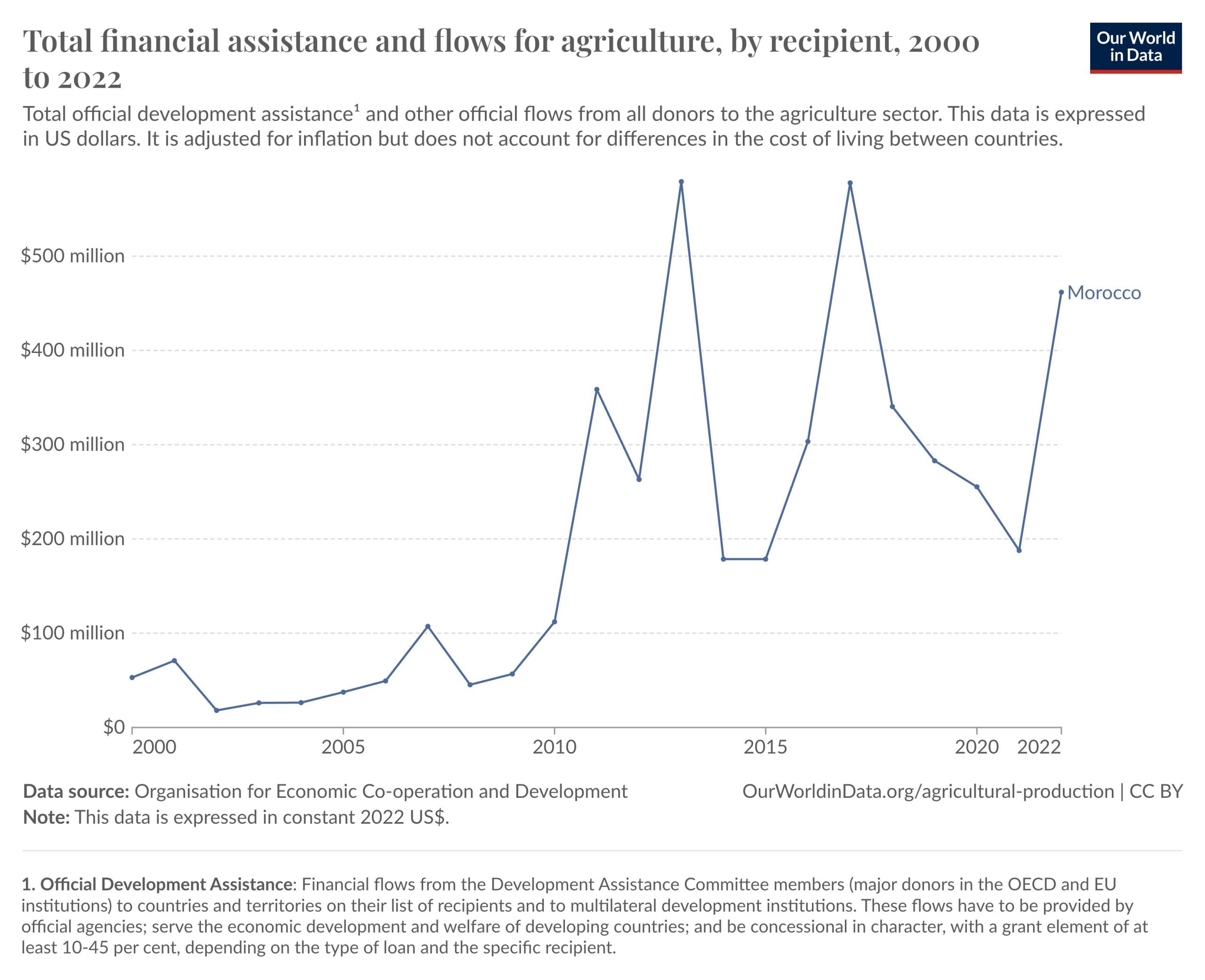
On the opposite end of floods, droughts are hitting Morocco hard and affecting its agriculture. In 2022, cereal production plummeted by 67%. That’s not just a statistic; it’s a disaster for an agricultural sector that feeds millions and anchors the economy.
Mohammed-Saïd Karrouk, a climatology professor, said that Morocco’s struggles with droughts and slow rainfall aren’t exactly new, even if they’re often portrayed as a recent crisis in the media.
“The real issue isn’t just the lack of rain,” Karrouk said. “It’s how the country has mismanaged the water it already has. Droughts have been a recurring challenge for years because of our limited water resources.”
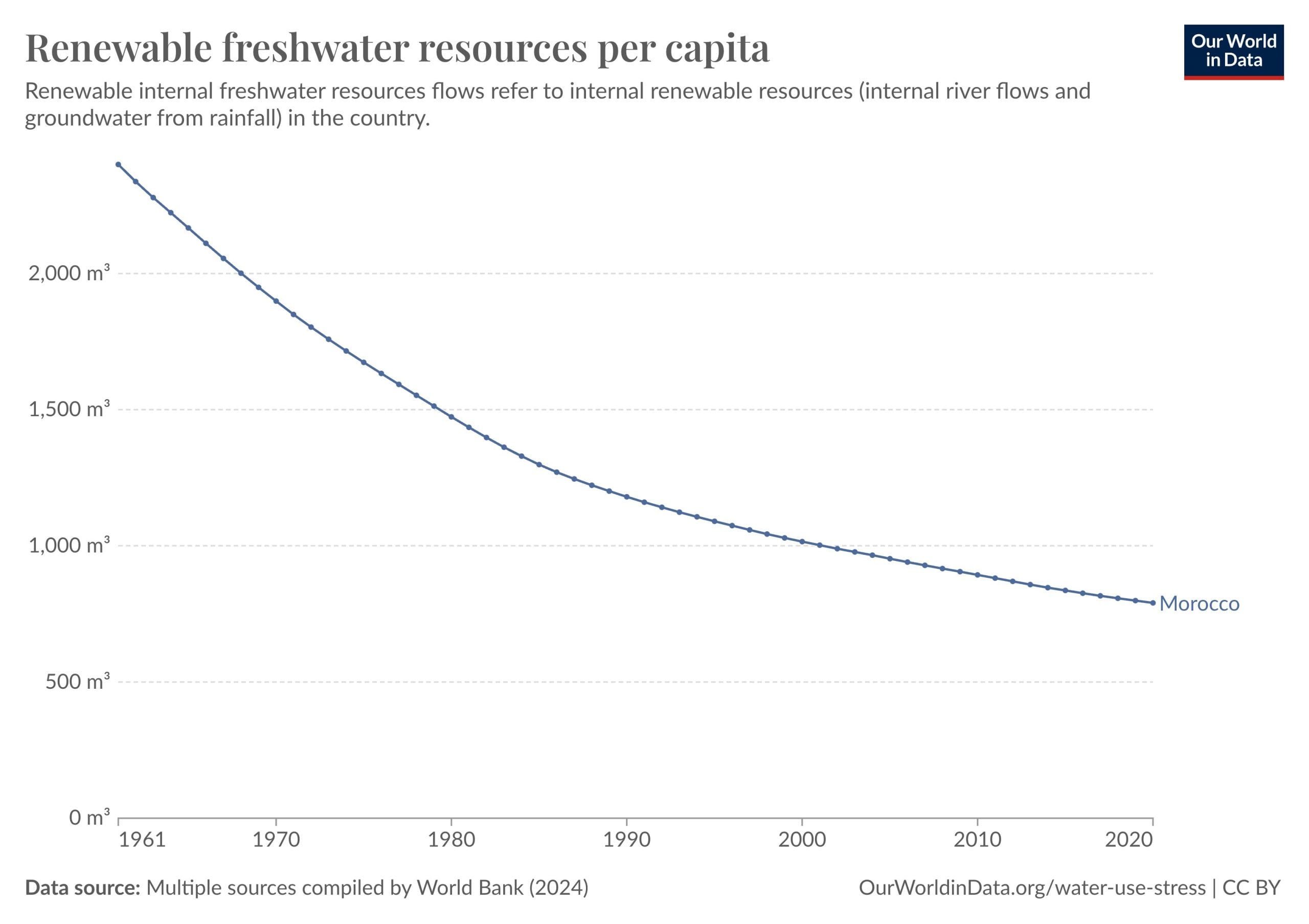
Karrouk explained that Morocco’s approach to tackling drought dates back to King Hassan II, who launched the ambitious dam policy. “This initiative cost the state a quarter of its budget but gave Morocco one of the best dam systems in the world, capable of storing over 18 billion cubic meters of water,” he noted.
Despite this impressive infrastructure, Karrouk said the country still faces yearly water shortages, a clear sign of poor resource management. “These dams were built to fight drought, yet here we are, struggling with water scarcity year after year.”
ICARDA, an international research center, says the solution lies in drought-resistant crops and water-smart farming. But these fixes cost money and demand long-term effort from both farmers and the government.
Not only that, but Morocco’s push to grow water-hungry crops like watermelon and avocado has taken a toll on already scarce water resources, draining vital supplies in regions struggling to keep up.
Despite some government initiatives, modern irrigation systems aren’t catching on fast enough. It’s a slow race against a fast-moving problem, and every year without action adds to the pressure.
Earthquakes: shaky ground
Then there’s the seismic risk. Northern and central Morocco know the devastation earthquakes can bring, from Al Hoceima in 2004 to the High Atlas quake in 2023.
After the 2004 Al Hoceima earthquake, Morocco took a more proactive approach to disaster management, focusing on prevention, especially with early warning and monitoring systems.
Since 2008, the government has rolled out several initiatives, like setting up the Monitoring and Coordination Center (CVC) under the Ministry of the Interior, the Disaster Recovery Fund (FNCL), and boosting the resources of the Civil Protection Directorate (DGPC).
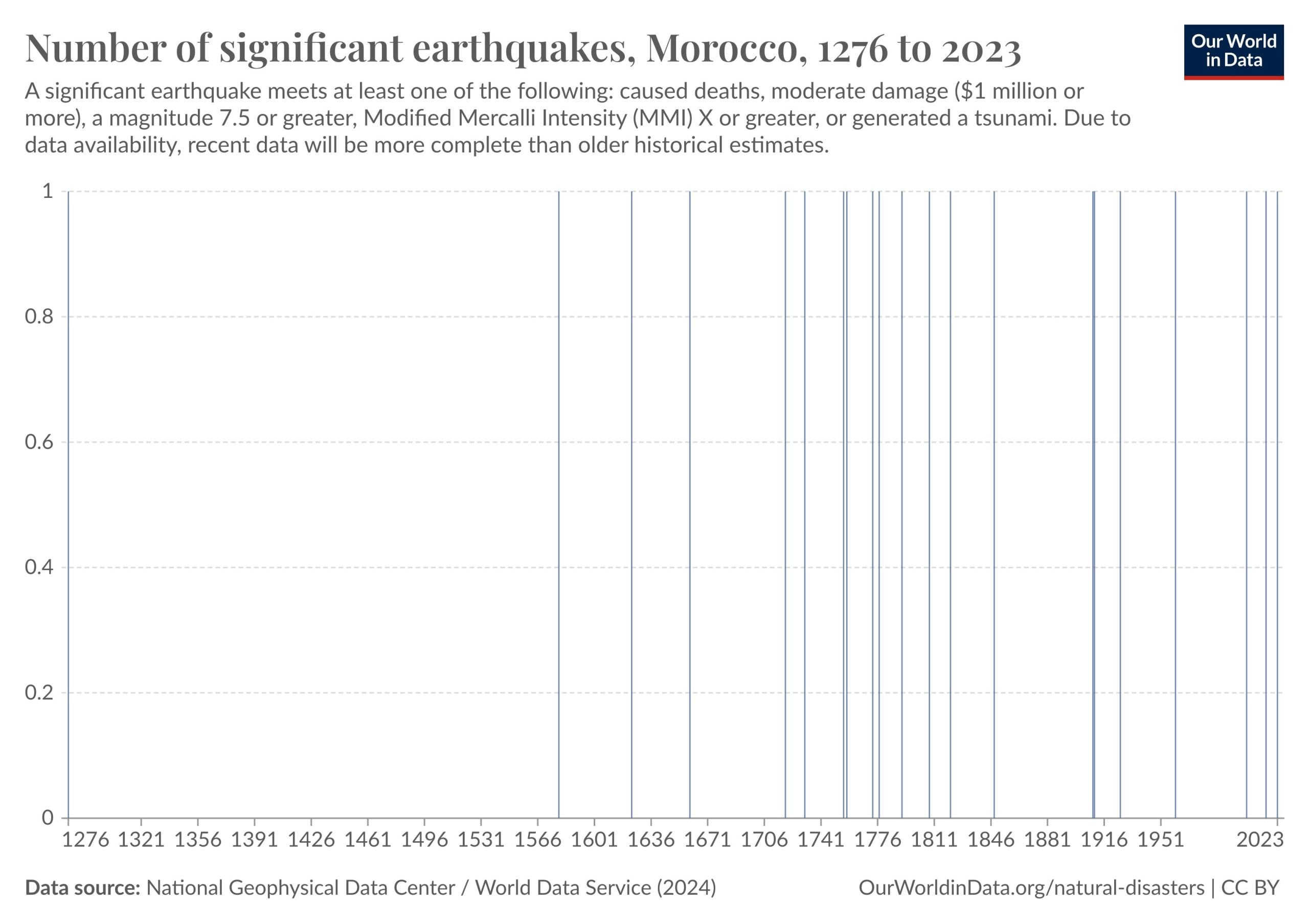
However, the Al-Haouz earthquake in September 2023 showed just how these efforts were insufficient and how severe the dangers of climate disaster can be. The quake impacted at least 300,000 people, destroying 60,000 buildings, and killing nearly 3,000 people. The World Bank says that disasters cost Morocco over $575 million every year.
The U.S. Geological Survey (USGS) projected that the economic losses could reach up to 2% of Morocco’s GDP, which would amount to about $2.7 billion, based on the country’s GDP of $134.18 billion in 2022.
The earthquake caused an estimated $7 billion in damage, making it one of the costliest earthquakes in recent history.
In an attempt to mitigate the material damages of earthquakes, the ministry in charge of national planning, urban development, housing, and city policy has been scrambling to implement a national land planning strategy, particularly for areas at risk of natural disasters.
The ministry also monitors the enforcement of earthquake-resistant building standards, under Decree No. 2.02.177 (2002), which sets guidelines for building safety and divides the country into seismic zones.
Public awareness could help reduce casualties—think preparedness drills and education campaigns. Studies back this up. But, again, Morocco hasn’t rolled out such programs widely. It’s another case of knowing the solution but struggling to implement it.
The Money question
So, what does 500 million DH really mean in the grand scheme of things? It’s a start, but it’s nowhere near the estimated $35 billion Morocco needs for climate adaptation by 2030, according to the Climate Policy Initiative. That’s a staggering gap.

And then there’s the issue of how effectively Morocco can use what it’s got. Morocco’s National Strategy for Sustainable Development outlines some bold goals: reduce disaster risks, promote resilience, and keep the economy growing.
To make that happen, the country needs international partnerships, more research-driven policies, and transparency in spending. It’s a tall order, but it’s not impossible.
This new fund is an opportunity to do more than just patch up problems. It’s a chance to tackle systemic issues head-on.
Experts say early warning systems could make a huge difference. The UN Office for Disaster Risk Reduction (UNDRR) says that such systems can cut flood casualties by 30%.
Early warning systems, resilient crops, seismic upgrades—these aren’t just ideas; they’re lifelines.
What’s expected to change in Morocco’s climate disaster prevention
Morocco had been stepping up its efforts to deal with climate disasters and is expected to continue doing so, according to a World Bank report.
The country has rolled out over 230 disaster risk reduction projects, worth $304 million. These projects have already helped 400,000 people directly and over 33 million indirectly.
To better manage disasters, Morocco has created a new Directorate for Disaster Risk Management and launched its first-ever National Disaster Risk Management Strategy for 2021–2030.
The country has also introduced a public-private disaster risk financing system that covers everyone, including a Solidarity Fund. After the 2023 Al-Haouz earthquake, $300 million was unlocked to help with recovery.
Morocco is also improving its disaster preparedness with a flood risk early warning system in four provinces, benefiting 240,000 people.
And with a national risk assessment and local resilience plans, the country is getting better at understanding and preparing for climate-related disasters.





add your comment
Terms of publication : Not to offend the writer, people, sacred things, or attack religions or the divine self, and refrain from racist incitement and insults.