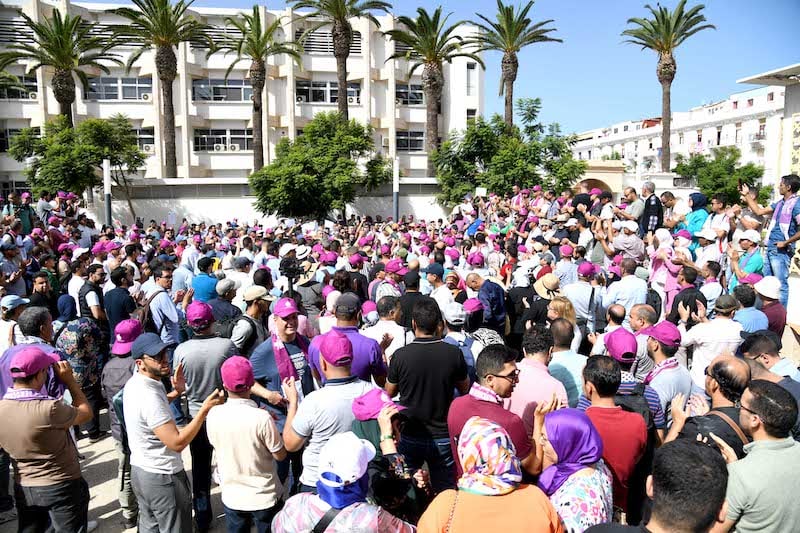
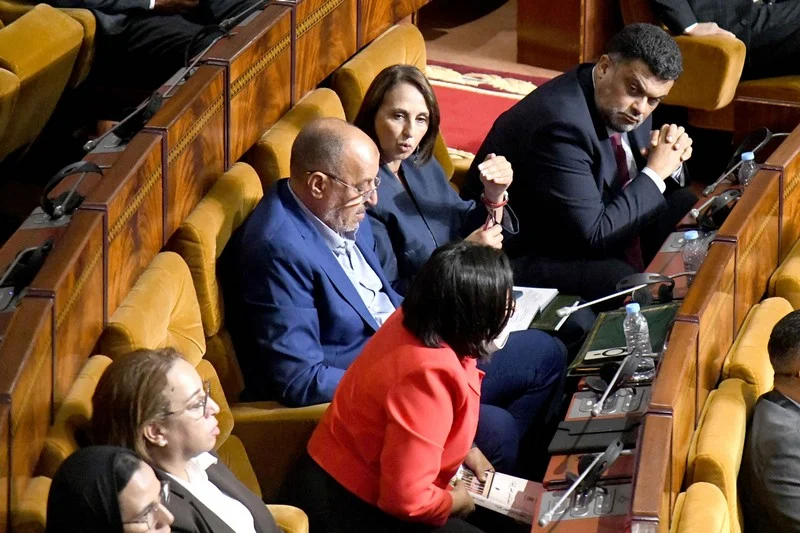
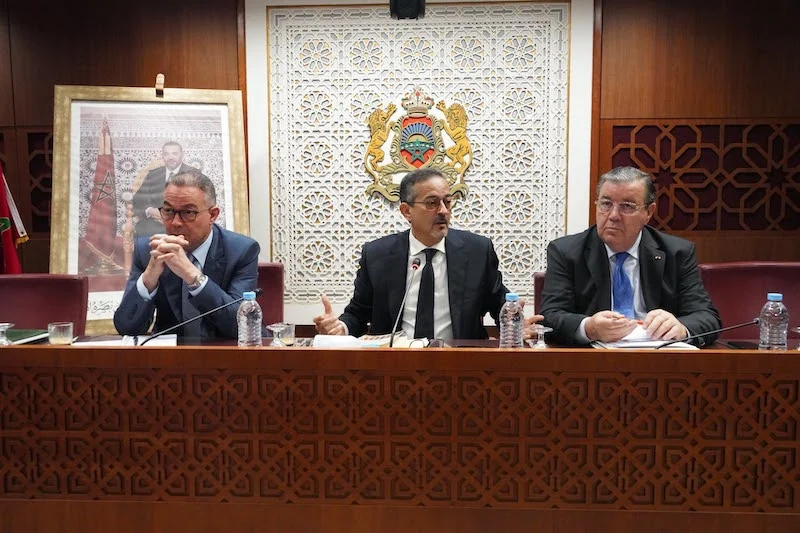
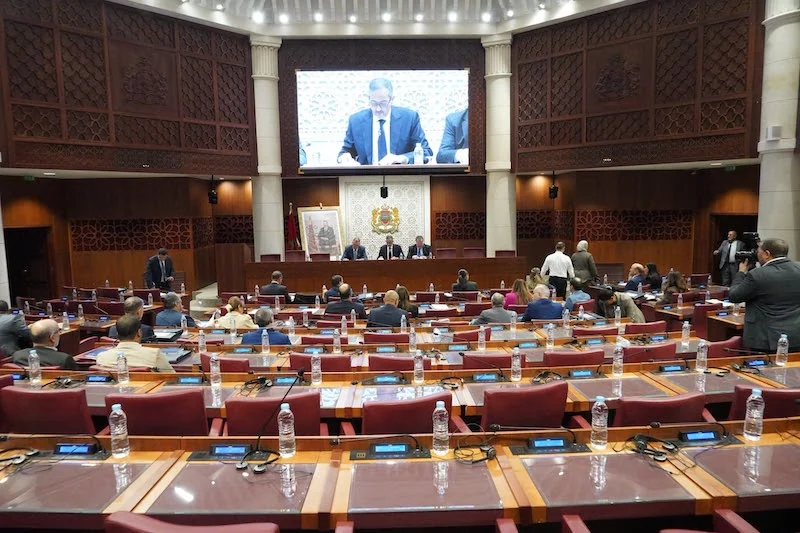
The Social Sectors Committee of Morocco’s House of Representatives spent hours today debating the inclusion of a preamble in the proposed law regulating the right to strike, with the contentious issue revolving around its potential violation of constitutional principles.
Some parliamentary groups pushed for the preamble to provide broader context, framing the law within Morocco’s historical practice of strikes and emphasizing its alignment with international human rights standards.
They argued that the preamble would offer a comprehensive introduction to the law, emphasizing the role of strikes in social justice and peace.
The government, represented by Minister of Economic Integration Younes Sekkouri, firmly opposed the idea, citing constitutional concerns.
Sekkouri said the Constitutional Court had previously ruled that organic laws must be derived directly from the constitution, and the inclusion of a preamble could violate this principle. The Court had made clear that preambles, which may introduce general or ideological ideas not directly related to the law’s content, could result in constitutional challenges.
In response, Sekkouri proposed incorporating the core elements of the preamble directly into the law’s first article, ensuring that the bill would align with the constitution and avoid legal complications.
This legal concern was backed by the head of the Party of Authenticity and Modernity (PAM) parliamentary group, Ahmed Touizi, who referenced the Constitutional Court’s decision No. 10.768, which rejected preambles in organic laws that contained general statements unrelated to the law’s specifics.
The government’s refusal to include a preamble turned the discussion into a political and legal showdown, with some parliamentarians accusing the government of trying to bypass the opportunity for broader political expression within the law.
Despite the political tension, voices of reason within the committee called for cooperation in shaping the law to ensure that it was balanced and fair.
After hours of debate, the committee agreed to adopt Sekkouri’s proposal for a compromise formula, which would incorporate the substance of the proposed preamble into the first article.
This revised article explicitly guaranteed the right to strike, defined it as a constitutional and human right, and outlined the legal framework for exercising the right in both the public and private sectors.
The government’s formula also emphasized the need to balance the protection of workers’ rights with the protection of freedom of work. It aligned the law with constitutional provisions, international human rights agreements, and Morocco’s historical context, ensuring that the exercise of the right to strike would be in harmony with the country’s social and legal frameworks.
After agreeing on this revised formula, all parliamentary groups withdrew their amendments to the preamble, signaling a rare moment of political consensus.
The committee voted unanimously in favor of the first article, with the final version of the bill reflecting a carefully negotiated balance between protecting workers’ rights and maintaining legal clarity.




add your comment
Terms of publication : Not to offend the writer, people, sacred things, or attack religions or the divine self, and refrain from racist incitement and insults.