
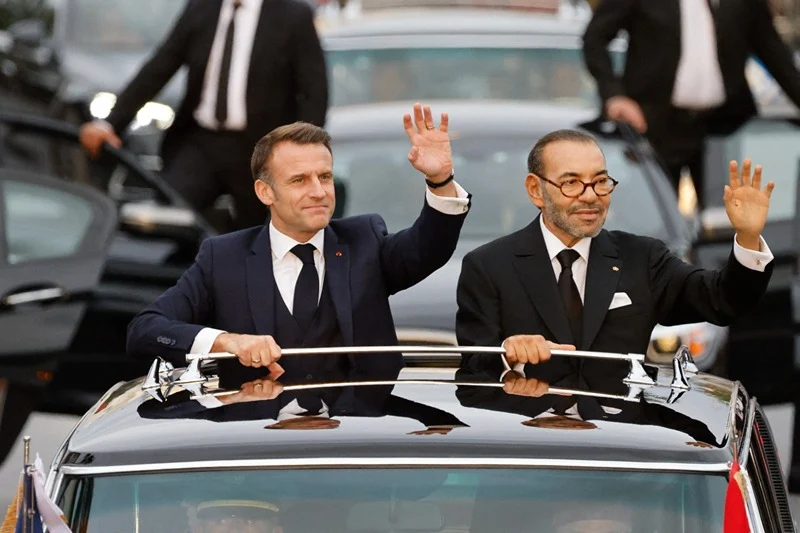
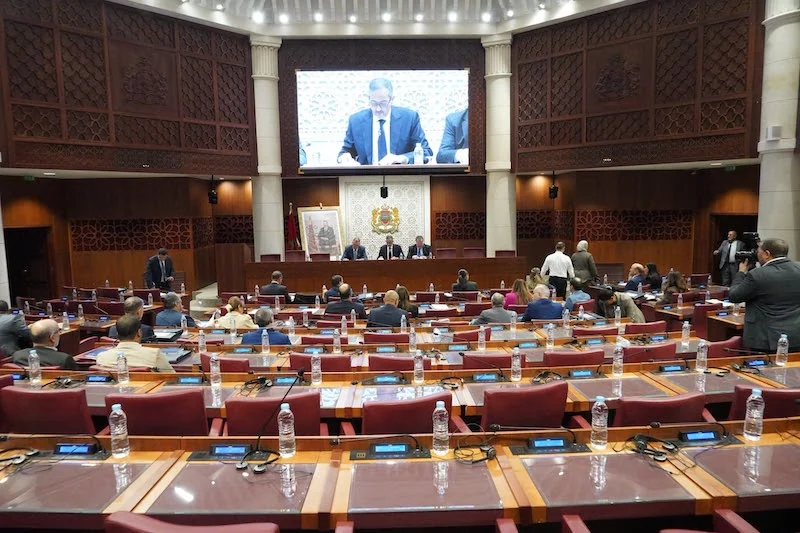
French President Emmanuel Macron delivered a historic speech today before the Moroccan Parliament.
In his speech, Macron stated that Morocco is one of the oldest monarchies in the world.
“When France looks back at the past eighty years of French-Moroccan relations, it primarily feels gratitude. For all those men who came from Morocco to liberate our homeland from the grip of the occupier, in Provence, in the Rhône Valley, but also in all the other places where the Free French Forces engaged.”
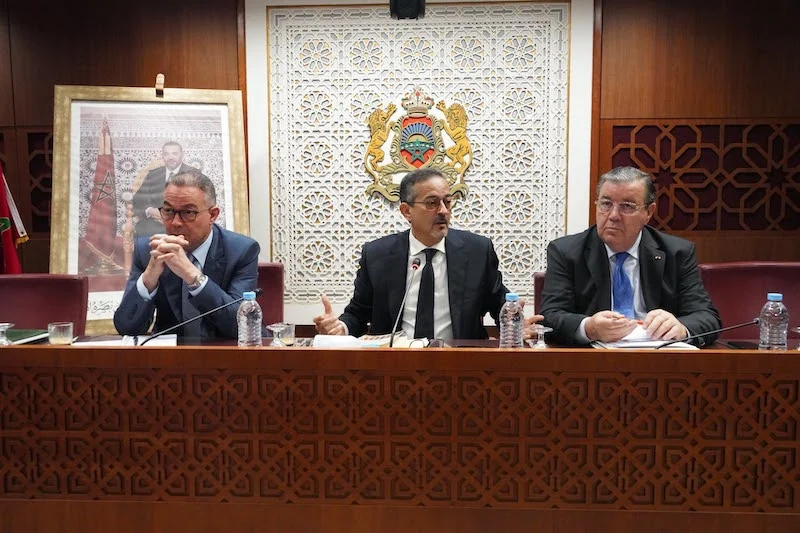
Rachid Talbi El Alami, President of the House of Representatives, began the joint session dedicated to listening to the speech of the French President this morning by stating that the visit of the French President, as a guest of King Mohammed VI, embodies those historical relations and the deep-rooted friendship that spans multiple dimensions and areas between the French Republic and the Kingdom of Morocco.
El Alami added: “Your reception here under this very dome carries more than just a symbol; it is, in part, a token that the two countries share many noble values, including democracy, human rights, political and party pluralism, and the rule of law and institutions that emerge from free elections.”
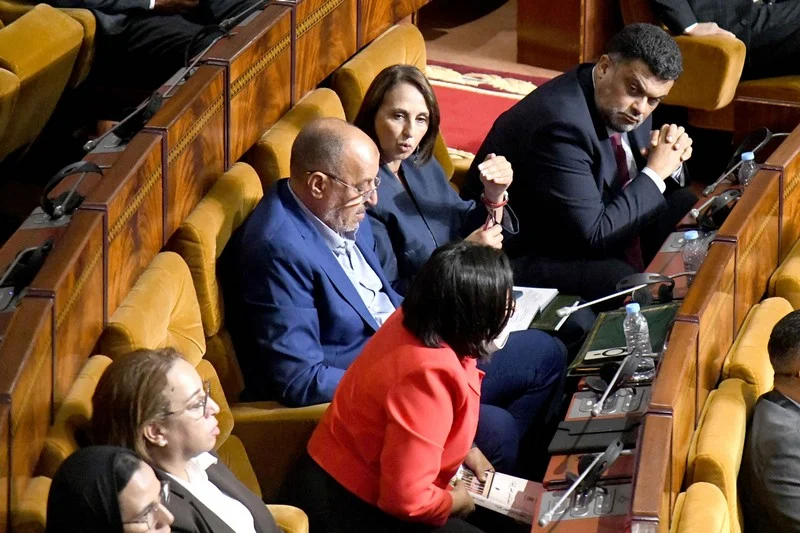
The Speaker of the House continued during the session, which was attended by the French President’s accompanying delegation and government ministers headed by Aziz Akhannouch.
“I take this opportunity of welcoming you in the heart of the Moroccan legislative institution to remind you first of what was stated in the royal speech delivered by His Majesty to the members of Parliament on the occasion of the opening of the current legislative session on October 11, where His Majesty expressed, on his own behalf and on behalf of the Moroccan people, sincere words of thanks and gratitude to France for its clear support of Morocco’s sovereignty over the Sahara and its backing of the autonomy initiative within the framework of territorial integrity as the sole basis for the fabricated regional conflict concerning the territorial integrity of the Kingdom.”
El Alami addressed the French President, saying, “On this occasion, we, the elected representatives of the Moroccan people, wish to express our deep gratitude and appreciation for this stance that champions historical legitimacy.”
He stated, “We assure you that the components represented in the Moroccan Parliament and, through them, the Moroccan people will always remember this wise position that upholds truth and legitimacy, as His Majesty has affirmed; regarding the territorial integrity of the Kingdom, this is a sacred and existential issue for Moroccans.”
President Macron, in his speech expressed his gratitude to Moroccans who contributed to liberating France from colonialism and participated in “the vitality of France in this century.”
Macron said, “Since 1955, a new era began, distancing Morocco and France from their peoples’ ten-year war, allowing both countries to move beyond the wounds of the colonial period,” noting that “when France reflects on its past relations with the Kingdom in the eighties, it feels gratitude.”
He added, “We are grateful to all the men who came from Morocco to liberate France, as all Free French Forces organized everywhere, and Moroccan citizens shed their blood for our freedom.”
Macron also said, “There were wars, but also a period of living forces for peace, where tens of thousands of Moroccans contributed after the war to building France, intensifying its industrial activity, and our cities bear witness to that.”
The French President spoke about the Moroccan community in his country, saying, “A Moroccan community living in French cities participates in the vitality of France in this century; many elected officials, entrepreneurs, athletes, and artists, through their spiritual values, represent what Morocco has offered France to become what it is today.”
“There were also men who sought understanding and respect, and I believe they love this empire that spans thousands of years, recognizing its deep, irreplaceable identity, including Louis Massignon, Jacques Berque, and Hubert Lyautey.”


add your comment
Terms of publication : Not to offend the writer, people, sacred things, or attack religions or the divine self, and refrain from racist incitement and insults.