
Morocco has ranked the second-largest supplier of fertilizers to the European Union (EU), accounting for a substantial 24% of the bloc’s total imports.
This achievement places Morocco just behind Russia, which traditionally held the top spot, according to data released by the European statistical office, Eurostat, and reported by Russian news agency RIA Novosti.
While Russia continues to be a dominant player in the EU fertilizer market, its share has slightly declined in recent months.
Despite setting record-high levels of fertilizer exports to the EU in July, Russia saw a 13% monthly decrease in August, with its total exports to the bloc amounting to €173 million.
Key EU importers of Russian fertilizers include Poland, Romania, and Spain.
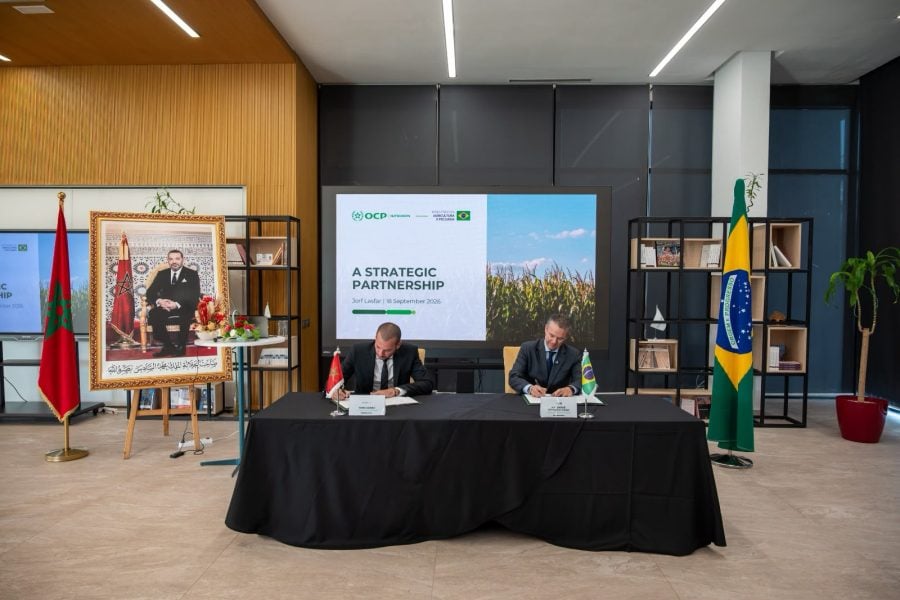
Morocco’s growing prominence as a fertilizer exporter to the EU is largely due to its substantial phosphate reserves, a key ingredient in fertilizer production.
Morocco has been strategically investing in its phosphate industry, expanding its production capacity, and enhancing its export capabilities.
According to official European data, Morocco’s phosphate fertilizer exports to the EU nearly tripled in July, reaching €111 million out of the EU’s total fertilizer imports of €640 million.
This surge in Moroccan fertilizer exports has been driven by several factors, including the EU’s increasing demand for agricultural inputs coupled with supply chain disruptions caused by geopolitical tensions.
Morocco’s strategic location, competitive pricing, and reliable supply have made it an attractive alternative for European buyers seeking to diversify their sourcing options.
The shift in the EU’s fertilizer import landscape has significant implications for both Morocco and the European bloc.
For Morocco, it represents a major economic opportunity, as it solidifies its position as a global leader in the phosphate fertilizer market.
The increased export revenue can be used to fund further investments in the country’s agricultural sector and support economic development.
For the EU, Morocco’s emergence as a major fertilizer supplier provides greater supply chain resilience and reduces its dependence on a single supplier. This diversification of sources can help mitigate the risks associated with geopolitical tensions and supply chain disruptions, ensuring a more stable supply of essential agricultural inputs for European farmers.







add your comment
Terms of publication : Not to offend the writer, people, sacred things, or attack religions or the divine self, and refrain from racist incitement and insults.