
When Hajar and her Latin American husband received a marriage permission document from a Moroccan court in July, they rushed to formalize their marriage that same afternoon—just ten hours before their flight back to Ireland—relieved to finally complete the process, which for mixed couples in Morocco is fraught with unclear information, complex procedures, high costs, and discriminatory practices.
The absence of a single official document outlining the required documents and the varying requirements from region to region contribute to the confusion. The process is lengthy, involving numerous documents and potential delays, making it stressful for couples with limited time.
“There’s barely any information available, and no office specifically assists mixed couples with the process,” complained Salma, a Moroccan woman married to a Yemeni born in Saudi Arabia and currently residing in Poland, in a statement to Hespress English.
“I relied mainly on Facebook groups, YouTube, and advice from people who had already gone through it. I sought details from the court twice, consulted an Aadoul, and scoured Google for answers,” she added.
“People seeking information on forums often still don’t know the final list of required documents. Everyone seems to have different information, causing confusion,” noted Mohamed Tahiri, a lawyer in Rabat, who spoke from his office to Hespress EN.
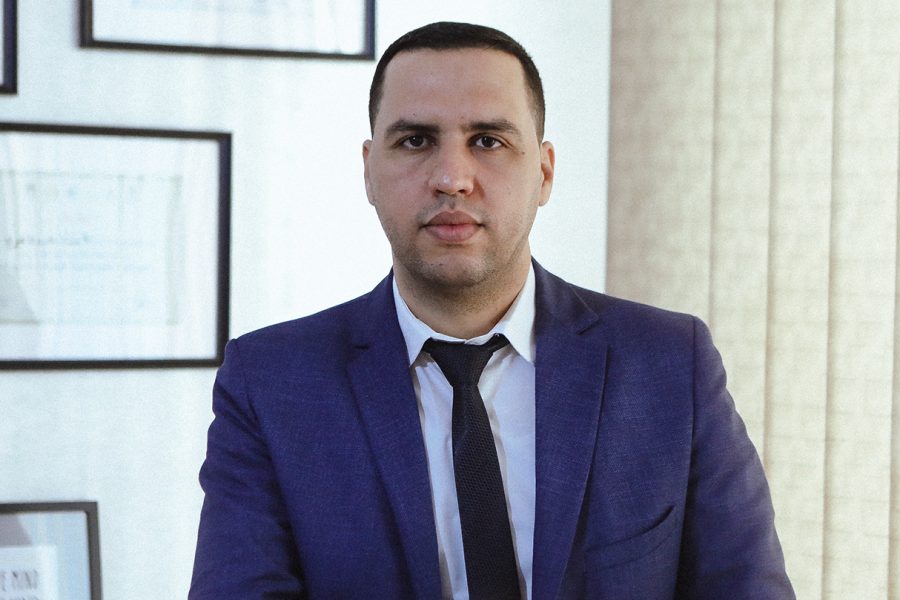
“This issue arises because no official document from either the Ministry of Justice, the foreign ministry, or the family ministry clearly defines the exact documents needed to submit a marriage application,” he continued.
These documents must come from both the foreign partner’s country and Morocco, a process that can take them at least 10 days within the kingdom— in the best-case scenario.
Tahiri emphasized that only his hands-on experience has enabled him to accurately identify the required documents, allowing him to guide mixed couples through the entire process.
But hiring a lawyer to handle this process isn’t always feasible for every couple as the process fees can cost between 15,000 and 25,000 MAD, according to testimonies gathered by Hespress English. Even a simple on-site consultation can be costly for some, as Salma found out.
“I spoke to two lawyers, but their fees were quite high for just helping with the process in diplomatic services even though I would still need to gather all the documents myself,” said Hajar who married a divorced Latin American and now living in Ireland. She requested anonymity while discussing the unclear procedure for obtaining the necessary documents with Hespress English.
Even lawyers may not always have the most up-to-date information, as demonstrated by the case of the Moroccan woman living in Ireland.
Her situation was complicated by her husband’s previous divorce in his home country, prompting the lawyer to advise her to obtain a matching divorce ruling certificate in Morocco, a potentially time-consuming and costly process, with translation fees for the required documents reaching up to 2,000 MAD.
“In the end, I didn’t even need it, as my husband’s marital status was already clearly stated on the marriage suitability document,” she said, recalling how she defended her case before the court.
The lack of clear information also creates room for brokers to exploit mixed couples who are simply trying to gather the necessary details and complete the process as quickly as possible. With tight timelines and the fear of missing sometimes a pricy flight, couples are left vulnerable to such exploitation.
“I was warned to stay away from brokers near the court,” said Salma, echoing the experience of the lady living in Ireland who said she encountered a broker right outside the foreign ministry office. The broker “insisted on accompanying her Latin American husband for the translation process, rather than allowing her to handle it herself.”
What made the process even more complicated for the Moroccan woman living in Ireland was the requirement for her husband, coming from a non-Muslim country, to provide proof of his conversion to Islam from an Aadoul—an extra document not required for Moroccan men marrying non-Muslim women, as stipulated in Article 39 of the Moroccan Family Code.
This article is often viewed as discriminatory against Moroccan women seeking to marry non-Muslim foreign partners, as highlighted by Fatiha Chtattou, a human rights activist and member of the Federation of Women’s Rights Associations, and Rhizlaine Benachir, a founding member of the Jossour Moroccan Women’s Forum.
“Article 39 is in direct conflict with Morocco’s international commitments to gender equality and women’s right to choose their partners freely,” underscored activist Chtattou, in a statement to Hespress English.
She demanded that the forthcoming Moroccan Family Code should “remove the religious requirement that currently prohibits marriage between a Muslim woman and a non-Muslim man.”
Even if this document is requested, it doesn’t appear to be a significant obstacle, as the suitability of a marriage certificate, obtained from either the spouse’s embassy in Morocco or their country of residence, is a crucial requirement for all marriages, according to Lawyer Tahiri and the two women who shared their experiences with Hespress English.
“My husband went to the Yemeni embassy in Morocco, but they refused, informing us that this document is only issued to Yemenis residing in Morocco, not those living abroad,” recounted Salma.
while the Yemeni embassy in Poland eventually issued the document, they initially refused, citing unfamiliarity and insisting it be obtained from Yemen or through the immigration office in Saudi Arabia, complicating the process for the couple. Lawyer Tahiri also emphasized the complete lack of information about the timeline for completing the marriage process, a challenge faced by the two Moroccan women.
“Many foreign partners come to Morocco with limited time, only to find that the marriage process takes longer than expected,” said the lawyer. “This adds significant stress to couples, as it may require multiple trips back and forth, which can be both time-consuming and costly.”
To streamline the process and complete it within a limited stay in Morocco, extensive research months in advance is the key. This was the case for the two women who managed to complete the process in just two weeks.
What makes it even more difficult is that if the couple manages to complete the process during the foreign partner’s stay in Morocco, the marriage permission document is only valid for two weeks.
The complexities of the Moroccan marriage process often drive mixed couples to choose marriage in their foreign partner’s country or a third country with faster procedures, sometimes only 48 hours.
The marriage certificate can then be submitted to Moroccan diplomatic services for approval, which is often granted, according to the lawyer.
In worst-case scenarios, this complexity has led some to marry unofficially, bypassing Moroccan embassies in foreign countries. In Egypt, this issue became prominent, as some Moroccan women chose to avoid official documentation, raising concerns.
To address this, the Moroccan Community Association in Egypt launched a campaign in 2022 called “Protect Yourself from Informal Marriage” to highlight the risks of informal marriages between Egyptians and Moroccan women.
“When the process is overly strict, couples may choose to marry abroad instead. As a result, the goals behind the lengthy process are often not achieved,” argued Tahiri.
The process involves a crucial step—a police investigation—that is bypassed if the couple marries abroad. This investigation is designed to assess whether the foreign spouse poses a potential threat to public order in Morocco and to evaluate their financial ability to support a Moroccan wife, particularly if she plans to move to a country with inadequate legal protections for women.
“While it’s a lengthy process, it’s essential for ensuring the security of our country and the well-being of Moroccan women,” defended human rights activist Chtattou.
This is particularly evident when considering the statistics revealed by the Supreme Council of Judicial Authority in 2023. Between 2017 and 2021, 73% of these marriages involved a Moroccan bride and a foreign groom, with French, Saudi, and Turkish nationals being the most common foreign partners, and this trend has been steadily increasing.
In total, 27,626 requests were made to document mixed marriages during this period, representing approximately 2.34% of all marriage registrations.



add your comment
Terms of publication : Not to offend the writer, people, sacred things, or attack religions or the divine self, and refrain from racist incitement and insults.