
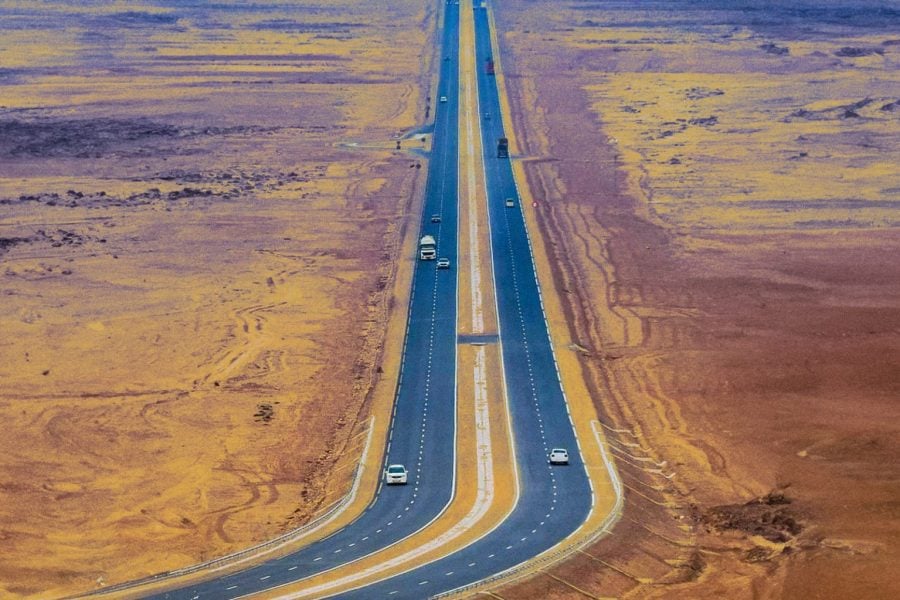
The year was 2015. Undeterred by dust and sandstorms, construction crews and highway engineers moved to construct a 1055 km highway network in Morocco’s southern expanse. Today, the project is 97 percent finished, and its impact is set to spillover across the nation.
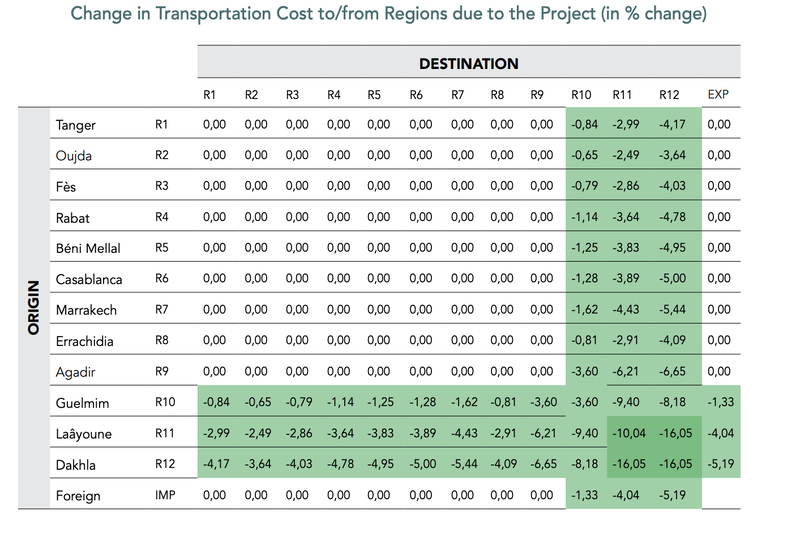
The Tiznit-Dakhla highway with a budget of $850 million, aims to significantly improve transportation in the region. Once completed, it will reduce travel time and costs, benefiting over 2.2 million people across ten provinces.
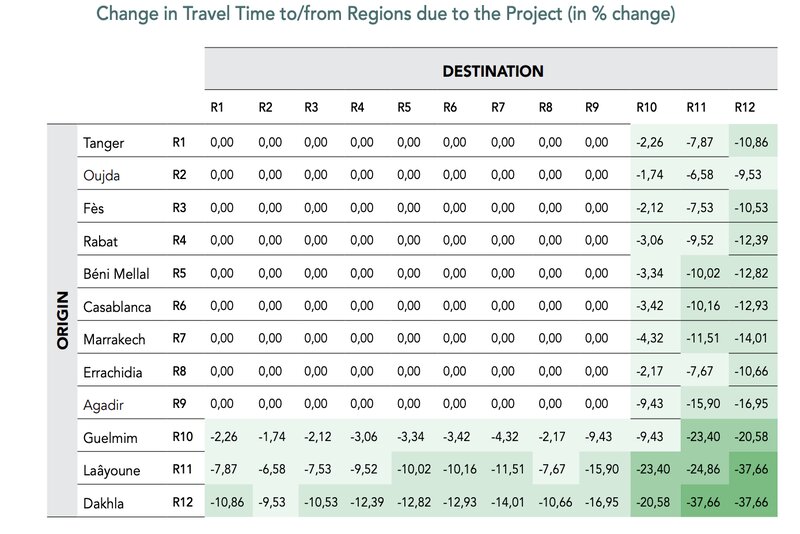
By connecting these once-isolated regions to the country’s economic hubs, accessibility has increased by over 60% in some southern provinces, such as Laâyoune and Es-Semara/Tarfaya.
But thanks to Morocco’s interconnected transportation system, improved accessibility and cost of travel is set to improve for the entire country.
Mbarek Fancha, the director of the provisional directorate for the development of the Tiznit-Dakhla highway, told Hespress EN that this crucial infrastructure project, is nearly complete with the construction of 16 major bridges.
According to the director, the project has generated over 2.5 million workdays and is projected to create over 30,000 direct and 150,000 indirect jobs annually. The project has also played a paramount role in stimulating investment and localization along the route and in the cities and regions it traverses.
The project has had a substantial impact on the national contracting industry with the involvement of over 35 companies, numerous engineering firms, and quality control laboratories.
The highway boasts over 7 rest areas, 18 wastewater treatment stations, and bypass roads in all cities. It also has a continental dimension, aiming to connect Morocco with its African hinterland.
With a daily traffic volume exceeding 10,000 vehicles, the director highlighted the road’s critical role as a major artery for the region.
The highway boasts over 7 rest areas, 18 wastewater treatment stations, and bypass roads in all cities. It also has a continental dimension, aiming to connect Morocco with its African hinterland.
The project has involved extensive earthworks, including over 33 million cubic meters of excavation and constructing more than 1570 drainage structures.
All of this was undertaken to create a road with international standards and to restructure the national road network. The director confirmed that road safety equipment, vertical and horizontal signage, and guidance signs have been fully installed.”
Challenges and Opportunities
The remaining work is concentrated between Tiznit and Guelmim, which encompasses the most challenging sections due to the mountainous terrain of the Anti-Atlas.
The director outlined the significant challenges faced during the project, including the impact of the COVID-19 pandemic in 2020, which disrupted work.
“In 2021 and 2022, geopolitical events led to shortages and significant price increases for raw materials,” he said.
The project’s encountered natural obstacles such as sand encroachment, salinity, water scarcity, and a lack of construction materials in some areas, particularly between Tantan and Dakhla, in addition to the harsh climatic conditions and the complexity of coordinating over 150 contracts for structures, sections, and ongoing works.
Despite these hurdles, the expressway is already showing positive impacts. Increased speed limits have led to shorter travel times, particularly in Laâyoune-Sakia El Hamra and Dakhla-Oued Ed-Dahab.
Economic analyses indicate that the Tiznit-Dakhla expressway is expected to have a minimal impact on the national economy in the short term. Since the project does not involve substantial immediate changes to existing infrastructure, its effects on national GDP and household consumption are projected to be less than 0.01%.
However, the long-term benefits are considerably more promising. As new infrastructure develops over time, the expressway’s positive impacts will spread beyond the southern region. Ultimately, it is anticipated to boost national real GDP by 0.0322% and increase real household consumption by 0.0908%.
Although the project clearly reduces regional disparities, regions outside the South are projected to experience proportionally larger long-term benefits in terms of growth and welfare than their initial gains.
While the southern regions will experience the most direct economic gains, the project is expected to generate between $486 million and $713 million in additional economic activity nationwide over 20 years.
Despite a low internal rate of return, the project is seen as a strategic investment. Improved transportation infrastructure will attract new businesses, create jobs, and stimulate economic growth in the region and beyond.
It’s worth noting that Morocco's road infrastructure plays a pivotal role in its economy, transporting 90% of passengers and 75% of goods.
The country has made substantial investments in expanding its road network, which has grown from 10,348 kilometers of paved roads at independence to over 45,240 kilometers today.
Highways and expressways, while still representing a relatively small portion of the total, are crucial for economic development and accessibility.
The government's "Roads Plan for 2035" outlines ambitious goals to further expand and modernize the road network. This includes constructing new highways and expressways, upgrading rural roads, and rehabilitating existing infrastructure.
The plan specifically targets increasing the highway network by 1,700 kilometers to a total of 3,500 kilometers by 2035.







add your comment
Terms of publication : Not to offend the writer, people, sacred things, or attack religions or the divine self, and refrain from racist incitement and insults.