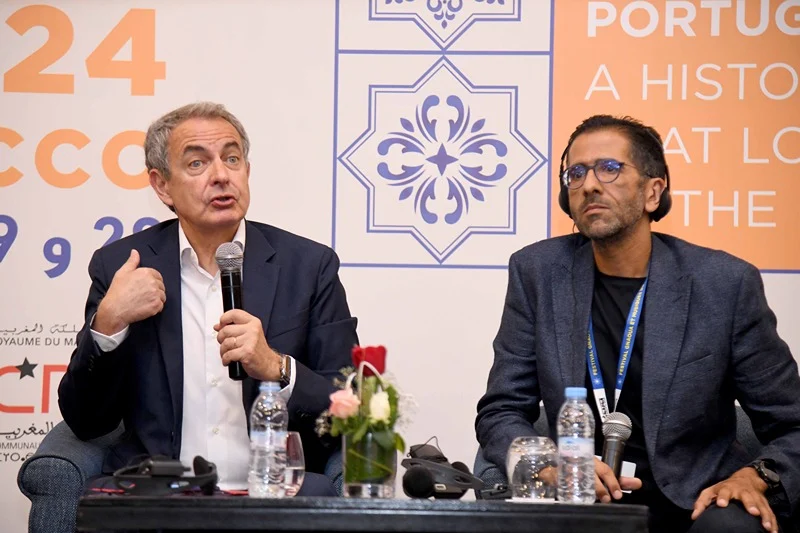
The Forum for Human Rights of the Gnaoua Festival and World Music kicked off today, with José Luis Rodríguez Zapatero as one of the keynote speakers at the forum.
Zapatero’s speech centered on the Mediterranean’s role: is it a border or a bridge between Africa and Europe?
Zapatero addressed key topics including strategies for strengthening ties to withstand crises and changes, fostering a unified perspective, and prioritizing shared interests.
Zapatero also discussed the potential impact of the 2030 World Cup on relations between Morocco and the European Union, as well as between Africa and the European Union.
Despite the dark clouds of current conflicts, like the war in Ukraine and the situation in Gaza, Zapatero held fast to the idea of achieving global peace by 2030.
He emphatically condemned blind support for aggression and underscored the importance of respecting Palestinian rights.
Peace, he said, is a fundamental right under siege by violence and war. He reminded the audience of how the global pandemic highlighted the necessity of international cooperation.
Looking beyond immediate crises, Zapatero urged the world to move past nationalism and rivalries.
Driss El Yazami, president of the council of the Moroccan community abroad, also delivered a keynote speech at the forum.
Yazami said that this forum is crucial as a platform for democratic debate and citizen deliberation.
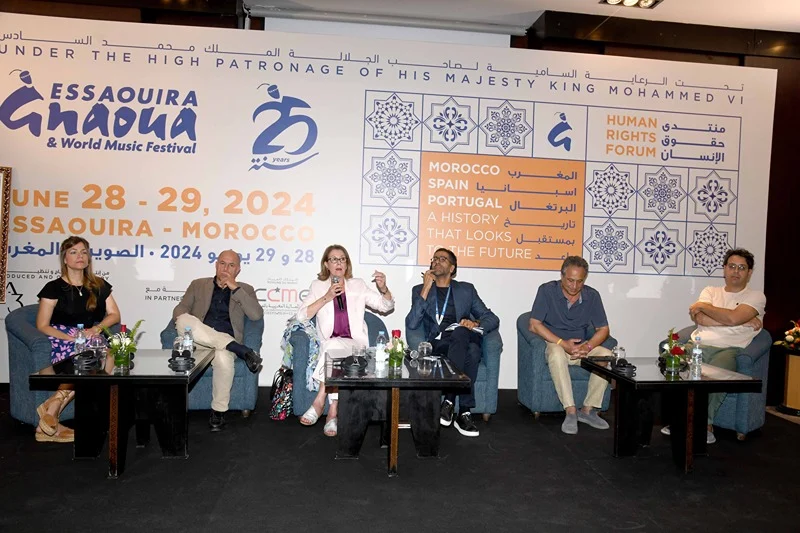
This year’s edition focuses on the theme “Morocco, Spain, Portugal: A History with a Future,” which is particularly relevant in light of Morocco’s joint bid with Spain and Portugal to host the 2030 World Cup.
Yazami acknowledged the challenges of organizing a tri-nation World Cup but highlighted the immense opportunities for strengthening cooperation between the three countries.
He stressed the need to break down stereotypes and prejudices, urging increased efforts to promote mutual understanding, dialogue, and solidarity.
Yazami also pointed to the growing importance of the diaspora in all three nations.
Spain and Portugal have large emigrant communities, while Morocco is experiencing a rise in both emigration and immigration.
Yazami said that Spain, Portugal, and Morocco share a common interest in supporting their respective global communities.
The president of the council advocated for increased collaboration in areas like translation and history, urging more translation of literature and academic works between the three countries.
The forum aims to move beyond the traditional perception of the Mediterranean as a dividing line between Africa and Europe.
Yazami instead called for a vision of the Mediterranean as a junction, a meeting place, and a space for exchange and transnational cooperation.
The forum is expected to bring together local and international actors to discuss human rights issues, cultural exchange, and the future of the Mediterranean region.




add your comment
Terms of publication : Not to offend the writer, people, sacred things, or attack religions or the divine self, and refrain from racist incitement and insults.