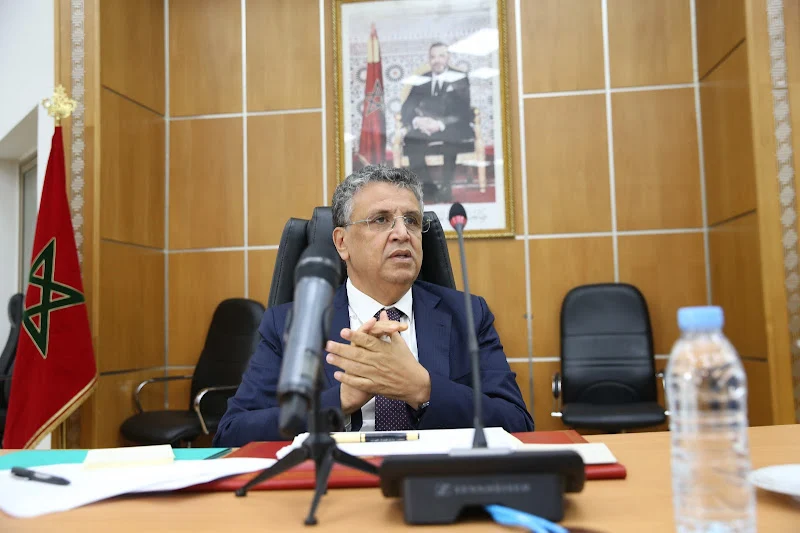
Voices within Morocco’s women’s rights movement have received Justice Minister Abdellatif Ouahbi’s comments on the move towards the rescission of “public prosecution in disputes where the state is not a party” with much “reservations,”sources indicate.
They point out that failing to exempt cases of rape, violence, and paedophilia will prompt impunity for offenders since Ouahbi did not present any explicit indication of such an exception.
Hespress observed that the minister’s remarks – made during a Justice and Legislation Committee meeting on the Civil Procedure Bill – indeed held no reference to exempting cases of sexual assaults that are likely to trigger “human rights controversy’.’
This “obscurity” could be seen as turning a deaf ear to the demands of the Moroccan Human Rights and Women’s Movement to the complete exemption of these cases from conciliation, rights activists warned during their talk to Hespress.
Perpetuating Impunity
Lawyer and human rights advocate Fatiha Chtato stated that “the reduction of the pressure on the judiciary through establishing an institution for conciliation is a matter of emergency and is needed immensely as we have been calling for over many years.”
“Yet, violence against women, their rape, or sexual assaults on children should never be left for reconciliation and mediation. Reconciliation in these cases signifies securing impunity for offenders, which would be a major setback in the protection of women’s rights”, she added.
Chtato accentuates the need to “take these cases with complete severity and with no reconciliation in case public prosecution was abandoned. Doing otherwise would walk us back to the terrible practice of marrying the victim to her rapist as avoidance of its imprisonment”, she added.
She noted, “We have to maintain our endeavours to secure judicial protection for women and children’s rights, as they are the most vulnerable, instead of founding legal loopholes for manipulation”.
Taking the issue from legal regard to reinforcing the role of legislation in shielding women’s and society’s rights, Chtato warned of the “collusion that has been taking place through financial compensation or settlements unregulated by the court, which we have been observing and warning of frequently’’.
Stressing that reforms should not harm the rights of any societal group – sensitive ones in particular – she indicated that public prosecution made sure to give at least some degree of punishment and law application.
Heavy Cases
Human rights activist and former president of the Federation of Women’s Rights Leagues, Latifa Bouchoua, stated that “Being open on reconciliation must consider the nature of cases that are not subject to reconciliation at all, and are rather to be punished, exposing the judiciary’s truthfulness in protecting women’s rights.”
“Reconciliation in some disputes might be suitable for cases that are not rights-based or misogynistic or gender discriminatory, like violence against women.”, she explained.
No different from Chtato, Bouchoua valued the shift towards mediation, which must be, according to her, “based on universal civil pillars and human rights foundations that encompass the advice of various activists to prevent setbacks.”
“The state must remain a party in some violence-related heavy cases, given that a wide variety of Moroccan women are yet to confront cultural and societal obstacles hindering their capability to speak out and take lawsuits to get their rights”, she pointed out.
Bouchoua accentuated that “the public prosecutor must keep initiating proceedings automatically, should there be any severe violence or pedophilic practices.” Welcoming “mediated deals” and financial resolutions in these related cases, as has been practised previously, would generate tens of new victims under the eyes of the law.
“Stipulating to exempt these cases from reconciliation by the legislator should make sure that no waivers may be granted and ensure the state’s presence as a party within the litigation process’’, she concluded.




add your comment
Terms of publication : Not to offend the writer, people, sacred things, or attack religions or the divine self, and refrain from racist incitement and insults.