
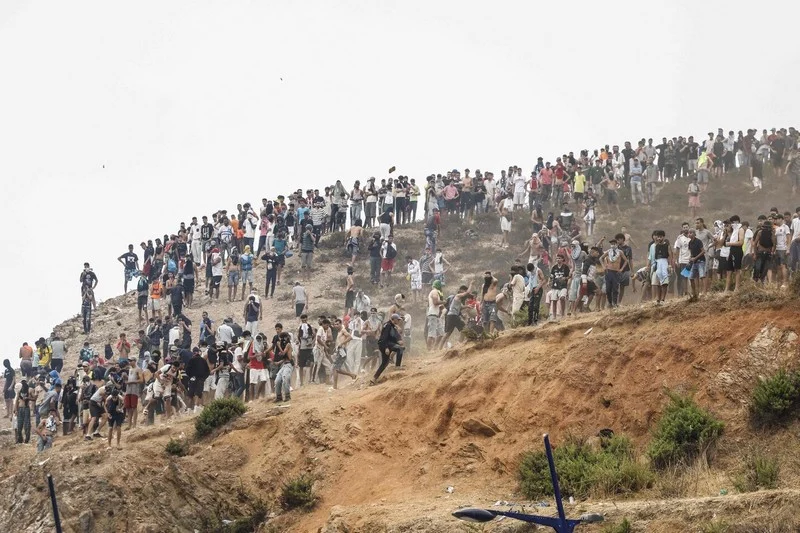
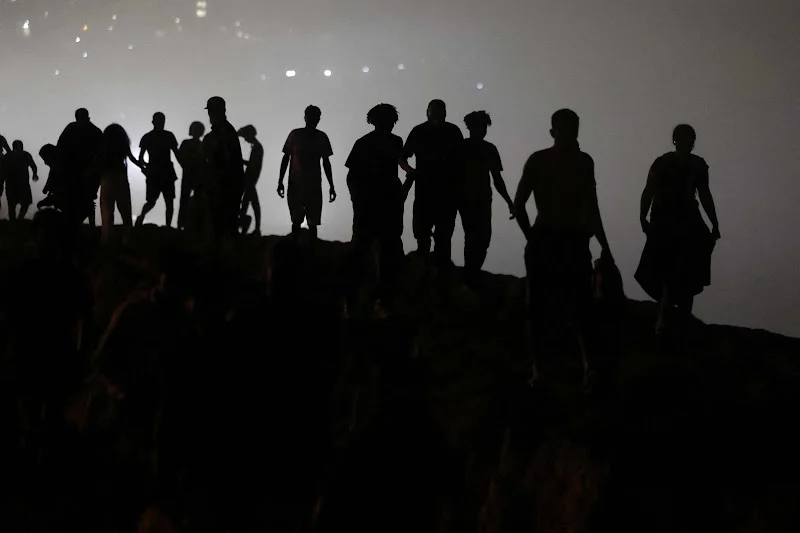
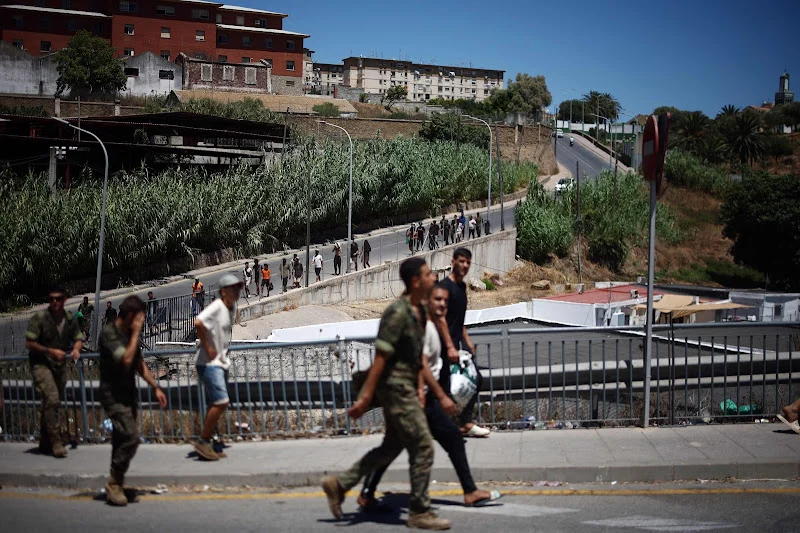
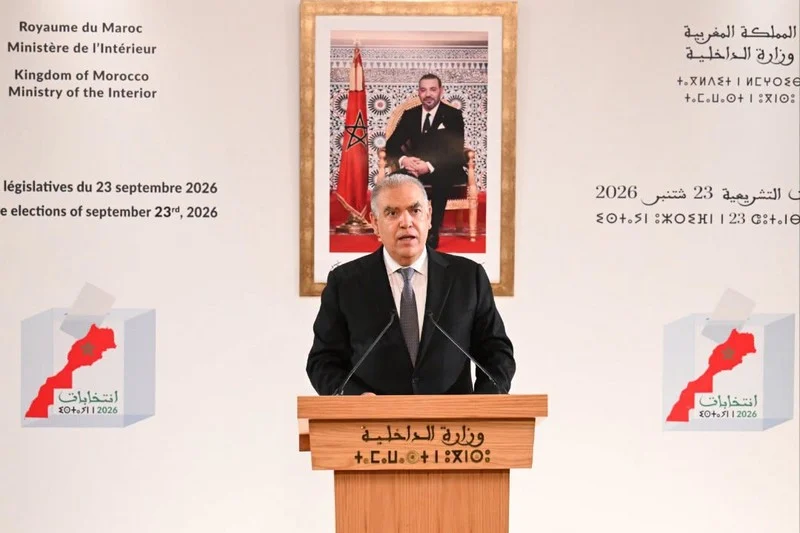
Morocco and Spain are holding consultations on how to address the irregular migration crisis following the recent events in Ceuta, with particular focus on Moroccan minors and the legal challenges surrounding their return, Moroccan Justice Minister Abdellatif Ouahbi told Hespress AR.
The talks between the Moroccan and Spanish justice ministers are focused on developing a joint approach to Moroccan minors in Ceuta, including mechanisms to verify their identities and facilitate their return to their families.
The discussions also seek to strengthen legal and institutional coordination in the fight against human trafficking networks that exploit teenagers seeking to reach Europe.
Morocco maintains that it is prepared to take responsibility for Moroccan minors and receive them back after their identities are verified and their cases assessed individually. At the same time, Rabat argues that addressing irregular migration cannot amount to turning Morocco into a guardian of Europe’s borders or leaving Morocco and Spain alone to bear the legal, political and humanitarian costs of managing migration flows.
Moroccan authorities also argue that certain legal and administrative practices in destination countries may create the perception among minors and migrants that reaching Ceuta provides a path to settling in Europe. Officials say trafficking and smuggling networks exploit that perception to encourage further migration attempts.
Minors are victims, not criminals
Ouahbi said Morocco was committed to the return of all Moroccan minors in Ceuta and had no objection to receiving them back, provided their identities were verified.
“Morocco is a responsible country when it comes to its minors, and we have to discuss the future of these children with their families,” Ouahbi said, stressing that children should be with their families and that cases submitted by Spanish authorities should be handled individually after confirming each minor’s Moroccan nationality.
The justice minister said Morocco considers minors attempting irregular migration to be victims rather than criminals.
“We do not consider these children criminals. We consider them victims of human trafficking,” he said.
Ouahbi said Morocco’s criminal justice policy was primarily focused on trafficking networks and those involved in violence and arson, rather than children and teenagers. He said the latest figures available to him indicated that about 100 people were facing prosecution in cases involving violence, human trafficking or arson.
He also said Moroccan authorities had sought to avoid violent confrontations with minors during the events because of the nature and number of those involved. The priority, he said, was to protect the children and avoid the consequences that could result from the use of force against them.
The minister also pointed to Morocco’s constitutional protection of freedom of movement, saying authorities could not prevent a Moroccan citizen from traveling from Rabat, for example, to northern Morocco simply because they suspected the person intended to migrate.
The legal situation changes, however, once a person begins attempting to migrate irregularly, he said.
Calls for broader European involvement
Ouahbi said responsibility for addressing migration should not remain limited to Morocco and Spain.
The legal, political and humanitarian costs of the migration crisis should not be borne by the two countries alone, he said, arguing that the European Union should also play a role in developing joint and sustainable solutions.
He described Spain as a friend and key partner and said Rabat was committed to preserving and strengthening relations with Madrid.
“Spain is a friendly country, and we do not want to lose a friendly country. We want to address the problem together,” Ouahbi said.
He also warned that some parties were seeking to exploit tensions surrounding irregular migration to undermine relations between Morocco and Spain.
Ouahbi said both countries were aware of such attempts and should prevent migration-related disputes from damaging their broader partnership.
He called for stronger direct consultation and coordination between Rabat and Madrid to prevent migration issues from becoming a source of tension, arguing that the strategic interests and ties between the two countries required disputes to be addressed through cooperation, trust and shared responsibility.
“The main entry point for a solution is cooperation at the legal and institutional levels, and serious cooperation between countries that share borders,” he said.
Focus on trafficking networks
Regarding minors, Ouahbi rejected a punitive approach.
“We are not prepared to sacrifice our teenagers and young people. They are Morocco’s future, and we will not take retaliatory measures against any young person or teenager. Our main focus will be on human traffickers,” he said.
He said criminal proceedings would target those involved in violence, arson and attacks against minors.
Traffickers and smugglers could face more serious criminal charges when their operations result in migrants dying at sea, he said, adding that such cases could amount to homicide depending on the circumstances.
Ouahbi reiterated that Morocco’s approach was based on protecting minors rather than criminalizing them.
“Children and teenagers are victims, and we will do everything we can to protect them,” he said, while stressing the importance of continued coordination with Spain and the EU to develop joint legal and institutional responses to irregular migration.



add your comment
Terms of publication : Not to offend the writer, people, sacred things, or attack religions or the divine self, and refrain from racist incitement and insults.