
Abdellatif Jouahri, governor of the Bank of Morocco, said after the latest meeting of the central bank’s administrative board, that the decision will depend on the indicators recorded during the second quarter of this year, leaving the door open to all expectations.
Is the government prepared for a new inflationary wave after Ramadan? Economists have been asking this question in light of the ambiguity of inflation forecasts and the direction of the Bank of Morocco, especially during the past and current periods, as the Kingdom is experiencing a period of inflationary stagnation; however, the gradual increase in the prices of vegetables and some consumer items since the second half of the holy month of Ramadan and renewed talk about removing subsidies on butane gas have reinforced expectations of an upcoming inflationary wave.
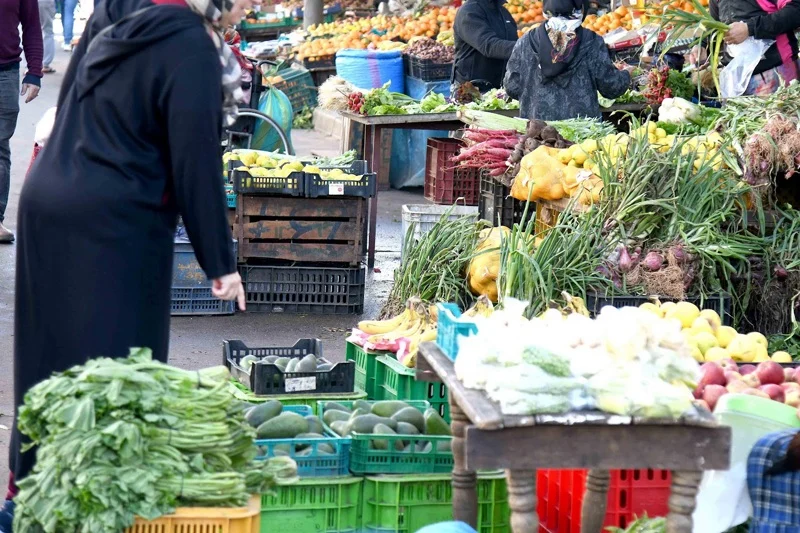
Since the end of last year, the government has made significant efforts to ensure the availability of products at relatively low prices on the tables of Moroccans during Ramadan, intensifying price control and anti-monopoly campaigns, capitalizing on the suspension of exports of vegetables and fruits abroad, and expanding customs exemptions on some products; however, these measures remain limited in the face of rapid internal and external changes.
Supply balance
Agricultural experts have downplayed the importance of the recent rainfall in saving the agricultural season, which the Bank of Morocco has predicted will not exceed 25 million quintals of cereals.
Hence, the threat remains about providing the necessary supply of vegetables and fruits in the market and ensuring price stability after Ramadan, especially since the upcoming period includes a series of consumption dates that stimulate demand. These include Eid al-Adha, the summer vacation season and the return of Moroccans living abroad.
Mohammed Amin Al-Hassani, an expert in applied economics, said that maintaining the balance of supply and price stability in the markets during the coming period requires the mobilization of huge funds by the state, which represents an additional burden on the treasury, which is facing a set of challenges represented in financing structural frameworks, such as universal health and social coverage, direct social support, direct housing support and others.
In a statement to Hespress, Al-Hassani explained that the current indicators on the evolution of prices of a range of consumer products over the past two weeks indicate a significant development, despite the government’s support and monitoring measures to ensure the supply of markets and the balance of supply.
The speaker emphasized that the high demand does not include vegetables, fruits and various foodstuffs; it also extends to loans, as successive increases in interest rates on loans have not curbed the demand for borrowing despite the high costs associated with it.
The butane bill
The government’s policy of gradually lifting subsidies on some food products, especially butane gas, is expected to increase after Ramadan due to the ambiguity of the government’s policy on the gradual removal of subsidies.
According to previous statements by the prime minister before parliament, it was expected to start removing subsidies on this commodity starting this April, before this step was postponed indefinitely, leaving the door open to the repercussions of this measure, which will affect a range of sectors.
Rachid Ksour, an expert in public finance, told Hespress that a sector such as poultry farming, which relies on subsidized butagas, will see its operational costs jump to new levels after the removal of the subsidy and the increase in the price of the cylinder, explaining that poultry prices will rise in the market as a result, as will the prices of some types of vegetables in the market in the coming period.
Ksour stressed that the new “butagas” bill will cast a shadow on supply in food chains, for example, as well as some sectors that used to rely on subsidized gas, warning that the expected repercussions of the gradual removal of subsidies on this substance could be a direct reason for the government to slow down on taking this step under the current economic conditions, especially since dealing with the potential effects in this inflationary context will be difficult and complicate maintaining the balance of public finances.








add your comment
Terms of publication : Not to offend the writer, people, sacred things, or attack religions or the divine self, and refrain from racist incitement and insults.