
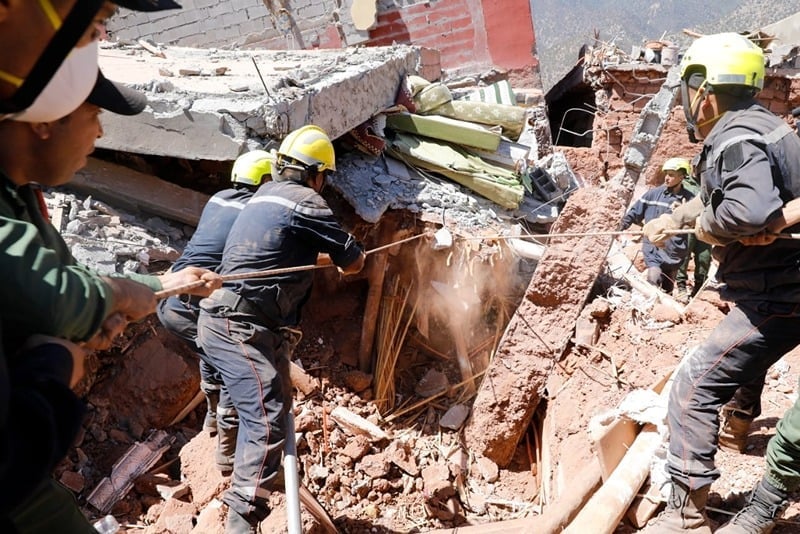
The National Institute of Geophysics said that aftershocks in the Haouz region will continue for many months, emphasizing the need to anticipate ongoing aftershocks in the future.
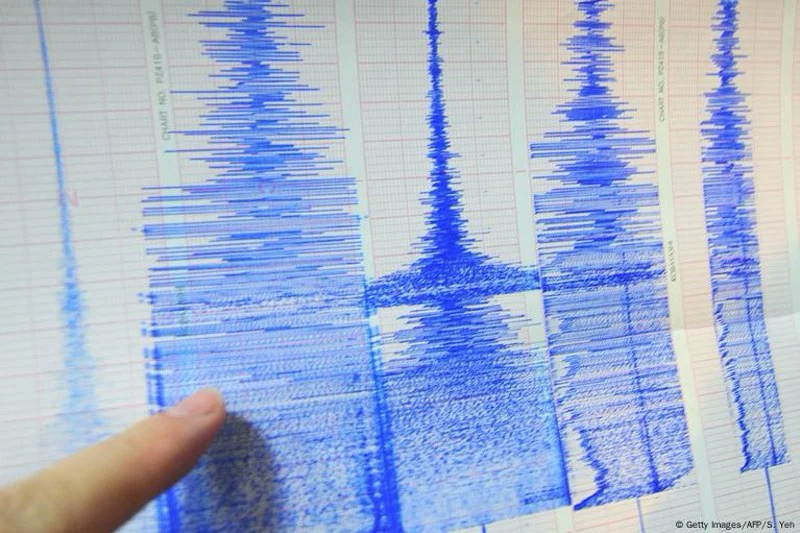
This warning comes after the institute recorded an aftershock measuring 4.3 on the Richter scale in the Haouz region today at 7:05 a.m., centered in the Aghbar commune.
The European-Mediterranean Seismological Center detected a quake in the Haouz region at the same time, registering 3.3 on the Richter scale, with an undetermined depth, consistent with data from online earthquake tracking services.
This aftershock is a continuation of the Haouz earthquake, which has produced thousands of aftershocks since its occurrence, according to Nasser Jebbour, director of the National Institute of Geophysics.
Jebbour stated that the depth of the quake was 5 kilometers, emphasizing that it is part of the ongoing aftershocks of the Haouz earthquake, which will persist for a considerably long time.
He added that both the European-Mediterranean Seismological Center and online earthquake tracking services are unable to precisely gauge the quake’s strength due to the distance from Morocco.
Jebbour characterized the quake as “not strong at all,” considering the international Richter scale, deeming it normal and expected as a continuation of the ongoing Haouz earthquake.
Residents of Chichaoua and Marrakech reportedly felt the quake strongly, prompting inquiries about its causes.
Jebbour explained that the quake may signify tectonic energy release and balance restoration in an area that may have experienced destabilization after the violent Haouz earthquake.
He noted that today’s quake is not the strongest since the Haouz earthquake, with thousands of quakes occurring without being felt by residents.






add your comment
Terms of publication : Not to offend the writer, people, sacred things, or attack religions or the divine self, and refrain from racist incitement and insults.