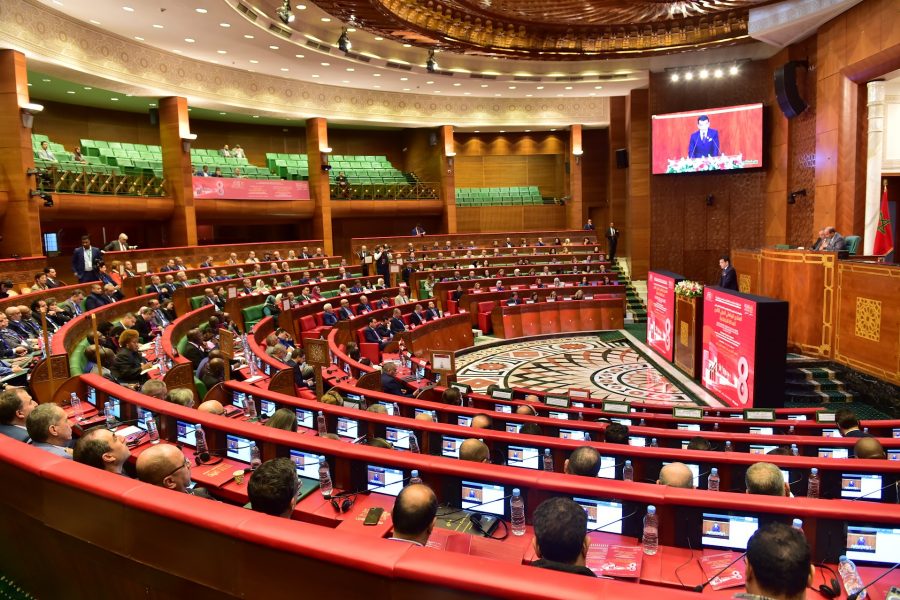
The government will focus on employment as a national priority, Head of Government, Aziz Akhannouch, said Monday in Rabat.
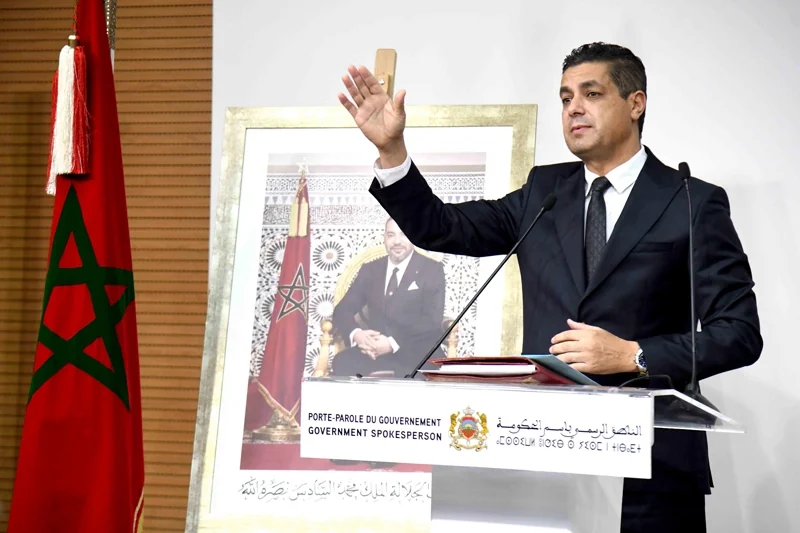
“The government will focus on employment and make it a national priority, which will require concerted efforts and a strong willingness to promote employment-creating investments and develop the national employment strategy”, Akhannouch underlined in a speech read on his behalf by Minister Delegate in charge of Relations with Parliament, government spokesperson, Mustapha Baitas, on the opening of the 8th International Parliamentary Forum on Social Justice.
This approach “will make it possible to offer employment opportunities to all Moroccans, in urban and rural areas, to integrate various programs for greater transversality and to increase the effectiveness of the actions of all stakeholders aimed at creating decent work opportunities in our country,” he argued.
In this regard, he stressed that the government has successfully completed the founding stage of building and strengthening the bases of the social State and has successfully completed all the social projects undertaken during the first half of its mandate despite difficult circumstances.
Government’s actions aimed at boosting employment and offering decent work opportunities have taken into account all the guarantees to ensure social protection for workers and employees, he pointed out.
Akhannouch also welcomed the 8th edition of the Forum, underlining the government’s commitment to decent work. He also spoke of the measures taken during the Covid-19 crisis to support families, businesses and workers, recalling that the Executive had put in place innovative strategies to promote employment, such as the “Awrach” program, which had achieved positive results with strong participation from women and rural areas.
He also mentioned the Forsa program, which embodies “a creative innovation and an ambitious governmental vision through which the State aims to overcome all the difficulties faced by young people with entrepreneurial projects and initiatives, while guaranteeing their access to sources of financing and, in this way, encouraging entrepreneurial work and creating employment opportunities, which are priorities on the government’s agenda.”
In addition, the Head of Government stressed that other measures had been introduced to offer decent work opportunities and guarantee social protection for workers. These include facilitating membership of the CNSS and ensuring fair medical benefits for all Moroccans. The direct social assistance program is also highlighted as an important initiative to strengthen the social state.
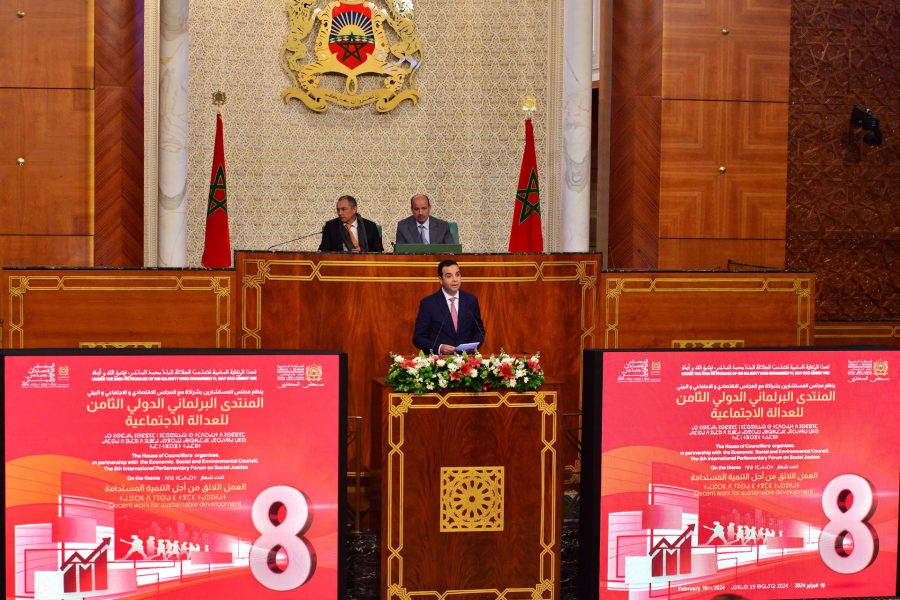
In parallel, the government is working on a new investment charter to boost employment and the national economy, he explained. It aims to improve the business climate, foster integration between education and business needs, and reform social laws such as the labor code to ensure stability and social peace.
For his part, the President of the House of Councillors, Enaam Mayara, highlighted the importance of issues such as gender equality at work, the eradication of child labor, the right of people with special needs to decent employment, and the restructuring of the informal sector. He noted that these issues are at the heart of the Sovereign’s concerns, and form part of the Kingdom’s constitutional and conventional commitments.
Mayara pointed out that the 2011 Constitution enshrines the principles of a cohesive society, guaranteeing security, freedom, dignity, equal opportunity and social justice. He stressed the importance of public authorities creating conditions that promote freedom, equality and civic participation.
For his part, the President of the Economic, Social and Environmental Council (CESE), Ahmed Réda Chami, affirmed that the Kingdom has redoubled its efforts to promote the conditions for decent work in both the public and private sectors.
These efforts include improving the legislative and regulatory system and implementing its provisions, as well as various programs and incentives aimed at supporting employment and entrepreneurial work, and increasing the guaranteed interprofessional minimum wage (SMIG) for civil servants and the guaranteed agricultural minimum wage (SMAG) for private-sector workers.
He stressed that the Constitution and national social legislation guarantee decent work by ensuring equal access to employment, fair wages with a legal minimum wage, labor agreements, health coverage, retirement, compensation in the event of job loss, protection against industrial accidents, occupational health, and the regulation of labor relations.
Despite persistent challenges, notably linked to the health crisis and the decline in job creation, job preservation remains a priority, he assured. Chami recalled the EESC’s recommendations to boost investment to stimulate economic growth and job creation, as well as to guarantee fundamental labor rights and establish regular social dialogue.





add your comment
Terms of publication : Not to offend the writer, people, sacred things, or attack religions or the divine self, and refrain from racist incitement and insults.