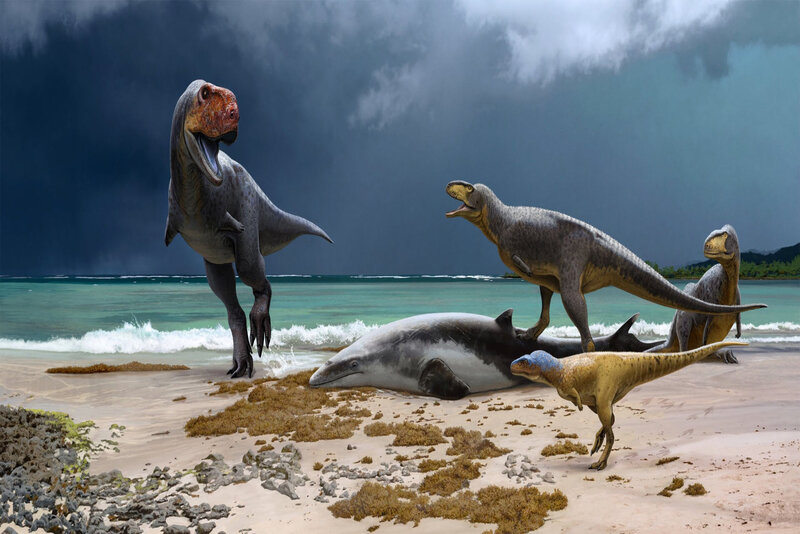
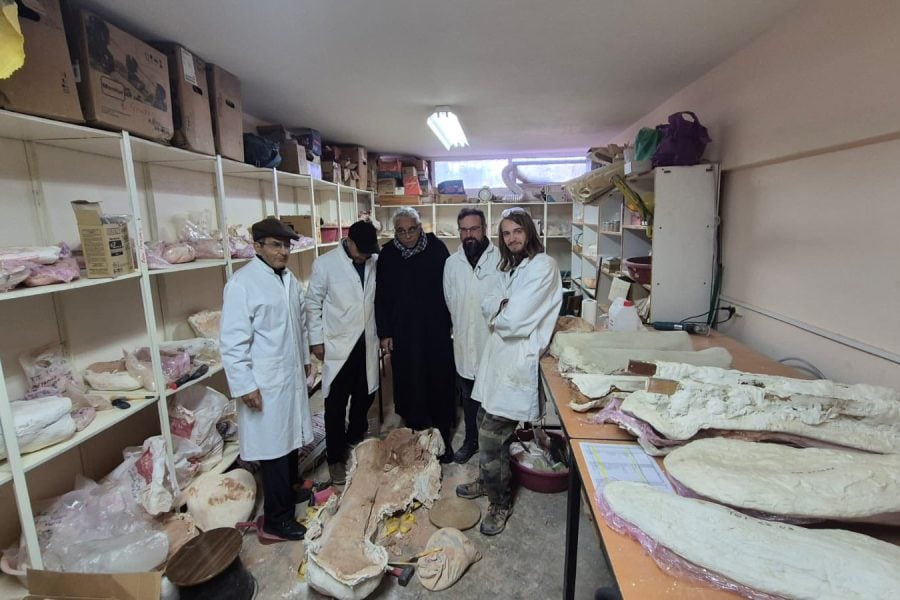
In a study published this week, paleontologists declared unearthing the fossils of two T. rex cousins, belonging to Abelisauridae, a family of carnivorous dinosaurs that were counterparts to the tyrannosaurs of the northern hemisphere, in the Moroccan Ouled Abdou Bassin.
The first finding is the tibia of a medium-sized abelisaurid from Sidi Chennane, with an estimated length of five meters, said the research paper shared in a journal called Cretaceous Research.
The tibia has a strongly hooked cnemial crest resembling that of the South American Quilmesaurus and Aucasaurus said the researchers.
“The highly rugose bone texture suggest the animal was mature, rather than a juvenile of the larger Chenanisaurus,” explained the study
The second finding is a small right-second metatarsal from Sidi Daoui. The metatarsal measures 190 mm in length, suggesting a small animal, of around 2.6 m in length.
In a statement to Sci News, paleontologist Nick Longrich of the University of Bath said “What’s surprising here is that these are marine beds. It’s a shallow, tropical sea full of plesiosaurs, mosasaurs, and sharks. It’s not exactly a place you’d expect to find a lot of dinosaurs. But we’re finding them.”
The study’s key take is that the newly discovered fossils indicate up to three abelisaurid taxa coexisted in Morocco’s upper Maastrichtian, demonstrating how dinosaur diversity in North Africa was extremely high before the end-Cretaceous mass extinction.
The two new theropod fossils found in the Ouled Abdoun Basin of Morocco’s Maastrichtian phosphate mines, which belong to the latest age (uppermost stage) of the Late Cretaceous Epoch or Upper Cretaceous series, show abelisaurid affinities.
The Sidi Chennane tibia resembles a South American species and is representative of a medium-sized abelisaurid.
Despite its modest size, the mature bone texture shows that the Sidi Daoui metatarsal represents a unique species of small-bodied, gracile abelisaurid rather than a juvenile of a bigger species, the researchers found.
“When T. rex reigned as a mega predator in North America, abelisaurs sat at the top of the food chains in North Africa,” said Professor Nour-Eddine Jalil, a paleontologist at the Natural History Museum and at the Universite Cadi Ayyad of Marrakech.





add your comment
Terms of publication : Not to offend the writer, people, sacred things, or attack religions or the divine self, and refrain from racist incitement and insults.