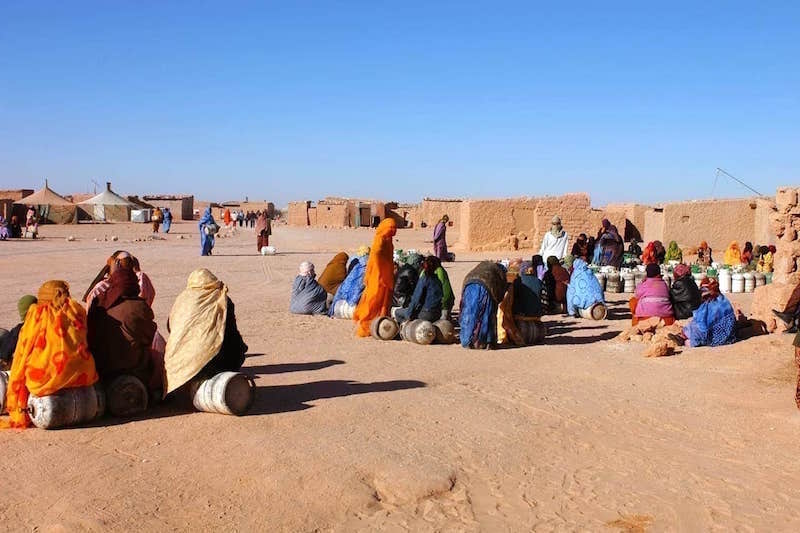
Moroccan researchers Malika Bensahra and Fatima Amrani from the Sidi Mohammed Ben Abdellah University of Fes recently published a study, exposing how human rights have been severely violated in Polisario camps’ prisons.
As the two investigated the reasons behind capturing and detaining Moroccan Sahrawi women, they delved and unveiled realities on the topic, and shed light on the tough circumstances of being forcibly detained in Polisario facilities, through multiple interviews with captives who fled Polisario prisons.
Why were women targeted and detained?
“Reaching people in Polisario camps for Moroccan researchers is very difficult,” said the researchers.
Polisario targeted young women and female children, which was confirmed by a fled detainee, who declared that she was captured when she was a child.
“I was with my aunt and Polisario troops raided our residence area. They took children, and I was one of the children kidnapped during that attack,’ she explained.
According to the researchers, it is important to note that the ladies who were kidnapped were civilians who had not been recruited by the Moroccan army.
The women in question had been kidnapped for a variety of reasons, including the fact that their fertility and youth were important features and traits that detainers wanted in them.
“Women were captured by Polisario troops in order to enlarge their population. Any woman can be subjected to sexual abuse by any man even if she is married. They want women to get pregnant and give birth to as many children as possible,” said a previous detainee to the researchers.
Detention periods :
The lengths of detention vary from person to person. The difference is in the era in which a person was taken.
According to the research called “Moroccan female detainees in Polisario camps’ prisons: grave violations of human rights”, it appears that those who were arrested in the years immediately following 1975 are more likely to experience human rights violations and are regarded as the inmates who have the longest periods of detainment, compared to others.
That is due to the fact that the Sahara cause was a recent problem, making it difficult to find or expose any violations, reads the study.
The violations Sahrawi women were subjected to:
Both male and female detainees report that they were subjected to different abuses and torture, but the study put an emphasis on women.
“We have been tortured. They beat us, we did not have enough food, and we kept working all day in building houses. They did not allow us to sleep,” said an ex-detainee.
Many detainees mentioned rape and sexual abuse.
“I have been tortured, and raped. I gave birth to my child in the prison. My two daughters were with me at the prison. One of them had been raped as well”. And that caused her a hemorrhage. They took her to Tindouf [to be hospitalized] but unfortunately, she died,” explained another detainee.
Because of lack of hygiene, reads a statement, “We saw our clothes moving slightly for they were full of lice. We did not have enough water to bathe, so we have been infested with head lice. We found them everywhere, on our clothes, in our beds in every spot”.
As homosexuality is a common phenomenon that is exacerbated and practiced in jails, reads the document, men were also the victims of sexual assault.
The issue is that homosexuality is being forced onto captives in this particular case.
The respondents shared their experiences and described how stigmatization and the scars that detention caused have left them with significant inferiority complexes.
Researchers called for monitoring of human rights performance in war zones in their study, which was published in April in the Journal of Applied Language and Culture Studies.








add your comment
Terms of publication : Not to offend the writer, people, sacred things, or attack religions or the divine self, and refrain from racist incitement and insults.