
In a tumultuous start to the new year, the consumer price index witnessed a surge of 0.5% in January 2023 when compared to the previous month. The hike was attributed to a sharp increase of 1.4% in the food index, while the non-food index took a marginal dip of 0.1%.
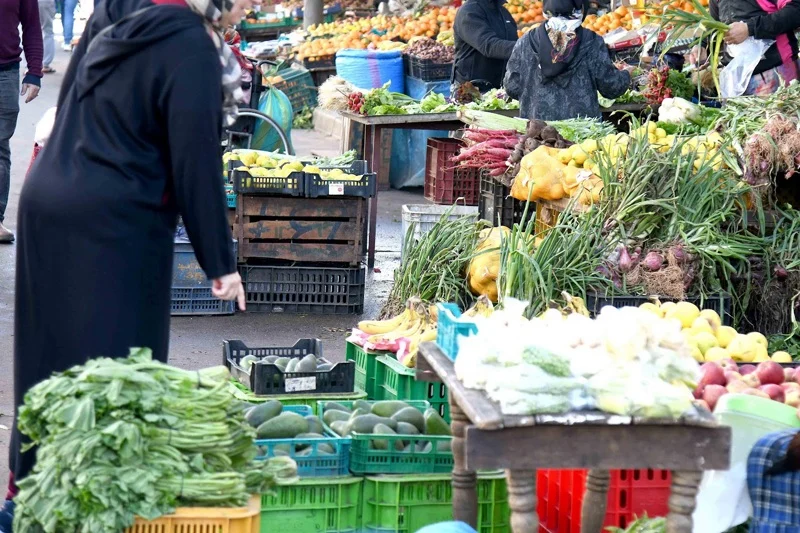
The escalation in food products was chiefly fueled by soaring prices of “Vegetables” (3.3%), “Fruit” (2.6%), “Milk, cheese and eggs” (1.6%), “Meat” (1.2%), “Mineral waters, soft drinks, fruit and vegetable juices” (0.6%), “Oils and fats” (0.5%), “Bread and cereals” (0.3%), and “Fish and seafood” (0.2%). Conversely, the prices of “Fuels” registered a significant decline of 3.2% in the non-food category.
Geographically, the highest upswing in the CPI was recorded in Guelmim and Errachidia with 1.2%, followed by Laayoune and Safi with 1.1%, Tangier with 1.0%, and Oujda, Tetouan, and Beni-Mellal with 0.9%. The rest of the cities including Fez, Marrakech, Dakhla, Agadir, Rabat, Settat, and Meknes saw an increase ranging from 0.3% to 0.8%. Surprisingly, the economic capital of Morocco, Casablanca, experienced a stagnation in CPI.
Compared to the same month of the previous year, the consumer price index registered an increase of 8.9% in January 2023, triggered by a steep surge of 16.8% in the index of food products and 3.9% in non-food products. In the non-food category, the variation ranged from a 0.4% rise in “Health” to a 9.6% surge in “Transport.”
Despite the fluctuations in the CPI, the underlying inflation indicator, which excludes products with volatile prices and public tariffs, rose by 0.4% in January 2023 compared December 2022 and 8.2% compared January 2022. These trends have significant implications for the economy and may influence various sectors, including consumers, investors, and policymakers.








add your comment
Terms of publication : Not to offend the writer, people, sacred things, or attack religions or the divine self, and refrain from racist incitement and insults.