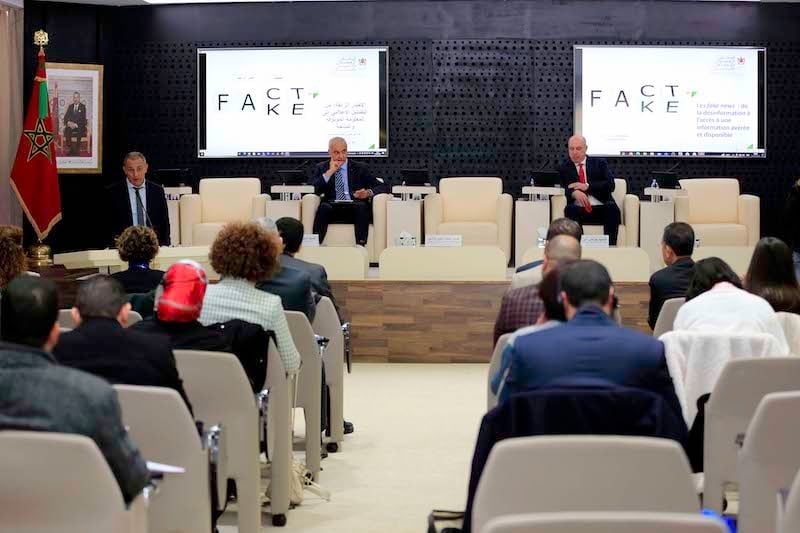
The Economic, Social and Environmental Council warned of the danger of fake news in the country, saying it poses a threat to trust in state institutions, security, and a violation of the private life of individuals.
In light of rising propagation of fake news on social media misleading Moroccans about a number of subjects, the council said that news source required by legislation in place framing the profession are to be trusted, but falsehoods continue to read due to the internet enabling all to share non-factual information.
Although Law No. 31.13 related to the right to obtain information obliges public institutions to proactively publish the information in their possession, even if they did not receive a request to publish it from citizens, it did not set a specific deadline for its publication, which prompted the Economic, Social and Environmental Council to recommend publishing it on its electronic portals within a deadline not exceeding 24 hours from availability.
While presenting the council’s report on fake news today, President Ahmed Reda Chami said that “a large number of public administrations and institutions do not publish or update the information in their possession in a systematic and regular manner, even though the law obliges them to do so.”
This creates a vacuum for unofficial information, misinformation and speculative posts to thrive, in absence of official sources.

“Even when a citizen requests information, he does not find it or faces great difficulties in obtaining it,” said Chami, attributing this structural failing to “the lack of human resources in institutions, or the poor qualification of available resources.”
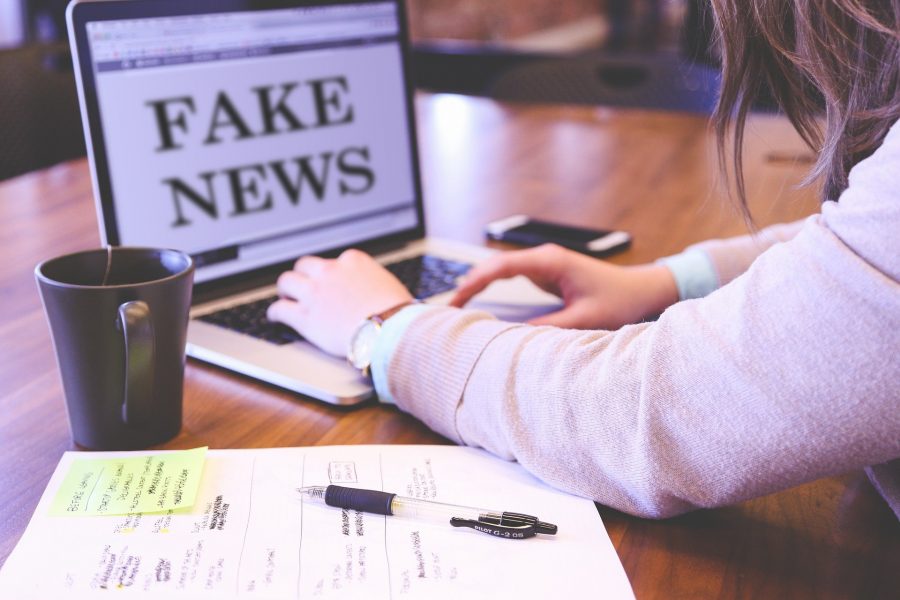
The Economic, Social and Environmental Council warned of the danger of fake news, which can be found in the form of press articles, videos, pictures or online statements.
“In addition to containing fake, inaccurate or incomplete data, in order to mislead public opinion, it leads to creating a parallel and fake public opinion, and this is the most dangerous result,” said the head of the council.
Chami touched on some examples of the negative impact of fake news that has spread in Morocco recently, “such as the circulation of incorrect data about the price of the Moroccan dirham against the dollar and the spread of rumors about the COVID-19 vaccine.”
“A number of people refused to get vaccinated after the spread of these rumors,” lamented the official.
“Fake news has very negative political and social repercussions, affecting trust in institutions, and undermining the sense of safety and security within society. It also calls into question common sense, especially in times of crisis, similar to what happened during the pandemic.”
Fake news often feeds conspiracy theories, and the lack of control over internet content specially worsens fact checking.
The Council noted the lack of a holistic approach to creating platforms to verify the validity of information, as there are only four platforms in Morocco, three of which belong to the National Radio and Television Company, the Maghreb Arab News Agency (MAP), and the High Commission for Audiovisual Communication, in addition to the platform for a private intervention.
The council presented a number of recommendations to address the spread of false news, calling for securing access to reliable information, and activating the requirements of the law related to the right to obtain information and the obligation to publish it within a deadline not exceeding 24 hours from the date of availability.
The council also recommended the creation of a national portal to monitor fake news in order to detect and refute it. Support for fact-checking sites, ensuring their neutrality, and support for initiatives to set up systems to detect false information among professionals to check it before it is published.
With regard to professionals, the Economic and Social Council recommended strengthening their capabilities in monitoring false news and verifying its credibility before publishing it, in order to implement the principle of professional ethics. While he called on citizens to show a critical sense and make an effort to search for the right news and not to get carried away by rumors.




add your comment
Terms of publication : Not to offend the writer, people, sacred things, or attack religions or the divine self, and refrain from racist incitement and insults.